Oklahoma governor candidates funnel $22 million in personal money to campaigns
Jun 10, 2026 | 3:43 pm ET
Description
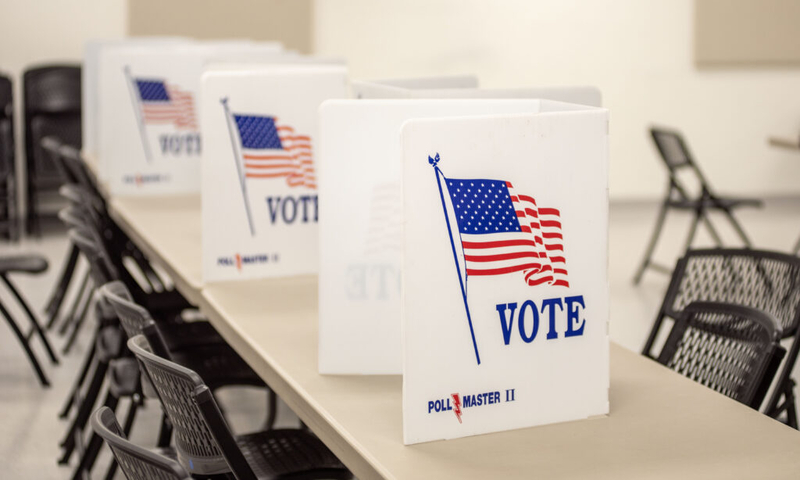
In the months leading up to Tuesday's gubernatorial primary election in Oklahoma, four Republican candidates poured more than $22 million of their own funds into their campaigns. (Photo by Annelise Hanshaw/Missouri Independent)
OKLAHOMA CITY — Candidate self-funding has soared past $22 million in the Republican primary race for Oklahoma governor, with a Trump-endorsed candidate alone pouring almost $10.9 million into his campaign.
Four Republican gubernatorial candidates have loaned millions of their own money to their campaigns ahead of Tuesday’s primary election, according to Oklahoma Ethics Commission reports filed this week. These zero-interest personal loans vastly exceed the amount the candidates have raised from campaign donors.
Former state Sen. Mike Mazzei, a Tulsa financial planner who recently scored an endorsement from President Donald Trump, has loaned $6.9 million to his campaign since April, new ethics records show. That pushed the total amount of his personal campaign loans to nearly $10.9 million since first launching his gubernatorial bid.
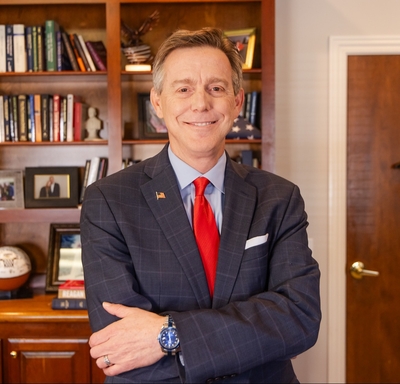
Former House Speaker Charles McCall, a banker from Atoka, has self-funded the second-highest amount in the governor’s race with $5.6 million in total. That includes $2.5 million over the most recent campaign finance reporting period of April 1 to June 1, according to Ethics Commission records.
Oklahoma City businessman Chip Keating has spent $3.5 million of his own money on his gubernatorial bid, including $1.5 million since May, his ethics reports show.
Attorney General Gentner Drummond, a lawyer and rancher from Hominy, for the first time made personal loans to his campaign for governor. He started with a $2 million loan on April 17 and followed with $500,000 more on May 29, according to his campaign finance records.
The only other gubernatorial candidate of any party to make a personal campaign loan is Kenneth Leroy Sturgell, also a Republican, ethics records indicate. Sturgell, a small business owner from Goldsby, loaned his campaign $11,000.
Self-funding in the 2026 race already outpaces past election cycles. Republican Gov. Kevin Stitt, a self-made millionaire, put $4.9 million of his own funds into his 2018 gubernatorial campaign and nearly $2 million when running for reelection.
Former State Auditor and Inspector Gary Jones ran against Stitt in the 2018 Republican primary. Jones loaned his campaign about $16,000 in that race, a decision he said is appropriate for candidates to do “if you believe in what you’re doing and you believe in what you’re trying to accomplish.”
But, the amount candidates are allowed to self-fund ought to be capped, said Jones, also a former Oklahoma Republican Party chairman. Otherwise, it creates a significant advantage for the wealthy over other quality candidates who don’t have the same personal resources.
“Now you’re seeing more and more people that jump into politics, their greatest asset is they have more money in their bank account and not necessarily they have better ideas and better plans to serve in that office,” Jones said.
Political candidates in Oklahoma have been able to loan personal funds to their campaigns for many years, said constitutional attorney and state historian Bob Burke. However, as campaigns have become more expensive, the dollar amounts of these personal loans “have skyrocketed.”
“It is an absolute prohibition on middle income or low income Oklahomans from running for governor,” Burke said. “That would have excluded more than half of our past governors.”
Candidates who make these loans can repay themselves with campaign donations.
The larger the personal loans, Burke said, the more candidates in the past have relied on large donors to cover the significant deficits. That diminishes the importance of small donations of $25 or $100 that most Oklahomans are able to make, he said.
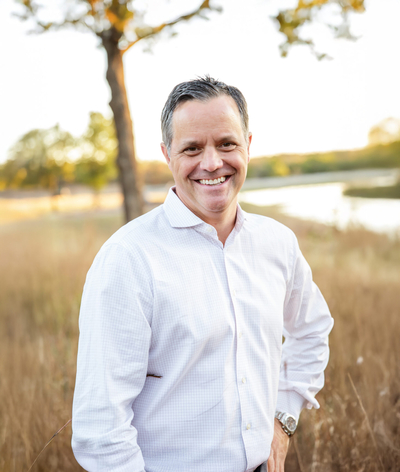
Since April 1, Keating leads all GOP gubernatorial candidates in fundraising from individual donors, who are allowed to contribute no more than $3,500 to a campaign. He raised $390,000 from these individual contributions during the latest April-June reporting period, plus $1,000 from the Oklahoma Optometric Political Action Committee, according to his finance reports.
Drummond is a close second in donor fundraising over the months preceding the primary. His campaign raised more than $340,000 in individual contributions since April, ethics records show. He also collected $12,000 from political action committees.
Mazzei raised $116,318 from individual donors and $5,000 from a political action committee, according to his campaign finance records.
McCall’s donors have contributed $105,195 since April. He reported no political action committee contributions in that time.
The governor’s race also has attracted millions more in spending from 501(c)(4) organizations, known as “dark money” groups, that don’t have to disclose their donors. These groups have purchased millions of dollars worth of advertising and mailers to support and oppose certain gubernatorial candidates, state records show.
Joining Mazzei, Drummond, Keating and McCall in the Republican gubernatorial primary are Sturgell, former Sen. Jake Merrick, Leisa Mitchell Haynes, Jennifer Domenico and Calup Anthony Taylor.
If no candidate gets more than 50% of the vote on Tuesday, the top two vote earners will advance to an Aug. 25 runoff election.
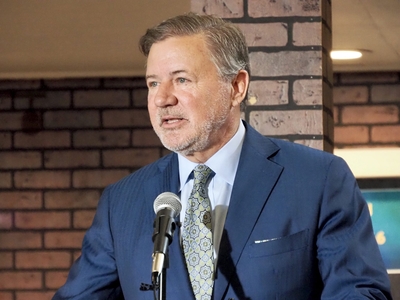
Rep. Cyndi Munson, former Sen. Connie Johnson and Arya are running for the Democratic nomination for governor. Independent voters will choose between Jerry Griffin, Robert E. Brooks Sr. and Orlando Lynn Bush to be their nominee in the Nov. 3 General Election.
Other statewide races have seen more limited amounts of self-funding.
State Chief Financial Officer David Ostrowe, a Republican, has loaned more than $1 million to his campaign for lieutenant governor, according to state records. One of his GOP primary opponents, Sen. Darrell Weaver, put $32,253 into his campaign, including spending personal funds on travel mileage, his ethics reports show.
Both Republican candidates for Attorney General have put hundreds of thousands of dollars into their primary race. Oklahoma Secretary of Energy and Environment Jeff Starling has loaned $500,000 to his campaign, and former state Rep. Jon Echols loaned $300,000.
Peggs Public Schools Superintendent John Cox, a Republican, is the only candidate for state superintendent who’s made personal loans to his campaign, pouring in $136,896.
Other candidates in the state superintendent race have reported spending their own money, though not in the form of a personal loan.
Republican candidate Robert Franklin spent $5,000 of his personal funds on various campaign costs — like mailing fees, printing, signs and travel mileage — and then was reimbursed through the campaign, his expense reports show.
Fellow GOP superintendent candidate James Taylor reported $3,410 in individual contributions from himself to his campaign. His campaign finance records show another $3,980 in joint individual contributions from himself and his wife.
Oklahoma City, OK