Oklahoma colleges and universities can propose 90-hour bachelor’s degrees
May 29, 2026 | 2:06 pm ET
Description
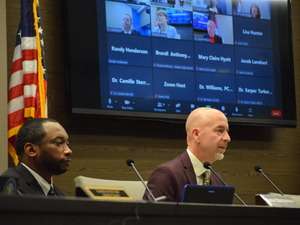
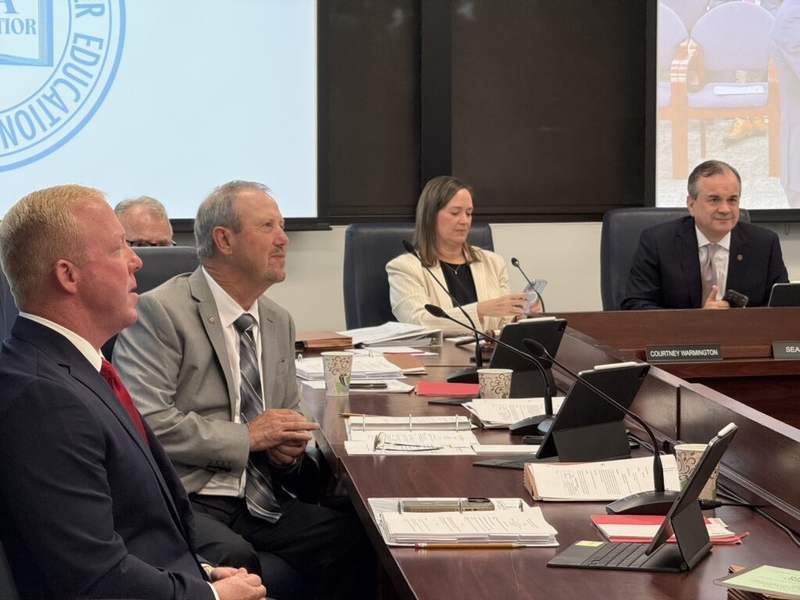
Members of the Oklahoma State Regents for Higher Education listen to a speaker during a meeting on May 29, 2026 in Oklahoma City. (Photo by Emma Murphy/Oklahoma Voice)
OKLAHOMA CITY — Higher education officials on Friday approved new policies that could soon open the door for some Oklahoma students to obtain select college degrees in as few as three years.
The Oklahoma State Regents for Higher Education approved revisions to their policies to outline what colleges and universities must consider before submitting proposals seeking to reduce the time it takes to obtain a bachelor’s degree to as low as 90 credit hours.
While Oklahoma institutions would not be required to offer accelerated degrees, the move for the first time allows universities to explore the option and submit proposals for different degree programs to the regents for review. Each school’s proposal for an accelerated degree would be reviewed on a case-by-case basis by the State Regents.
The board’s decision comes after Gov. Kevin Stitt and the Legislature both charged the State Regents with studying the feasibility of Oklahoma’s higher education institutions offering such programs.
The change has been considered in an effort to make college more affordable and to address workforce shortages. Some criticisms have included concern over a loss of academic rigor, a less prepared workforce and underdeveloped degrees.
Under the new guidelines, any school seeking to shorten the number of credit hours must provide to regents:
- clear rationale for why a reduction in credits is appropriate,
- evidence that it will address workforce needs,
- proof of demand from students and employers,
- description of how academic rigor will be maintained, and
- demonstration that approval has been or will be obtained from any necessary third-party accrediting or licensing bodies.
The institution would also need to monitor the effectiveness and student outcomes of a reduced-credit program.
The reduction in credit hours would come from elective coursework rather than program-specific requirements.
Two regents voted against the changes, including Regent Steven Taylor.
Taylor said he was concerned about transparency and reduced rigor if a school offers a 90-hour bachelor’s degree program.
Degree programs requiring less than 120 credit hours shouldn’t be advertised as bachelor’s degrees, he said, and this would make earning a degree less rigorous.
“Common ed is going in the direction of more days in school, more rigor, more time, no virtual days, and this is, in my opinion, going in the wrong direction,” Taylor said. “I’ve never been in favor of things that are the easy way or less rigorous way, and I just see this is a direction that we don’t want to go.”
State Regent Chair Courtney Warmington said multiple states have mandated offering this type of programming and this is an ongoing national conversation.
At least 60 schools across the country have created 90-credit hour pathways and five other states are working on testing and developing these programs, according to a report from Georgetown University.
“We got here because the governor asked us to proactively take a look at this,” Warmington said. “That was the beginning point, and what we are doing now is coming up with a potential set of guidelines for how we are going to think about and review and analyze potential requests in the future. There is no pending request at the moment by any institution for a 90-hour bachelor’s degree program, but I am appreciative of this body being proactive, because it is coming.”

Oklahoma City, OK