Meet the Democrats running for Oklahoma state superintendent
May 29, 2026 | 6:30 am ET
Description
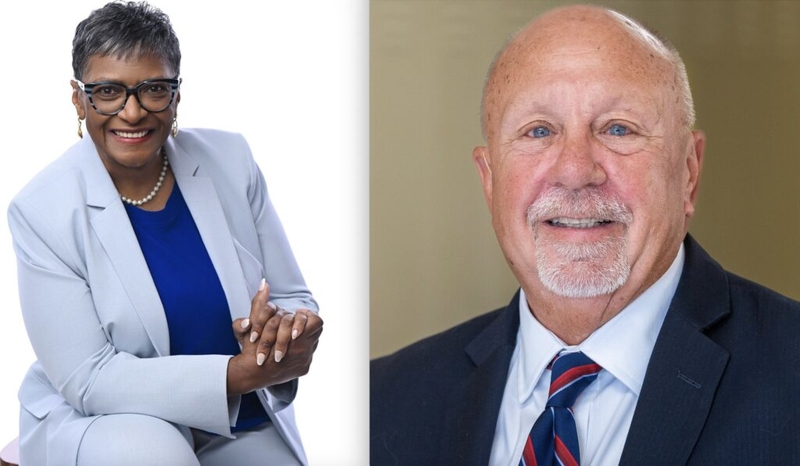
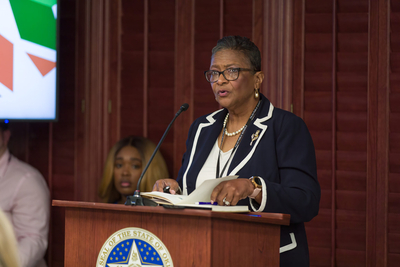
Jennettie Marshall and Craig McVay are running for the Democratic nomination for Oklahoma state superintendent in the June 16, 2026, primary election. (Photos provided)
OKLAHOMA CITY — A former school board member and a retired district superintendent are vying for the Democratic nomination to be Oklahoma’s public schools chief.
Democrats will choose between Jennettie Marshall, 67, and Craig McVay, 65, in the June 16 primary election for state superintendent. The winner will advance to the November General Election to face the victor of a seven-candidate Republican primary field.
Marshall served for eight years on the board of education for Tulsa Public Schools, the state’s largest district. McVay retired in 2022 as the superintendent of El Reno Public Schools. Both said they would push for a greater state investment in public schools and teachers.
McVay, of El Reno, said Oklahoma should start by adding $500 million to the education funding formula, the main driver of district budgets.
The extra money would support lowering class sizes, reading initiatives and pay raises for teachers and school support staff, he said. The state Legislature, which passed a $2,000 increase to teachers’ minimum salaries this year, should have approved a $12,000 raise over four years, McVay said.
He blamed the Legislature’s Republican supermajority for plunging Oklahoma into a 16-year “continued program of austerity” in public school funding. He said the state lacks a long-term plan for investment and academic improvement.
“When you have an urban classroom with 45 second graders in it, you’re not going to improve outcomes,” he said. “That’s what we have to address.”
The role of state superintendent, considered Oklahoma’s top education official, leads the state Department of Education and the state Board of Education. The officeholder doesn’t decide how much funding to put into public schools — that’s the role of the state Legislature and U.S. Congress — but the superintendent does oversee the state’s public education system and requests budgets for school needs.
“Oklahomans want their education system to be fixed. They don’t want a Band Aid. They want a plan,” McVay said. “I’m going to be the leader in developing that plan (and) putting that plan in front of the Legislature on day one of an administration that I was elected to. That would be the sole focus.”
McVay’s two children and six grandchildren have attended public schools, as well, he said.
McVay said his long career in public education, including 18 years as a district superintendent, set him apart in the race.
“Across the state, all four corners, as a superintendent, principal, teacher, coach, counselor, there’s just not anything in the school business that I haven’t done, and I think that’s what separates me,” he said.
Marshall, of Tulsa, said she hasn’t targeted a specific dollar amount the state should reach in public school funding. While pointing to Mississippi as a state to emulate, she said Oklahoma leaders “need to just really look at what we’re putting into education and what it will really take to turn it around.”
Mississippi, which leapt above the national average in elementary reading scores, has spent $15 million a year for more than a decade on literacy initiatives.
However, both Marshall and McVay voiced reservations about Oklahoma’s new Mississippi-style reading law that would require struggling readers to repeat third grade. Both said the state should fund more interventions for early childhood learners — as the new law would do — and focus on lowering class sizes before requiring third-grade retention.
Marshall said teacher salaries also need more support. Teachers’ starting pay should begin at $45,000, she said. The current starting minimum is $41,601
If elected, she said she’d seek to foster a more collaborative posture at the state Education Department and a more inviting environment for teachers, with the goal of convincing experienced educators to stay in the classroom.
“What we’ve experienced over the past few years (is) the state department being an adversarial agency and the state superintendent being an adversarial individual,” Marshall said. “That department I would like to see become more of a supportive, collaborative department.”
Few districts had a more contentious relationship with the agency than Tulsa. During Marshall’s tenure on the board, former state Superintendent Ryan Walters threatened a state takeover of the district and forced out its superintendent, Deborah Gist.
Walters at the time cited Tulsa’s poor academic results as the reason for drastic measures. He is not seeking a second term as state superintendent after resigning with more than a year left in his term to lead an anti-teacher-union organization.
During his 33 months in office, Walters made national news with a push for public schools to teach from the Bible and keep a copy of it in every classroom. The state also has faced multiple attempts to open religious charter schools.
Both Democratic candidates said religious teaching has no place in public education.
Marshall said she aims to continue a “lifetime of service” in the state superintendent role. She’s had lengthy careers as a pastor and in law enforcement, including 17 years with the Department of Corrections.
Through her work in corrections, including as a parole officer, she said she saw too many young people who “fell through the cracks,” something Oklahoma cannot afford.
Marshall said she’s the right candidate for the state superintendent job because of her work experience and her history as a Tulsa school board member overseeing the largest district budget in the state.
She has 12 grandchildren, four of whom are of school age and attend public schools in Oklahoma.
“Above all, I want everyone to know that I’m in this to bring a collaborative environment between the state department, the state superintendent’s office and the districts of our state, which would also include the parents because I believe we have to get into this together,” Marshall said.
Oklahoma City, OK