As Ohio summer meal programs see increased use, federal cuts make it harder to fight child hunger
Apr 10, 2026 | 4:00 am ET
Description
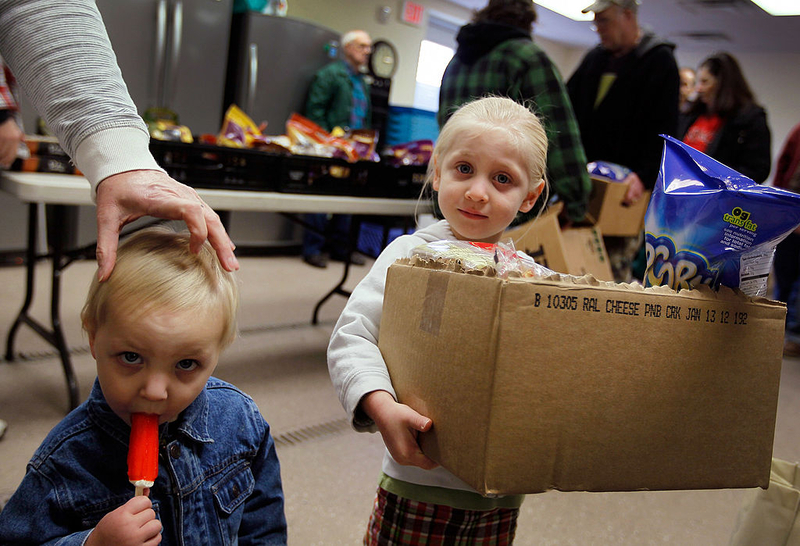
Two children help their mother pick up food from the Sugartree Ministry food bank in Wilmington, Ohio. (Photo by Joe Raedle/Getty Images)
As summer approaches, national researchers say that participation in summer food programs for children has increased in Ohio and across the country, but federal budget cuts could mean more food insecurity for children and their families.
Researchers at the national Food Research & Action Center said participation in federal Summer Meals Programs is up nationwide based on 2024 data, and Ohio saw its own boosts.
The group called the numbers “a promising sign after three years of steadily dropping participation,” but also said gaps still remain to help feed hungry children.
Summer meals are provided through a federal program called the National School Lunch Program Seamless Summer Option, and the Summer Food Service Program, through which children can go to designated sites to pick up food.
Some sites provide up to 10 days of meals per child every two weeks, and bulk items like bread and milk are available at some sites as well. Home delivery is also an option.
“While summer 2024 introduced new opportunities to expand access to nutritious meals when school is out and progress was made, there are still millions of children missing out, and more must be done to connect them to these critical nutrition supports,” the researchers stated in the center’s newest report.
In 2024, a separate federal program was also introduced, called the Summer EBT program.
A program approved by Congress in 2022, the Summer EBT program was made available to children who are also eligible for free and reduced-price lunches during the school year.
In 2024, that program served 21 million children, with Ohio participating in it.
In Ohio, children in households with incomes at or below 185% of the federal poverty level are eligible for Summer EBT.
According to the Children’s Hunger Alliance, the $120 loaded onto EBT cards “works with other nutrition assistance programs to provide kids consistent access to critical nutrition when school’s out.”
A family of four is eligible if they make $4,810 or less per month.
If a household already receives federal Supplemental Nutrition Assistance Program (SNAP) funds, Ohio Works First funds, or is Medicaid-eligible for free and reduced price meals, children are automatically enrolled in the Summer EBT, according to the state’s website on the program.
The EBT program and the Summer Meals Programs work in tandem, as the Summer EBT is considered by the Food Research & Action Center to be “an important nutrition support,” but only amounting to about $1.33 per child per day.
“Summer EBT is an important complement to the Summer Meals Programs, which provide a maximum of two meals each day at most sites, less than the breakfast, lunch, supper, and snack that children can receive on school days during the school year,” according to the center.
Ohio’s average daily participation in summer lunch between 2023 and 2024 was up 16.6% in Ohio to more than 76,000 children, ranking the state 36th in participation rates.
Summer breakfast programs in the state also saw increases, with average daily participation up nearly 26% between 2023 and 2024.
Ohio served more than 2.6 million summer lunches over June, July, and August of 2024 through the Summer Meals Program, numbers that were up from 2023 numbers for the same time period. July 2024, in particular, saw a 31.6% increase in the number of lunches served from July 2023.
Nationally, almost 3.2 million children received a lunch through the Summer Meals Program in July 2024, an increase of more than 350,000 kids, or 12.6%.
According to the report, 43 states and the District of Columbia had increases in their average summer lunch daily participation.
Like Ohio’s numbers, the national participation rate for breakfast assistance was higher in July 2024 than in July the year before, seeing more than 380,000 more children in the program.
Reductions coming from the federal budget bill, also called the One Big Beautiful Bill Act, could create more need for child hunger programs, while also reducing the ability for children to get that help.
Cuts to the Supplemental Nutrition Assistance Program (SNAP) in the bill mean millions of Americans are expected to lose some or all of the funding from that program, including children in low-income households.
“Already 14.1 million children lived in food insecure households in 2024, and that number will likely increase as fewer families qualify for SNAP or receive reduced benefits, underscoring the importance of the Summer Nutrition Programs when school meals are unavailable,” researchers stated in the summer meals report.
Kids across the country who lose benefits through SNAP will also lose their automatic eligibility for free school meals, and that may “artificially lower an area’s poverty rate, resulting in some sites no longer being eligible to operate the Summer Meals programs,” according to the report.
“With the attacks on SNAP through (the federal budget bill) set to impact millions of families now and in the coming years, it is vital that all states work to expand access to summer meals and implement Summer EBT, so that they take full advantage of all the options available through the Summer Nutrition Programs,” the center stated.
Administrative SNAP costs being deferred to states in the budget bill have already caused the Ohio House to pass a bill to cover a shortfall of about $38 million in administrative funds, meaning a much smaller pot for certain Ohio counties to divvy up.
Columbus, OH