Ferry construction begins in Florida on WA’s new hybrid-electric vessels
Aug 05, 2026 | 6:58 pm ET
Description
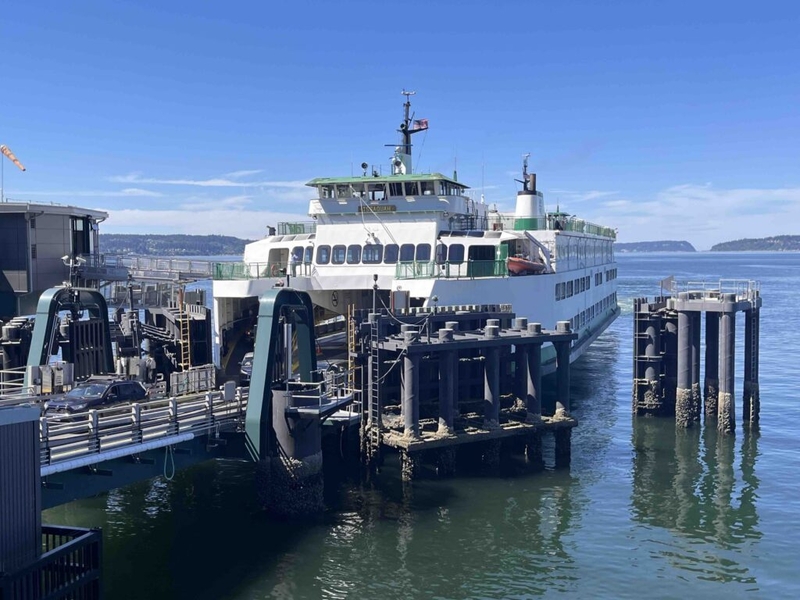
Construction officially began in Florida on Wednesday on the first new Washington state ferry in more than a decade. When it’s completed, the hybrid-electric vessel is expected to serve the Mukilteo-Clinton route, seen here. (Photo by Tom Banse)
Top brass from Washington State Ferries gathered Wednesday at a shipyard in Panama City, Florida, for a maritime ceremony that has been all too rare lately for the agency. They celebrated the cutting of the first steel for a new boat, the first of three new hybrid-electric ferries.
The state ferry system urgently needs new vessels to replace aging ferries that are past or very near retirement age. This is the first new ferryboat for the fleet to enter construction in more than a decade. Still, the cheaper out-of-state assembly work is generating ongoing static back home.
“Today’s steel cutting makes the future of Washington State Ferries tangible and marks a major milestone for our entire region,” ferries chief Steve Nevey said at Eastern Shipbuilding Group’s shipyard. “Washington is making a long-term investment in reliable ferry service and a modern, sustainable fleet.”
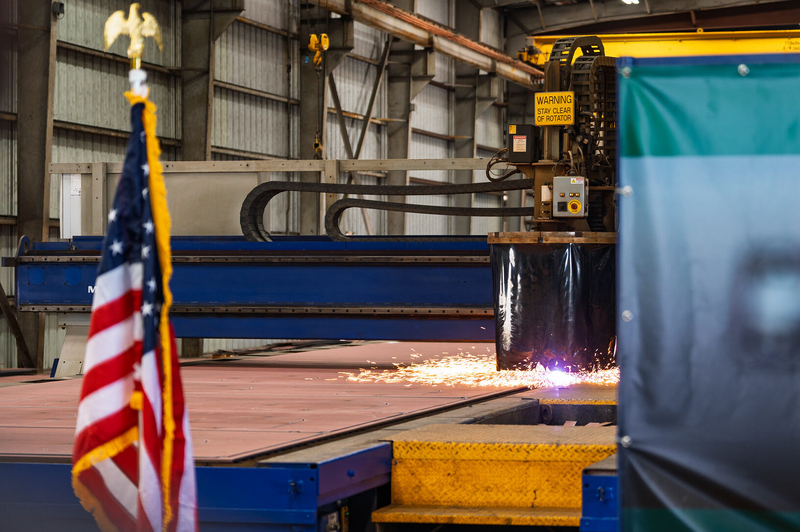
Nevey concluded his remarks by cheerfully giving the command, “Let’s cut steel!” That was the signal to a shipyard worker off to the side to slice into a heavy steel plate destined for the hull. The dignitaries watched from behind a yellow line as sparks flew. It was the maritime equivalent of a groundbreaking.
Gov. Bob Ferguson had planned to join the event in the Florida Panhandle, underscoring the project’s importance. However, the governor canceled his trip because of the unfolding wildfire disaster in eastern Washington.
The governor’s office on Wednesday did announce the state would exercise its purchase option for a third hybrid ferry from Eastern Shipbuilding on top of the first two ordered in 2025. This was no surprise given the ferry system’s needs. The option clause provided for an early exit in case the ferry system lost confidence in its new shipyard partner.
“In the past decade, we lost four ferries to retirement. Today signifies a critical step in rebuilding our fleet with modern vessels that will allow us to provide more dependable service,” Ferguson said in a press release that recounted multiple signs of improvement in ferry service that has been strained since the pandemic by canceled sailings and crew shortages.
The anticipated delivery date for the first new plug-in ferry, to be named the Wishkah, remains four years away in summer 2030. Eastern Shipbuilding is expected to deliver the second and third ferries of the same design in 2031 and 2032.
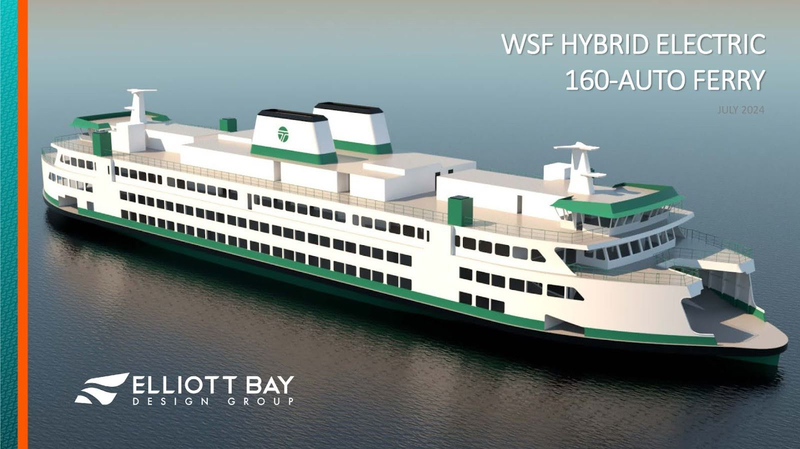
Eastern Shipbuilding will assemble the ferry in a modular production process on dry land and then slide the completed vessel into Florida’s St. Andrew’s Bay. The ferries will have capacity for 160 cars and 1,500 passengers. They are designed to run on rechargeable battery power most of the time.
“Eastern Shipbuilding Group is proud to begin construction on these vessels and to partner with Washington State Ferries on one of the most important ferry modernization programs in the country,” said Joey D’Isernia, the company’s CEO.
Ferry riders pleased to see progress, but still unsettled
Regular ferry riders expressed happiness about the start of vessel construction, but some are still worried about the future of the state ferry system.
“There’s been a lot of discouraging news in the last number of years. So, it’s great to see some good news and the fact that this is actually happening,” said Lopez Islander Ken Burtness, a retired ferry captain.
He said this week’s warm feelings are tempered with anxiety about getting through the years-long interim until new ferryboats arrive in sufficient numbers to shore up the state’s aging fleet.
“One new ferry a year isn’t, I don’t believe, going to get Washington State Ferries out of the hole,” Burtness said. “We need to be building two ferries a year.”
In an analytical essay, Burtness said the strained ferry system is headed into “a certain crisis” because some of its oldest ferries are bound to conk out before replacements arrive. To head off such a scenario, Washington State Ferries and the governor asked the Legislature for money to extend the lives of the aging boats. Lawmakers granted $28 million extra for vessel preservation earlier this year.
The advocacy group Restore our Ferries raised similar themes as Burtness in an email. Group members, led by Duncan Chalmers of suburban Seattle, noted that the ferries in the state fleet average 35 years old and five are over 50 years old.
Wednesday was “a good start, but the state badly needs more ferries,” Chalmers and fellow group members wrote. They urged consideration of “creative interim solutions like private ships, BC Ferries partnership, smaller ships and/or less frequent sailings, new funding models… etc.”
The Florida-built boats
This is the first time in more than 50 years that Washington state ordered new ferries from an out-of-state shipyard. Only two shipyards nationwide competed for this ferry construction contract. Eastern Shipbuilding’s bid was more than 30% cheaper than a competing bid from Nichols Brothers Boat Builders of Whidbey Island.
The $715 million contract with non-union Eastern Shipbuilding includes delivery of each new ferry via the Panama Canal. Whether the ferries will be towed from Florida to Puget Sound (the shipyard’s preference) or be carried on the deck of a specialized large transporter ship (WSF’s more costly preference) remains under negotiation.
On the new ferries, the center of the ship’s hold will be packed with racks of water-cooled rechargeable batteries so each ferry can sail fully on electric power most of the time. The engine room will also feature twin diesel generators as a backup source of propulsion.
Assuming they use green electricity to recharge at the terminals, the new ferries should achieve large reductions in fuel consumption and air pollution.
Washington State Ferries plans to assign the first two plug-in ferries to the Mukilteo-Clinton route. WSF previously explained that the short route lends itself well to electrification because it offers frequent recharging opportunities.
Figuring out how to pay for more new ferries
Meanwhile, back in Washington state, a bipartisan workgroup of legislators has started meeting with WSF and hired marine consultants to hash out how to pay for additional new ferries. The ferry system’s electrification plan calls for 13 more new ferries by 2040 in addition to the three already on order.
The long-range plan is to grow the state ferry fleet from the 21 vessels on hand today to as many as 26 eventually, after accounting for retirements. That would mean that the state could have one or two reserve vessels available to fill in for unexpected breakdowns, which would reduce sailing cancellations that happen all too frequently now. It could also pave the way for restoration of the long-suspended Anacortes-Sidney international route.
Earlier this year, state lawmakers rejected a proposal from Ferguson to borrow $1 billion on the bond market to pay for new ferries number four through six. Instead, the state House and Senate transportation leaders chartered the interim workgroup to brainstorm how to scrape together the money for a “sustainable” long-term ferry construction program.
“There’s a lot of consternation about where these vessels are built and how they’re constructed,” said state Sen. Marko Liias, D-Edmonds, touching on the list of ferry procurement hangups. “What are their capabilities… What propulsion system or fuel mix they have. So, we need to answer those questions with enough detail that we can make a decision and move forward.”
The supplemental transportation budget signed by the governor at the end of March set a Dec. 15, 2026, deadline for the ferry workgroup to report its findings and recommendations. The workgroup is meeting behind closed doors, but publishes the presentations it receives and meeting agendas on delay at the Joint Transportation Committee website.
“The fact that we’re all talking now is really useful and important,” Liias said. “As the chair of the Senate Transportation Committee, I would like the Legislature to take action at least on (ordering) vessels four through six in 2027.”
Olympia, WA