NV going 2nd. Or 22nd. Does it matter?
Jul 26, 2026 | 8:46 am ET
Description
(Photo by Joe Raedle/Getty Images)
Nevada will go second on the 2028 Democratic presidential primary calendar, following South Carolina, a group of national party mandarins announced Friday. Apparently there’s still another step in the process, but all the kids who are following this seem to think that’s a mere formality and that the calendar is set.
Nevada Democratic Party leaders had hoped Nevada would go first, arguing:
a) With its diversity and working class economy Nevada is about as representative of the contemporary United States as it gets, so no one is more qualified to give an early blast of momentum to a presidential candidate than Nevada Democratic voters, and
b) the Nevada Democratic electorate’s collective finger is on the nation’s collective political pulse, as evidenced by all those radically innocuous pro-business politicians Nevada Democrats vote for all the time, so — always and ever transactional first — Nevada will be sure to pick a plain vanilla winner yay!
The validity of the first premise — and dubiousness of the second — aside, going first wouldn’t relocate the state any closer geographically to the East Coast political-media-industrial complex. Nevada likely wouldn’t be showered with the 24-7 “first-in-the-nation” attention historically bestowed on New Hampshire and Iowa in prior years, or that will be lavished on South Carolina in 2028.
Ever since Nevada became an early caucus state in 2008, it has been sort of a junior early state, never receiving the star treatment New Hampshire, Iowa, or South Carolina got. It doesn’t get polled as much. Except for the occasional goofy exception (Rand Paul), presidential primary candidates themselves have tended to treat Nevada with some indifference, not really looking Nevada in the eye, but over its shoulder at some state that’s cuter. The national political press doesn’t encamp in Nevada to cover the presidential race as a daily news story, but instead parachutes in on occasion to produce feature-style previews/overviews laced with gambling clichés. Nevada’s never really been viewed as a make or break state.
And no, Joe Biden finishing second in 2020 after finishing third in Iowa and New Hampshire doesn’t mean Nevada counts; South Carolina and its living legend Democratic Rep. Jim Clyburn would have rescued Biden’s candidacy the week after Nevada’s 2020 caucus no matter where Biden had finished in the contest.
Speaking of Clyburn, earlier this week he turned to a baseball analogy and suggested to the New York Times that South Carolina would have more influence if it went not first, but fourth.
“I learned that the best batter on the team is the cleanup hitter. Fourth place. And so South Carolina will be OK continuing being the best batter on the team, the cleanup batter,” he said.
Meanwhile Nevada Democrats will go second, and hold a competitive early presidential primary for the first time. The hype and hoopla and nonsense that goes with being an early primary state (while not as intense and tiresome as perpetually being the smallest battleground state in the general election) should assure Nevada’s primary garners a much higher national public profile than the preposterous caucuses ever earned.
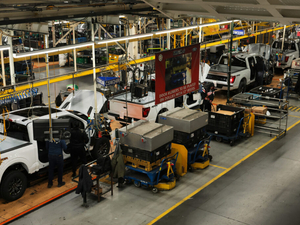
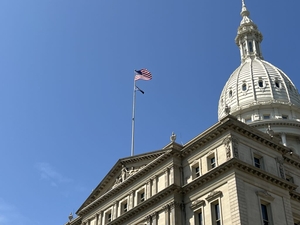
But that’s a low bar. Nevada’s moment in the spotlight will still be somewhat overshadowed, and the nation’s aforementioned campaign complex’s attention diverted, by two newly added looming early states, delegate-rich Michigan and Virginia. And Nevada’s impact on the Democratic nomination for president could end up being about the same by going second as it would be by going 22nd.
A version of this column was originally published in the Daily Current newsletter, which is free and which you can subscribe to here.
Las Vegas, NV