By the numbers: Analyzing Letlow’s first-place Senate primary finish
May 19, 2026 | 6:00 am ET
Description
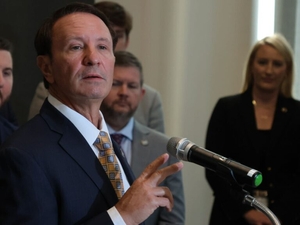
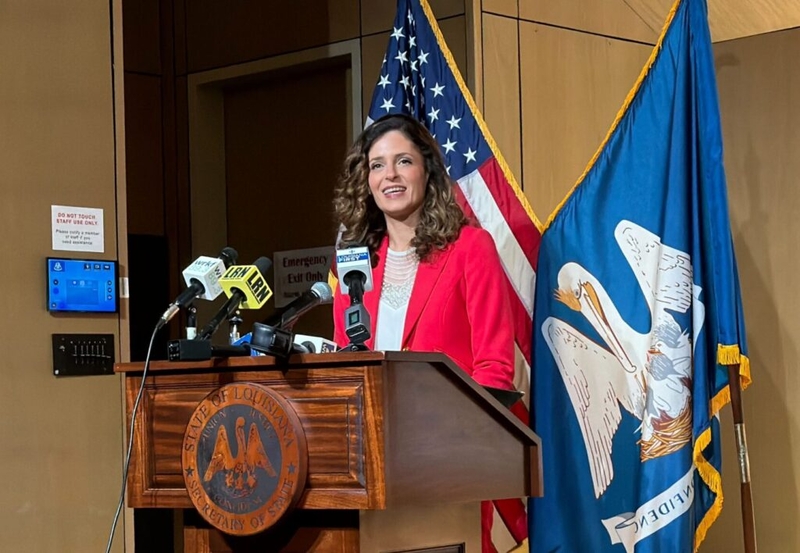
U.S. Rep. Julia Letlow speaks to the media after qualifying to run for U.S. Senate (Piper Hutchinson/Louisiana Illuminator)
That Bill Cassidy didn’t survive Saturday’s U.S Senate primary for the wasn’t a major surprise given President Donald Trump’s vast popularity among the state’s Republican voters.
What was eye-popping was the margin of victory that U.S. Rep. Julia Letlow, Trump’s endorsed candidate, managed against a two-term incumbent and John Fleming, a statewide official with his own ties to the president. Letlow drew 45% of the more than 401,000 votes cast, compared with 28% for Fleming’s and Cassidy’s 25%.
How she amassed those numbers is among the notable takeaways from Saturday’s showdown for the U.S. Senate.
Parish-level dominance
Any hopes for Cassidy vanished when Letlow battled him to a draw in the parishes where the most Republican ballots were cast: East Baton Rouge and Jefferson.
Letlow matched Cassidy’s 35% support in East Baton Rouge. Other than his time in medical school and residency training, Cassidy has spent his entire life in Baton Rouge. Still, he only managed to get 185 more votes from his backyard than Letlow, who moved from the Monroe area to the capital last year after the legislature drew a chunk of Baton Rouge into her 5th Congressional District.
Letlow trailed Cassidy in Jefferson by just 235 votes out of more than 35,000 cast. But in every other parish with a substantial Republican ballot count, Letlow scored decisive wins. She pulled 44% support in St. Tammany and Lafayette, and she won Caddo with 39%.
As pollster John Couvillon noted in his election night analysis, Letlow dominated the state’s metropolitan areas. Fleming edged her in Shreveport and was close behind Letlow in Shreveport. Otherwise, Letlow dropped the hammer on her competition.
She claimed victory in an impressive 52 parishes to just nine for Fleming and Cassidy’s three.
Another example of Cassidy’s struggles: He finished second in just 10 parishes, while Fleming finished in second in 43 and Letlow in 11.
Big spenders, mixed results
Fleming placed in the top 10 in spending among U.S. Senate candidates nationwide, according to the Federal Election Commission’s breakdown for the 2026 cycle. The former congressman, Trump administration official and current state treasurer’s nearly $9.9 million in expenditures, ranking ninth among all candidates, to make the Republican runoff came almost entirely from loans he made to his campaign.
Fleming has amassed a fortune from his career as a physician, real estate investments and several Subway franchise locations.
Cassidy was not far behind Fleming in 11th place in campaign spending at $9.45 million, and Letlow came in at 48th with a relatively paltry $2.78 million.
These numbers pale in comparison to the hundreds of millions that candidate-specific political action committees, super PACs and the National Republican Party have poured into congressional races this year. The Louisiana election saw some of that largesse.
The Accountability Project, a super PAC aligned with Gov. Jeff Landry, put $6 million behind the effort to elect Letlow, while the Louisiana Freedom Fund was on pace to eclipse $10 million to keep Cassidy in office.
It’s worth following where, or even if, these dollars land in the June 27 runoff.
The numbers you can’t see
We know that more than 401,000 votes were cast in Louisiana’s Republican primary for U.S. Senate, and there were nearly 345,000 Democratic ballots counted.
What we don’t know yet is how many can be attributed to party members and unaffiliated voters. Secretary of State Nancy Landry said Friday official turnout data won’t be available for another two weeks, with elections officials needing more time to sort through the extra voter paperwork accompanying the semi-closed primaries.
Under the new system, unaffiliated voters could choose a party ballot for the primary. They have to stick with that party in next month’s runoff, but they can choose any candidate on the ballot in the November general election.
It will be interesting to see the no-party trends, but it’s doubtful they steered the outcome Saturday or will do so in the fall.
The more striking figure is the hundreds of thousands of registered party voters who passed on the primaries. The official counts will likely show at least 60% of Democrats and Republicans opted out of the election.
Their silence might say more about the current state of national politics in Louisiana than the actual results from Saturday.
Baton Rouge, LA