North Dakota US House candidates discuss debt, healthcare, farmers during podcast debate
Oct 14, 2026 | 5:02 pm ET
Description
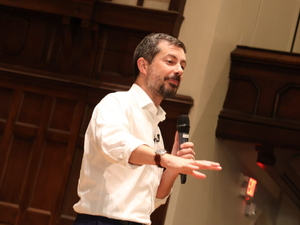
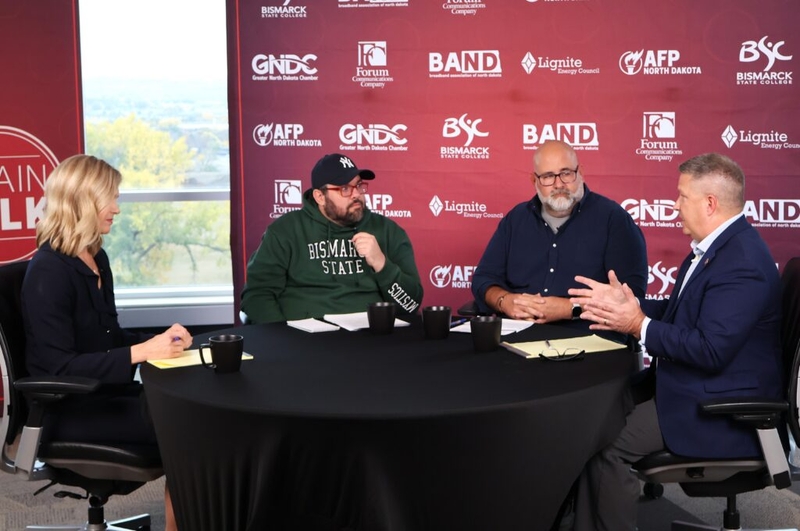
Democratic-NPL U.S. House candidate Trygve Hammer, right, speaks to moderators Rob Port, center-left, and Chad Oban, center-right, during a U.S. House debate with Republican incumbent Rep. Julie Fedorchak at Bismarck State College on Oct. 13, 2026. (Photo by Michael Achterling/North Dakota Monitor)
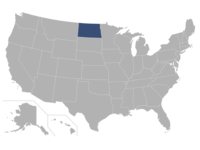
North Dakota’s Republican and Democratic-NPL candidates for U.S. House debated the national debt, surging healthcare costs and farming concerns during their first – and probably only – debate of the 2026 election.
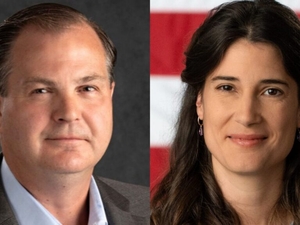
Republican incumbent Rep. Julie Fedorchak and Democrat Trygve Hammer also clashed over the Iran war during a recorded episode of Plain Talk, hosted by Forum Communications columnist Rob Port and Chad Oban, at Bismarck State College on Tuesday.
Fedorchak said she’s received classified briefings on the Iran war and saw “some pretty compelling evidence” that the actions taken by President Donald Trump were justified.
Hammer said he does not believe Trump’s claims that Iran was two weeks away from having a nuclear weapon and thinks Congress could have kept the U.S. out of the war if members had been holding the president accountable.
$40 trillion national debt
Fedorchak, who is seeking a second term, said her concern about the federal debt was one issue that drove her to run for Congress. She said that there is “no silver bullet” to solve the country’s debt problems.
“It’s taken a long time to get here, and it’s going to take a long time to get back,” she said. Fedorchak said three major initiatives can help: growing the economy, reducing spending and eliminating fraud, waste and abuse.
Provisions in the 2025 budget reconciliation package stimulated the growth, she said, by giving North Dakota households about $2,000 on average back to them through provisions that don’t tax tips or overtime, among others.
“Most North Dakotans do not think we have a revenue problem,” she said. “We have a spending problem. We cannot tax our way out of this.”
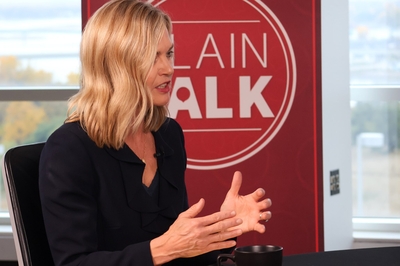
Fedorchak said reforming mandatory spending programs, like Social Security, Medicare and Medicaid, will allow the next Congress to “get a lot more serious” about controlling federal spending. She said Social Security, Medicare and Medicaid are “unsustainable in their current forms.”
Hammer said the country needs to stop operating under a budget deficit in order to begin bringing down the national debt.
“I don’t think we’re going to find enough fraud, waste and abuse out there to do it,” Hammer said. “We are going to have to tax these billionaires, and some of them are asking for it.”
He said reducing the national debt will take an all-of-the-above approach, including increasing revenue through taxes and cutting spending.
“If we’re making cuts, let’s make them meaningful and well thought out,” he said. “Not like what we saw with DOGE that ended up just being destructive.”
Medicaid, healthcare and the Affordable Care Act
Fedorchak and Hammer differed on new requirements for Medicaid recipients that were part of the 2025 budget reconciliation.
Fedorchak said the new eligibility checks beginning next year will ensure those receiving Medicaid benefits are supposed to receive them. She said that type of oversight will ensure Congress is “being responsible with taxpayer dollars.”
Issue spotlight: North Dakota US House candidates differ on solutions to affordability
She also spoke in favor of work requirements for Medicaid recipients that begin next year, which are projected to cut about $1 trillion in government spending over a decade. People who receive Medicaid under expansion provisions will be required to meet work, school or community service requirements unless they qualify for an exemption.
“I have yet to find a North Dakotan who doesn’t agree with me that able-bodied, working-age people who can work, should work,” Fedorchak said.
Hammer cited statistics that show 44% of North Dakota Medicaid recipients work full time and 43% who benefit from Medicaid are children.
He said the Medicaid work requirements create more red tape for people to access healthcare.
“They’re going to have to do more paperwork. We’re not going to have more staff to help them do that paperwork, and some of them are going to drop their insurance,” Hammer said.
Hammer added it was “kinda rich” that Congress passed the work requirements during a session that has had several recesses. House lawmakers have been in session a total of 72 days in 2026 with an additional 20 days scheduled before the end of the year.
Fedorchak said the Affordable Care Act isn’t operating as planned and said the cost of healthcare “has gone through the roof” since the program began.
Issue spotlight: North Dakota US House candidates discuss AI regulation, data centers
“It’s going to take some time to unwind the ACA,” she said.
Fedorchak reiterated her support for expanding health savings accounts to help people take control of their own healthcare decisions.
Farmers and Canada
The candidates also disagreed on tariffs and federal policy decisions affecting farmers.
Hammer said it’s Congress’ job to control tariffs, which have strained North Dakota agriculture markets.
“The tariffs have been this tax that made our ag markets go away, and now they try to buy back votes with bailouts,” he said. “We don’t want a bailout economy.”
Ending the Iran war would allow fertilizer costs to come down, he said, which farmers desperately need.
“We have plenty of natural gas here in North Dakota that we could use to make nitrogen fertilizer,” he said. “We have to start doing some of those things at home as well.”
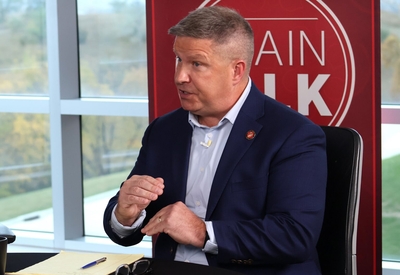
Fedorchak said increasing crop reference prices and improving crop insurance were included in the 2025 budget reconciliation. She added she supports the Farm Bill passed by the U.S. House that is under consideration by the Senate and another bill to provide E15 fuel year-round.
“That creates a lot of domestic markets for those products,” she said.
Fedorchak said Canadians are friends of North Dakota and she wants the trade dispute addressed quickly by the Trump administration.
However, she also pointed out that Canada has implemented non-tariff trade barriers for some U.S. products.
“This approach that the president is taking to renegotiate some of these trade agreements … was an effort to address some of those issues,” she said. “And Canada walked away from the negotiations. They need to come back and we need to get that done as soon as possible.”
Hammer said the Trump administration and a Republican-controlled Congress have created the impression that the U.S. is an unreliable trading partner.
“We are an unreliable ally because everything is just up to this capricious leader who might decide something one day and then that night, in a Tweet, reverse it,” he said.
Hammer added that Canada is moving on by building pipelines to their west coast and making deals on their potash fertilizer that don’t involve the U.S.
“If you are a farmer or rancher in North Dakota, if you run a small business in North Dakota, you need some predictability because you need to plan ahead,” he said. “We need Congress to be that guard rail and be the adults in the room so we can reestablish a stable economy that people can count on.”
Independent candidates Helene Neville and Charles Tuttle are also running for North Dakota’s U.S. House seat.
Fedorchak declined to participate in a debate hosted by Prairie Public last week, which featured the two independent candidates in addition to Hammer. No other debates between the candidates have been scheduled.
North Dakota Monitor reporter Michael Achterling can be reached at [email protected].
Bismarck, ND