Rep. Kevin Mannix faces political newcomer in fight to hold onto Oregon swing seat
Oct 14, 2026 | 6:13 pm ET
Description
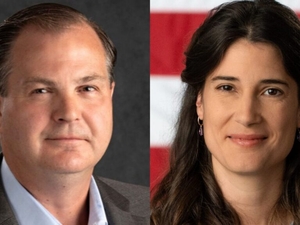
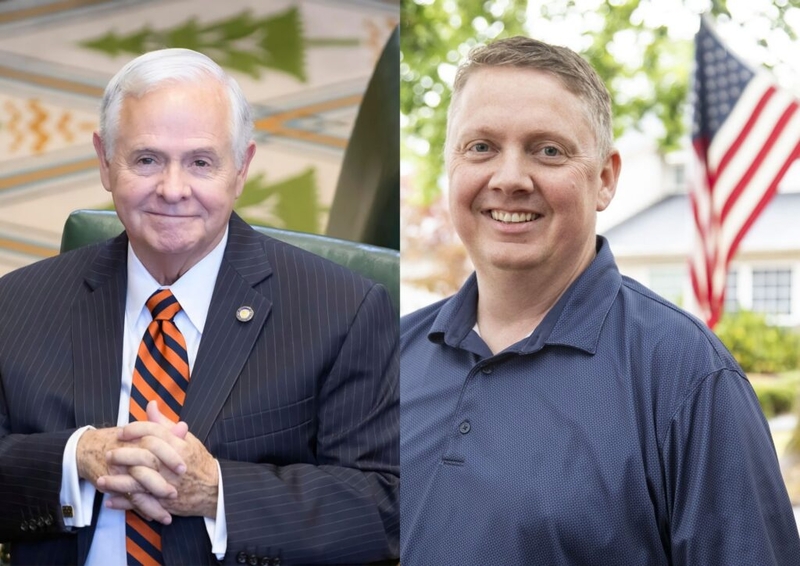
Rep Kevin Mannix, R-Salem, (left) and Michael Welsh (right) are vying for a competitive Oregon House seat that Mannix has held since 2023. (Photo by Laura Tesler/Oregon Capital Chronicle and courtesy of Welsh campaign)
A business law attorney and an occupational safety professional with vastly different levels of political experience are vying for control of one of Oregon’s few swing districts.
Rep. Kevin Mannix, R-Salem and the architect of many of the state’s voter-approved tough-on-crime laws from the 1990s, is running for reelection in Oregon’s 21st House District, which spans Keizer and portions of north and downtown Salem. He has more than a decade of experience in the Legislature between various stints in the House and Senate since 1989, and he has run for attorney general, governor and Congress in various elections.
HIs opponent, Michael Welsh, is a safety professional from Keizer. He has little political experience but has spent nearly two decades working in the manufacturing sector and is emphasizing his goal to support people when it comes to making ends meet.
The district is home to more than 12,600 registered Democrats, about 11,000 Republicans and nearly 19,150 nonaffiliated voters, who will be key to swaying the election in favor of either Mannix or Welsh. One other district, the 52nd House District, represented by Rep. Jeff Helfrich, R-Hood River, has a Republican state representative but more registered Democratic voters than Republicans, according to October voter registration data.
Mannix argues that his bipartisanship and success as a legislator distinguishes him from Welsh. He pointed to a 2023 law that changed Oregon’s estate tax on dead people’s assets to increase its exemption to up to $15 million specifically for farmers, ranchers and small property owners.
“I’m not sitting there in a doctrinaire corner,” he said. “Because of that, I’ve been able to get a lot of support from so-called independent or nonaffiliated voters who say, ‘Hey, here’s someone who’s important, focused, who’s focused on what’s best for the state and for the district, not what’s best for a given party.’”
But Democrats nationwide are expected to overperform this November due to headwinds for Republicans who are in control of Congress and the White House, a factor that analysts say could trickle into down-ballot races. Welsh argues that he’s more equipped to represent the working class and reduce the cost of living.
“While my opponent does have a lot of experience, he’s also had that plethora amount of years to make good on what he’s wanted to have happen to make things better for the working class, and it hasn’t happened,” Welsh said. “It seems like everything’s getting tighter from a financial standpoint, for a lot of the folks in the community, my coworkers, myself, my family included.“
Mannix pushes against tax increases, calls for more accountable spending
Mannix said he is most focused on preventing increased payroll taxes for working people who are often confronting insurance, rent, food and gas prices that are increasingly unaffordable. He also said that businesses are struggling with costs and overregulation.
He sometimes finds himself working more collaboratively with Democrats than other Republicans, including joining Democrats in 2025 to advance a nearly $15 billion funding package. The legislative session ended before the full Legislature voted on it, and Mannix voted against a pared-down package that fall.
With inflation and more Oregonians turning to electric vehicles, Democratic lawmakers and the Oregon Department of Transportation continue to explore ways to increase revenue. But Mannix said any payroll tax increases would have to go to the voters.
“That is most damaging to lower-income people,” he said. “It’s all based on a certain percentage of your pay and going in this case to transit.”
He said he plans to address budget shortfalls Oregon is facing due to the 2025 federal GOP tax and spending law for social services by taking a look at how the state prioritizes its resources. Mannix argues that more can be done to improve Medicaid eligibility standards and ensure the programs work efficiently.
“We’re going to have to take a very hard look at how we can save money in delivering quality services to our citizens, and that is going to be a challenge. And I don’t pretend that it’s anything but a challenge,” he said. “At the same time, I think we can. We are up to the challenge. We have dealt with these challenges before, and I’m prepared to do that.”
Welsh seeks to support working class, improve social services access
Welsh said he will bring a focus on the cost of living, with an emphasis on education, tenants and healthcare in Salem due to his own experiences struggling to make ends meet and paying for care. He wants to work on lowering utility bills and creating opportunities for rent relief or first-time homebuyer assistance. As a father with two children in local public schools, he said he wants more resources in the classroom for instruction time that leads to students accessing high-paying careers.
The cost of healthcare has hit his family particularly hard. He described a kidney cancer diagnosis last year that required him to undergo surgery, an experience that is key to his support for universal healthcare, an issue lawmakers could take up in the upcoming legislative session before referring the matter to voters for the 2028 election. He said the cost of the system will be accounted for by relieving the burden of healthcare premiums on employers and individuals.
“10 years ago, where my family was financially, I probably would not have had that surgery. We would not have been able to afford it out of pocket,” he said. “We would have asked ourselves, okay, how long can we live with this type of condition before we absolutely have to proceed forward with some type of surgery?”
On transportation, Welsh said that Oregon should focus on taking care of existing needs such as filling potholes and damaged roads, rather than expanding services, but that residents will ultimately get what they pay for. He said he is interested in creative options to bring in funding for transportation services and that voters spoke clearly about their opinions on the gas tax in the May primary.
“In my 9 to 5, my day job, I have to bring all the departments together: production, management, maintenance, engineering, safety-you name it. We all come together into the same room because we have the same goal to eliminate hazards in the workplace for our workers,” he said. “I’m willing to do that with folks in Salem because it’s for what’s best for Oregonians.”
Salem, OR