NJ legislators approve bills on data centers, voting rights, and more
Jul 01, 2026 | 1:47 pm ET
Description
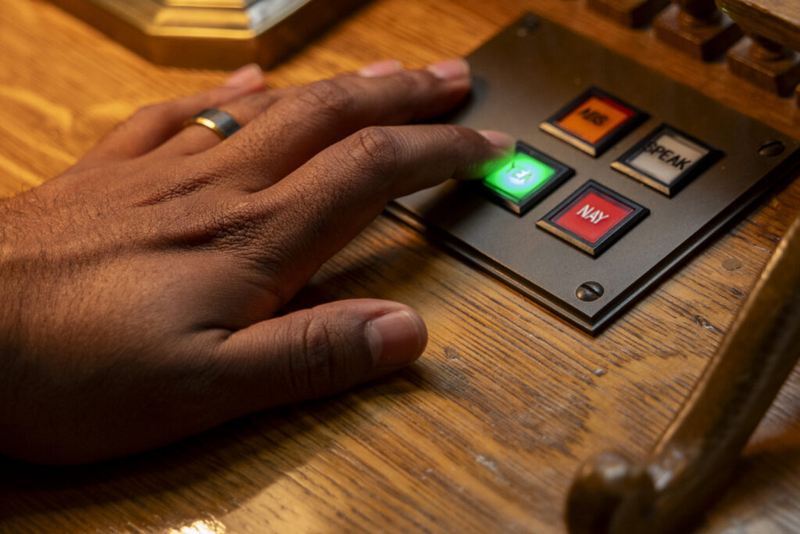
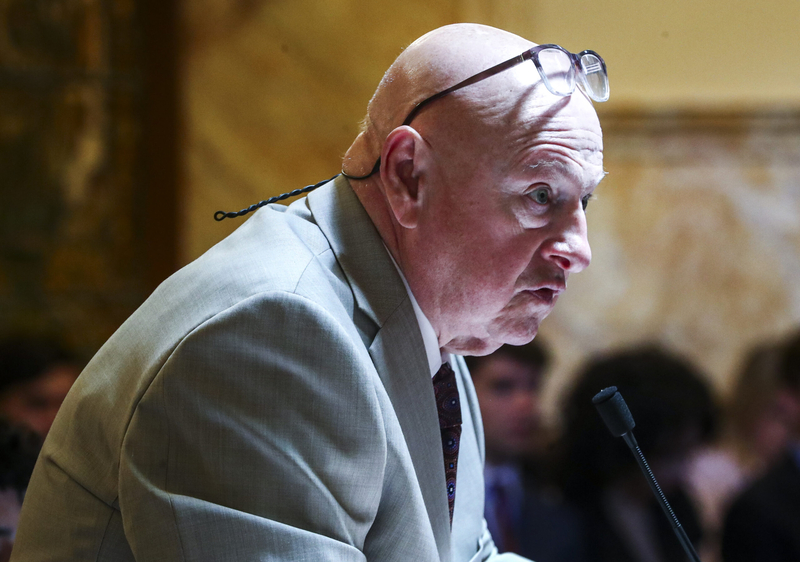
An assemblyman votes yes during the Assembly session at the Statehouse in Trenton on June 30, 2026. (Anne-Marie Caruso/New Jersey Monitor)
New Jersey legislators pondered and passed more than 100 bills in voting sessions that stretched into the night Tuesday on their race to summer recess.
Many of the bills have cleared both chambers and now head to Gov. Mikie Sherrill’s desk for a signature. The legislation passed touched on matters small and large, from toughening the state’s limousine laws to passing the state’s $60.7 billion annual budget.
Legislators aren’t expected to return to Trenton until at least September.
Below is a look at some of the more notable measures approved Tuesday, beyond the budget bill.
Voting rights
Lawmakers approved a bill, called the John R. Lewis Voter Empowerment Act of New Jersey, meant to prevent voter discrimination amid national attacks critics complain have increasingly disenfranchised voters of color. It would expand language access requirements beyond those in federal law, afford state courts broad powers to rewrite discriminatory election rules, and require the state attorney general’s approval for any changes to election procedure.
Alejandra Sorto of the American Civil Liberties Union of New Jersey, said the measure will ensure “a strong, inclusive, and representative democracy where every voice is heard” in the Garden State.
“This bill will remove barriers to voting that disproportionally harm voters of color across the state, increase language access and assistance, and prohibit deceptive practices at the polls — critical measures as federal protections continue to be eroded,” Sorto said.
The Senate passed the bill by a 25-14 vote largely along party lines. The Assembly passed the bill in March.
Affordability
Lawmakers in both chambers passed a bill that would expand the child tax credit for working families with kids under age 6, a measure meant to reduce childhood poverty.
The bill increases the credit by 25% for parents making up to $80,000 a year in 2026, 2027, and 2028, with credits ranging from $250 to $1,250 per child depending on family income.
“New Jersey’s child tax credit has been a valuable tool, providing families with meaningful financial relief, and this expansion is a direct response to the rising costs they continue to face,” Sen. Angela McKnight (D-Hudson) said in a statement. “Higher refunds will help stretch household budgets even further, giving families greater flexibility to cover everyday expenses.”
That bill passed unanimously in the Assembly and by a vote of 39-1 in the Senate, where Sen. Parker Space (R-Sussex) voted no.
Lawmakers also passed a measure meant to halt surveillance pricing, in which businesses use technology to track consumers’ shopping habits, online activity, and more and use that data to charge shoppers different prices for the same items.
The bill, dubbed the Fair Price Protection Act, also would bar stores from installing electronic shelving labels, which connect to surveillance pricing systems, for a year to give the state time to study whether they comply with state consumer fraud laws.
The bill passed the Senate by a vote of 22-14, and the Assembly, by 51-20, with Republicans calling it an unfair business restriction that “slows modernization.”
Bill sponsor Assemblyman Chigozie Onyema (D-Essex) defended the bill as a tool to prevent businesses from using algorithms to turn people’s “personal data into a price tag.”
“Across the country, people are tired. They’re tired of feeling like every corner of the economy is designed to outsmart them. They’re tired of hidden fees and possible cancellation systems, shrinking products, and apps that seem to know more about their lives than they do,” Onyema said. “The price on a shelf is supposed to mean something. If two people walk into the same store or log into the same platform and buy the same carton of milk, they should pay the same amount. That is not a radical idea.”

Data centers
The state Legislature also advanced three bills aimed at reining in data centers and studying the amount of electricity they consume, as lawmakers and residents push back on the industry’s growing footprint in the Garden State.
A bill called the “End Data Center Tax Credits Act” would slash the tax credit annually available under the Next New Jersey Program by half — from $500 million down to $250 million.
The measure would redirect some of the freed-up credit capacity to other programs, like cultural arts institutions, manufacturing, and energy storage projects.
The state Economic Development Authority has awarded $250 million in tax credits to one project, according to the bill. That project will not be impacted by the legislation, which will take effect immediately once signed.
NJ Sierra Club Director Anjuli Ramos-Busot applauded the bill’s passage, saying that if the state “truly seeks for data centers to contribute to the state-wide economy, this is the necessary starting point.”
The legislation advanced Tuesday in the Assembly 74-4 and in the Senate 35-3, with a few Republicans opposing it in both chambers.
Lawmakers passed another bill to shield ratepayers from the high electricity costs generated by large data centers by requiring the state’s electric utilities to develop special rates and standards for the biggest electricity consumers. The Board of Public Utilities would have 12 months to establish standards on how electric utilities provide service to large data centers and set a threshold defining “large data centers.”
New data center customers would have to guarantee they’ll pay at least 85% of the electricity they request for 10 years, and during grid emergencies, large data centers would be first in line for curtailment rather than residential customers, under the legislation.
The bill also mandates data centers to report annually to the BPU on their performance and pushes data center to bring their own clear power or storage online, giving priority grid interconnection to those that do. Data centers already approved for service before the bill takes effect would be exempt from some requirements.
That measure advanced out of both houses Tuesday along party lines.
The third bill — requiring data center owners to submit semi-annual water and energy reports to the state — passed with less pushback from Republicans.
The bill directs data centers to submit a water and energy usage report to the BPU annually for three years. That reporting must include whether a data center uses water from a public water system, the total and peak daily water input the data center uses for all functions, total energy consumption, all on-site power supplies, and the name of the electric public utility serving the data center, along with any service agreements.
BPU officials would be required to publicly post the information online within 30 days of receiving the reports.
Environmental activists said the data center bills passed Tuesday show that New Jersey is poised to become a “national model for meeting this moment and taking energy affordability seriously.”
“From reining in data center costs to expanding community solar and transmission projects, we’re grateful state leaders are taking steps to slow rising energy bills and ensure data centers bear the costs of their growing energy demand,” said Eric Miller, Evergreen regional director.
New nuclear
Lawmakers in both chambers unanimously approved legislation that will deliver subsidies for at least one new nuclear power plant in New Jersey.
The bill, dubbed the Power NJ Act, orders the BPU to procure the development of at least one new nuclear plant and requires other power producers to purchase reliable capacity certificates to subsidize them for a 40-year period once they come online and begin delivering energy.
“With both rising costs and increased demand for electricity, New Jersey needs to explore all manners of increasing our production capacity without contributing to climate change through new fossil fuel burning facilities,” said Sen. Bob Smith (D-Middlesex), a sponsor and chair of the Senate Environment Committee.
The bill, meant to guarantee power generation amid price spikes fueled by data centers’ mammoth energy demands, faced opposition from environmental advocates and the Division of Rate Counsel over the long timelines associated with nuclear projects and the costs the subsidies would add to ratepayers’ energy bills.
In a letter to lawmakers, Rate Counsel Brian Lipman said the subsidies could add between $7.80 and $22.43 on average to monthly utility bills, depending on project delays. A drop in energy prices could magnify those costs, Lipman said.
“This bill not only raises rates, but ultimately acts as a ratepayer subsidy of data centers,” he said in the letter.
Though nuclear plants provide large amounts of reliable generation without emitting carbon dioxide, such plants take at least a decade and billions of dollars to construct, and opponents said the state might be better served pursuing faster solutions, like solar or battery storage projects.
Sherrill, who has pushed for more nuclear generation in New Jersey, is expected to sign the bill.
Trenton, NJ