New Mexico State Land Office holds hearings to increase oil and gas bond costs
May 27, 2026 | 7:21 pm ET
Description
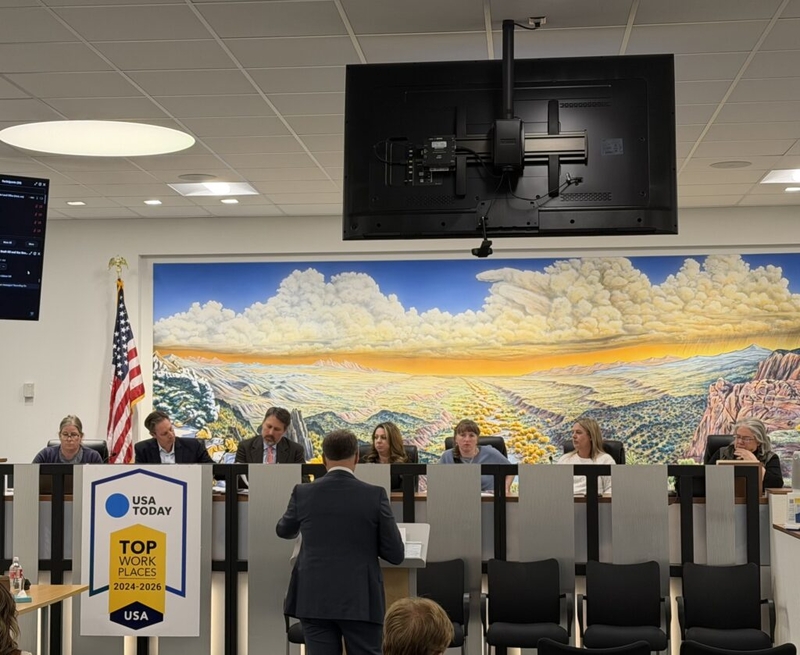
Attorney Robert Sutphin, representing the New Mexico Oil and Gas Association, questions officials with the New Mexico State Land Office at a hearing about oil and gas bonding on May 27, 2026. (Joshua Bowling/Source NM)
The New Mexico State Land Office on Wednesday began a two-day public hearing over a proposal that would increase the amount of money oil and gas companies operating on state land must guarantee for plugging and cleaning wells, and would implement annual reporting requirements.
Currently, oil and gas operators are required to guarantee a minimum $10,000 bond for a single lease, $20,000 for multiple leases or $25,000 for a “megabond” that includes activities in addition to oil and gas operations, according to the State Land Office. The proposal before the office would increase that minimum from $10,000 to $150,000.
The proposal would also create an annual reporting system for oil and gas operators to provide State Land Office officials with information about their leases, inactive wells, plugged wells, spills and more.
“For too long, New Mexicans have been exposed to unnecessary financial liability because existing bonding levels for oil and gas operations are far too low. That stops now,” Commissioner of Public Lands Stephanie Garcia Richard said in an April statement announcing public hearings for the proposal. “Having an adequate bond in place is simply the cost of doing the business on state lands so we can ensure that the public doesn’t have to pick up the tab if a company goes belly up or isn’t willing to clean up properly.”
Some environmental advocates praised the proposal, but argued that it does not go far enough.
Mariel Nanasi, executive director of the Santa Fe-based clean energy advocacy organization New Energy Economy, at Wednesday’s hearing voiced her support for the State Land Office proposal and said New Mexico taxpayers for years have unfairly shouldered the cost of cleaning private industry pollution.
“They are not only reasonable — they are long overdue. New Mexico is facing an orphan well crisis of staggering proportions,” Nanasi said. “The oil and gas industry is poisoning New Mexicans.”
Earlier this week, Nanasi released a report that alleged oil and gas companies routinely transfer ownership of aging, less-productive wells to financially unstable companies that subsequently declare bankruptcy, leading to orphaned wells that require plugging and cleanup at taxpayer expense.
The state Legislative Finance Committee in a 2025 report found that plugging an identified 1,400 wells could cost the state between $700 million and $1.6 billion. The report made several policy recommendations, including enabling state regulators to review or deny the transfer of wells if the buyer cannot plug or clean them.
Nanasi called on the State Land Office to take stronger action than laid out in its proposal, including bonding requirements tied to cleanup costs; oversight of well transfers to financially unstable operators; and enforcement mechanisms to ensure inactive wells are promptly plugged and reclaimed.
Earlier this year, a coalition of climate advocacy organizations sued the New Mexico Energy, Minerals and Natural Resources Department for allegedly failing to address the “thousands of unplugged, inactive oil and gas wells and unremediated extraction sites littered across the state.”
During questioning at Wednesday’s hearing, lawyers representing oil and gas industry interests asked State Land Office officials if they thought they might bear some of the blame for the state’s issues with unplugged, unused wells and the subsequent pollution.
“Would you agree that it at least appears, because these violations have occurred over a long period of time, that there was a failure of the regulators to recognize these violations and curb them?” Robert Sutphin, an attorney representing the New Mexico Oil and Gas Association, asked officials Wednesday morning.
Ari Biernoff, general counsel for the State Land Office, responded that there was “no question” previous leaders of the state agency “bear a responsibility for their own shortcomings.” But, he said, private industry needs to own its part of the mess.
“That in no way absolves the private businesses that plundered state-owned resources like oil and gas and left behind a multimillion-dollar mess,” he said.
Santa Fe, NM