NJ appeals court limits release of internal affairs documents
Aug 05, 2026 | 3:47 pm ET
Description
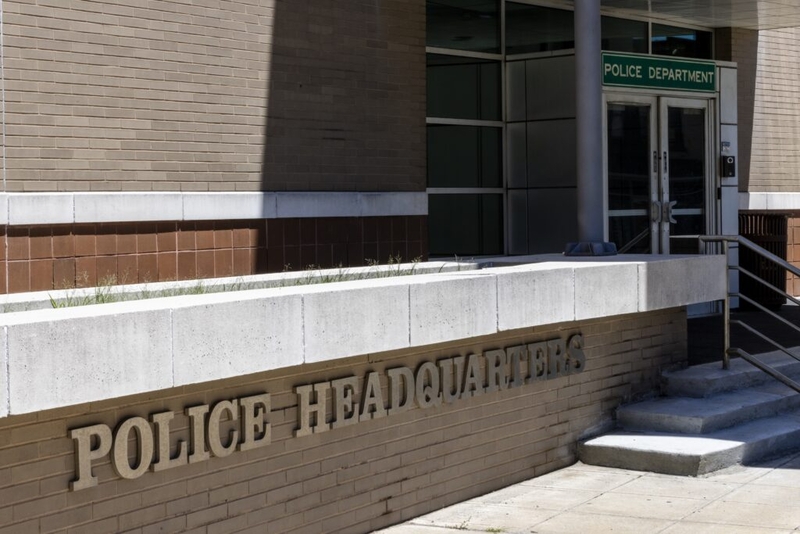
A state directive requires defendants to be notified when an officer who could testify at their trial faces an investigation that questions their candor. An appeals court said Wednesday that documents from pending investigations may not need to be disclosed. (Photo by Anne-Marie Caruso/New Jersey Monitor)
A New Jersey appeals court limited the release of internal affairs documents in pending investigations that question officers’ truthfulness, bias, and integrity, ruling that potential harms to officers from the records’ release outweigh the due process rights of the defendants who seek them.
Wednesday’s ruling from the three-judge panel relates to seven cases where the Passaic County Prosecutor’s Office informed defendants that officers who could testify at their trials were accused of misconduct. A lower court allowed the defendants to see the internal affairs records in question, but Wednesday’s ruling overturns that decision because the investigations of the officers were not complete.
“Premature disclosure of unsubstantiated allegations and the consequent revelation of witness identities during an IA investigation can damage reputations, hinder investigations, compromise disciplinary processes, unfairly harm officers, and potentially expose complainants to negative consequences,” Judge Jeffrey Jablonski wrote for the panel.
Grand jury declines to charge cop who fatally shot New Brunswick senior
The court said such disclosure should be reviewed on a case-by-case basis.
The appellate ruling stemmed from a consolidated appeal lodged by seven people charged by Passaic County prosecutors.
The seven sought documents underlying the internal affairs investigations. A lower court judge found that Passaic prosecutors deprived the defendants of the ability to prepare for trial by informing them of the internal investigations but not describing their nature or context.
The case centers on two longstanding legal doctrines, Brady and Giglio, that require prosecutors to share evidence favorable to the defense, including evidence that could seed doubt about a witness’s credibility.
Wednesday’s ruling says the logic of a 2023 New Jersey Supreme Court decision called State v. Higgs should apply to these cases. The high court in that case ordered a new trial for an Essex County man convicted of murder after finding prosecutors should have disclosed internal affairs records related to a detective’s prior on-duty shootings.
Under that framework, defendants can request a judge privately review internal affairs files for a specific category of information. If that information exists and the judge decides it’s relevant, the judge can order the evidence be shared with both parties.
“This approach is the most reasonable and equitable and aligns with common sense,” Wednesday’s ruling says.
Internal affairs documents from investigations that result in sustained charges must be released, the court said.
It’s not clear how the ruling applies to the case of one defendant, Kahdar Holmes, who received internal affairs documents after requesting that a judge review them. The ruling does not appear to carve out the order granting him access to those documents.
Danica Rue, director of investigations and police accountability at the Office of the Public Defender, which represented all seven defendants, declined to comment on how the decision would affect any single case.
Separately, the appeals panel upheld a lower court’s decision to strike protective orders that barred defense lawyers from discussing — even with other attorneys in their office — the letters informing them that officers faced internal investigations. Those orders were overbroad, the court said.
It declined to set standards around prospective protective orders because attorneys from both sides could make their arguments to judges on a case-by-case basis.
“We welcome the Court’s recognition that the protective orders entered in Passaic County went too far. Today’s decision affirms that effective representation is strengthened when defense attorneys can appropriately collaborate within their office and consult with the experts necessary to prepare a defense. Every client deserves a defense that is informed, thorough, and fully prepared,” Rue said.

Trenton, NJ