Could Oregon end up building more prisons to address earthquake safety concerns?
Aug 05, 2026 | 2:18 pm ET

Description
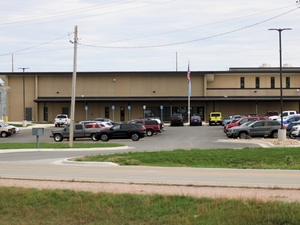
The Oregon State Penitentiary in Salem in June 2022. The Oregon Department of Corrections is studying a potential plan to replace the facility. (Photo by Ron Cooper/Oregon Capital Chronicle)
The ongoing threat of a major earthquake affecting Oregonians who live west of the Cascades and a major maintenance backlog for Oregon prisons are fueling debate over how best the state should protect incarcerated people during dangerous seismic events.
The tension between some left-leaning prison rights advocates and state officials traces back to the ongoing implementation of Oregon Gov. Tina Kotek’s executive order last year ordering large state-owned buildings to be retrofitted by 2060 and new ones to be built under a worst-case-scenario earthquake code to withstand a magnitude 7 or greater earthquake. The Department of Corrections says the order prioritizes prisons because they house people in custody, but advocates oppose building new prisons with stronger infrastructure.
More than 12,000 people are incarcerated in a dozen Oregon prisons, and several correctional facilities in Western Oregon are particularly vulnerable to the “Big One” seismologists expect to hit the Pacific Northwest in the next 50 years.
But they were a major barrier to accomplishing the executive order, Oregon’s state resilience officer, Jonna Papaefthimiou, said at a recent public event. The Kotek adviser said “nobody likes to spend money” on incarcerated people, but that prisons contain thousands of people who are living and working in these facilities.
“If it wasn’t for corrections, we could have done it by 2050,” she said in July at the Portland-based 13th National Conference on Earthquake Engineering. “Prisons are tough. We have a lot of them. They’re old, and we never put any money into those buildings.”
Papaefthimiou pointed to the Salem-based Oregon State Penitentiary, which could be renovated or replaced with a new building in the next decade following an ongoing review by the Oregon Department of Corrections. A scathing July audit found the 160-year-old Oregon State Penitentiary will become functionally obsolete regardless of upgrades or completion of longstanding maintenance requests.
But criminal justice reform advocates were quick to caution against creating a new facility for the Oregon State Penitentiary, instead suggesting that the state work to lower the number of people incarcerated in Oregon.
“The immediate question is what do we do about this obvious emergency? The wrong answer would be to build new prisons,” Alice Lundell, a spokesperson for the Portland-based Oregon Justice Resource Center, said in a statement. “Our prison infrastructure was mostly built decades ago and developed to support an outdated era of mass incarceration. We need to chart a new trajectory based on our most updated understanding of what actually improves the well-being and health of our communities.”
Corrections Department says approach is individualized and risk-based
Most of Oregon’s prisons are at least 20 years old, and all but two of them were rated as “poor” in a 2023 rating conducted by an external engineering firm, according to auditors. But they are also particularly vulnerable because correctional institutions cannot be simply evacuated or closed after a major earthquake, according to Amber Campbell, a spokesperson for the Department of Corrections.
She said the agency is taking a risk-based approach to determine how to retrofit each of the state’s prisons, prioritizing the protection of critical utilities and communications and replacing buildings where retrofitting “would not be cost-effective.”
The Oregon Secretary of State’s July audit of the Oregon Department of Corrections excluded seismic maintenance costs in its more than $800 million estimate for total deferred maintenance. The Department of Corrections declined to provide an estimate for seismic costs on the grounds that determining a reliable figure was part of the ongoing work of implementing Kotek’s executive order.
“ODOC is studying the replacement of the Oregon State Penitentiary because of its age, physical configuration, accessibility problems, deferred maintenance, and other limitations make replacement more practical than continually investing in the existing institution,” Campbell wrote in a statement. “The broader approach is therefore not simply ‘build more prisons’ or ‘retrofit everything,’ but to determine the safest and most cost-effective solution for each facility.”
But the Oregon Justice Resource Center is arguing that the state is taking the wrong lessons, with Lundell calling out “years of the executive and legislature denying the reality of our prisons and refusing to provide meaningful oversight of ODOC.” She urged Oregon lawmakers to support more opportunities for release based on good behavior and sentencing reform, which can include restricting the use of life without parole or mandatory minimum sentences.
“Fewer people should be imprisoned, our communities should get the investment they need, and everyone who remains in state custody should be treated humanely,” she said. “Our goal should be a smaller prison system — not a newer one.”
Luke Harkins, a spokesperson for Kotek’s office, didn’t directly respond to questions about Kotek’s position on building more prisons. He said implementation of the executive order is now up to Oregon’s Capital Projects Advisory Board, which will set standards, timelines, data and review costs for state agencies.
The executive order, he wrote in an email, “reflects the governor’s position that the state has a fundamental duty to protect the people who work or reside in state facilities and to protect the Oregon taxpayers who deserve that this work is done in the most efficient way possible, and that includes for Department of Corrections facilities.”

Salem, OR