Lawsuit alleging guards fatally beat inmate prompts calls for state review of prison deaths
Aug 05, 2026 | 8:00 am ET
Description
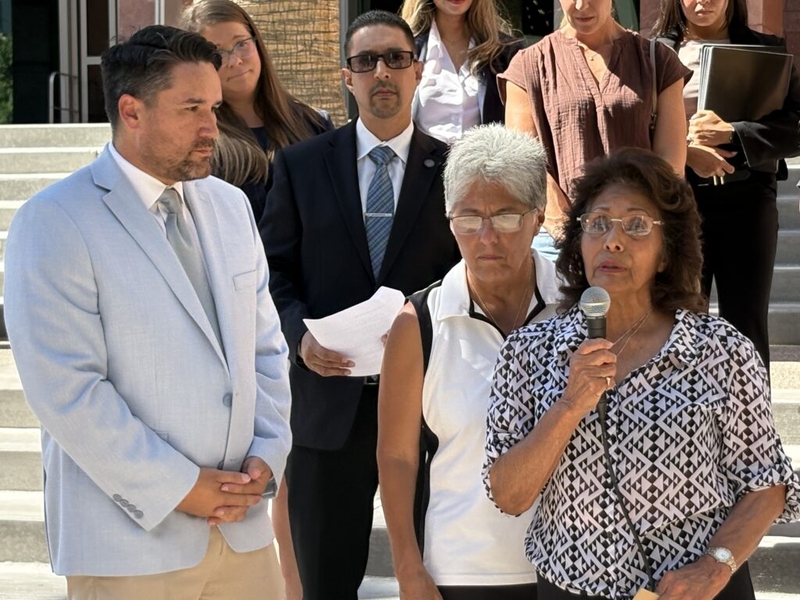
Attorney James Urrutia and the family of Malik Avila, who died with incarcerated in Nevada, announced a wrongful death lawsuit.
(Photo: Michael Lyle/ Nevada Current)
More than eight months after 24-year-old Malik Avila died in custody at High Desert State Prison his family is still left with questions around the circumstances that lead to his death.
James Urrutia, an attorney at LJU law firm, which is representing Avila’s family, filed a wrongful death lawsuit Monday seeking answers and alleging prison guards fatally beat Avila.
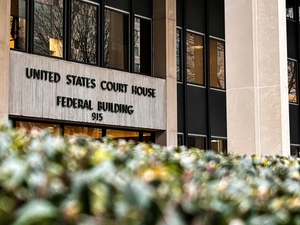
“Malik Avila’s case is extremely disturbing,” Urrutia said Monday during a press conference on the steps of the Regional Justice Center in downtown Las Vegas. “We have again a case of an underlying beating of an inmate by guards.”
The Clark County Coroner’s Office classified Avila’s death as “natural” caused from a lack of oxygen and brain damage. The road to finding answers, and justice, has been plagued by obstacles from state and local officials.
The Nevada Department of Corrections declined to respond to questions from Nevada Current, saying it does not comment on pending litigation.
NV prison system mortality report ‘sounds like a lot of unexplained deaths,’ legislator says
The litigation comes weeks after state lawmakers questioned corrections officials about the number of deaths in Nevada prisons.
At the time of its July 16 presentation to the Interim Judiciary Committee, 166 people had died since 2024 while in NDOC custody, officials said.
Two additional deaths have been reported since then, including another death Monday at High Desert State Prison, bringing this year’s death toll to 38 so far.
Of the 166 deaths corrections officials presented to state lawmakers in July, 98 were classified as natural – just like Avila.
State Sen. Melanie Scheible, who chairs the committee, said at the time the 166 figure “sounds like a lot of unexplained deaths to me.”
When an incarcerated person dies in custody, it should be considered a “red flag,” Urrutia said.
“There are so few inmates who have life sentences,” he said. “One of the challenges is that a prison controls the evidence. They are the ones telling the story to a coroner. And yes, the body tells a story. But it needs context. If the only context you’re getting is from the prison, they are not getting the proper context. It’s a huge problem.”
In an interview, Urrutia said the Nevada Attorney General’s Office should consider pursuing an independent investigation into all those who died in custody and review the manner and cause of death determined by a county’s coroner’s office.
Alcinia Whiters, a spokesperson for the AG’s office, said the Nevada Office of the Inspector General is tasked with handling “investigations into suspicious deaths” at state prisons.
“Our office may become involved when a case is referred to us, including when an inmate’s death involves an alleged use of force by a correctional officer,” Whiters said in a statement.
When asked under what circumstance would Attorney General Aaron Ford consider a broader holistic review of inmate deaths, the office said “prosecutorial decisions are made on a case-by-case basis.”
“We also regularly review and discuss broader issues that may affect inmate safety and deaths within Nevada’s correctional system,” Whiters wrote in an email. “Our focus is ensuring accountability where the evidence supports it while remaining attentive to systemic issues that may emerge through the cases we handle.”
The Current also asked Gov. Joe Lombardo’s office under what circumstances should the state review in-custody deaths.
“To strengthen safety and support the Department’s mission of maintaining secure, humane facilities while preparing offenders for successful reentry, NDOC is evaluating additional measures to curb the flow of illegal substances while increasing surveillance, adjusting staff operations, and reviewing standard procedures regarding classification of offenders and housing practices,” Drew Galang, a spokesperson for the for the governor, said in a statement.
‘I will never understand’
Avila’s family joined Urrutia at the press conference Monday ahead of the lawsuit being filed.
“I miss him so much,” Lucy Avila, Malik’s grandmother, said as she fought back tears. “Every single day I think of him. He had a beautiful smile.”
In 2019, a then-17-year-old Avila was convicted of second degree murder and began serving a 10-year sentence.
“There are so few inmates who have life sentences. One of the challenges is that a prison controls the evidence. They are the ones telling the story to a coroner. And yes, the body tells a story. But it needs context. If the only context you’re getting is from the prison, they are not getting the proper context. It’s a huge problem.”
Lucy Avila described her only grandson’s efforts to better himself in prison by taking classes and working as a porter serving meals to other inmates. The family mourns the person he could have become if he hadn’t died.
“For over a week, Malik had been requesting medical assistance,” the lawsuit reads. “Prison guards mocked him. Malik’s mom started calling the prison to seek assistance. Prison guards mocked Malik even more.”
A summary of the investigation included in the autopsy report says that a Correctional Emergency Response Team was dispatched to Avila’s cell at 4 a.m. Nov. 4 after a family member called the prison to inform staff he was having a seizure.The investigation alleges that Avila had access to an unauthorized cellphone.
The report alleges Avila became “combative” and the CERT unit went “hands-on” and “took him down.”
Urrutia said the firm obtained a voice recording from a whistleblower within the prison system who captured the incident.
“We know what his last words were,” Urrutia said. “‘Please stop. Please stop.'”
The autopsy report says Avila refused medical treatment and only began to have a seizure needing medical assistance nearly three hours later. The lawsuit alleges he was rushed to the infirmary immediately after the CERT unit entered his cell.
“By 7:53 am, still in the infirmary, Malik began convulsing unconsciously; his brain damaged,” according to the lawsuit.
A prison nurse called 911 seeking for Avila to be transported to the hospital after he began convulsing. During the call, the nurse described Avila as a “stupid young idiot.”
Though he arrived at Mountain View Hospital on Nov. 4, Avila’s family didn’t know where he was at the time, according to the lawsuit.
“The family shouldn’t have to be searching all over the state of Nevada for where their son is.” Urrutia said. “And while they are searching, they don’t even know his status. They don’t even know why he is missing.”
Corrections officials “never told his next of kin that he’s on life support,” Urrutia said during the press conference. “It takes eight days for the family to finally find where Malik is laying unconscious on life support. How that is OK I will never understand.”
The lawsuit also alleges that the prison lied multiple times, telling the family officials “suspect he ingested a substance” and that “he wasn’t involved in any altercation.”
“How can we expect our medical staff to provide proper care when they are being told lies from the prison?” Urrutia asked. “It causes confusion with medical treatment. It causes confusion for the family?”
Avila died Nov. 22 according to the autopsy report. Urrutia questioned the determination as a “natural” death.
“If people have head trauma, they are not dying naturally,” Urrutia said in an interview, adding the family has waited eight months to receive a final autopsy report. “Families should not have to wait eight months to find out why their son died.”
Clark County didn’t respond to requests for comment.
In conversations with the coroner’s office, “they just keep saying they are still investigating and that they sent Malik’s brain to a neuropathologist … and they are waiting to get that result back,” Urrutia said. “My understanding is they have gotten the results back but still aren’t letting us have access to the brain yet so we can do our own analysis.”
Following the 10 a.m. press conference, the Current emailed Clark County to confirm it hadn’t released the autopsy report to the family and explain the timeframe for releasing reports.
Urrutia said the family was sent the final autopsy report that night.
‘Justice has to be done’
In addition to a lawsuit on behalf of Avila’s family, Urruita also filed a separate lawsuit July 30 in the deaths of three other inmates in 2024.
“It hurts my heart that we keep having to show up and talk about this,” Urrutia said. “We hope at some point our government officials will put more work into solving this problem.”
A deadly fight took place at Ely State Prison in 2024 and three people who were incarcerated died.
“The prison officials working that day watched as multiple men bled out and took no action to save their lives,” Urrutia said at the press conference. “It doesn’t make sense for a group of prison guards to watch men or women bleed to death.”
Monday isn’t the first time Urruita stood on the steps of the Regional Justice Center surrounded by grieving families searching for answers after loved ones died under unexplained circumstances while in NDOC custody.
The attorney also represented the family Christian Walker, another inmate who died in 2023.
At the time the lawsuit was filed – April 2024 – Urruita said corrections staff “beat him and left him to die in a cell all by himself.”
Walker’s family was awarded a $4.6 million settlement in October 2025 for his wrongful death.
His death – like Avila’s – was also determined to be natural, Alyssa Piraino, an attorney at LJU Law Firm, said.
In the Walker’s case, the Nevada Office of the Inspector General recommended criminal charges.
“Up at the next level, at the attorney general’s office, the criminal prosecution division chose not to press charges,” Urrutia said.
The Attorney General’s Office, which was defending NDOC in the wrongful death lawsuit, argued last summer there wasn’t enough evidence to bring criminal charges.
The LJU attorneys said that three independent medical experts disagreed with that determination. But “the coroner’s office filed a motion for summary judgement,” said Piraino, ending the case.
All these incidents together should show a need for reform to Nevada corrections institutions, the attorneys said.
“We need the camera system regularly inspected, unannounced,” Urrutia said. “The prison should not be the only one responsible for saving the footage. We need somebody independent to be monitoring the cameras and the footage.”
In the meantime, the families still wait for answers.
“We are just looking for justice,” Lucy Avila said. “Justice has to be done for the inmates who have lost their lives.”
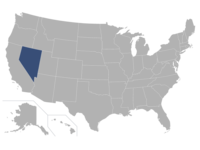
Las Vegas, NV