Report: Kansas fails to meet housing, mental health needs of vulnerable children in foster care
Sep 22, 2026 | 3:59 pm ET
Description
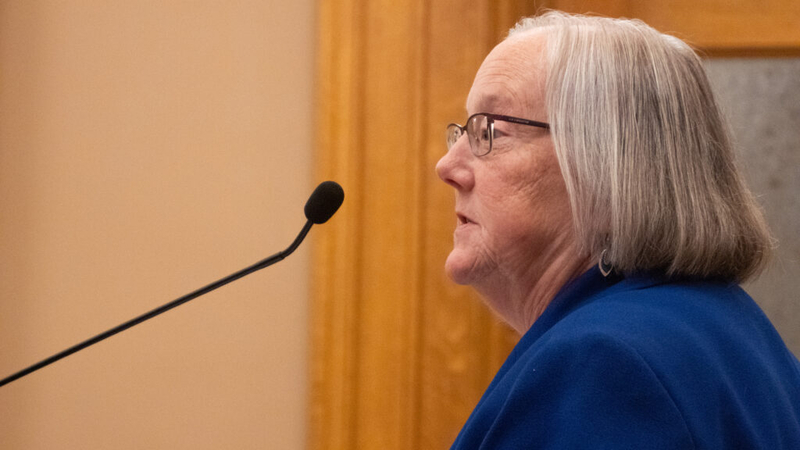
Laura Howard, secretary of the Kansas Department for Children and Families, says the state in 2025 improved services to more than 5,000 children in foster care. She says meaningful change takes time because no easy fixes exist for challenges in the system. In this image from June 10, 2025, Howard addresses a Kansas Senate committee regarding DCF's work with foster care contractors. (Photo by Anna Kaminski/Kansas Reflector)
TOPEKA — Annual assessment of Kansas foster care reform required by settlement of a class-action lawsuit indicates the state improved health screening and crisis intervention for vulnerable children, but it fell short in advancement of home placement stability.
The Center for the Study of Social Policy released on Tuesday the fifth compliance report about work by the Kansas Department for Children and Families and its private contractors responsible for more than 5,000 children taken into foster care. The yearly assessment by the third-party organization was an outgrowth of the agreement laying out expectations of structural change on behalf of children “who are now, or in the future will be, in the protective custody of DCF.”
The Center for the Study of Social Policy, a nonprofit organization in Washington, D.C., said in the report covering the 2025 calendar year that DCF and its contractors did better in terms of providing screening and intervention services for children removed from their home.
However, the report says hundreds of vulnerable children had their lives further disrupted when compelled to spend the night in contractor offices or unlicensed centers — especially in the Wichita region — rather than at a licensed foster home.
Many children drawn into the state’s foster care system didn’t receive mental health services they needed in 2025 due to residential instability, the report says.
“The state isn’t just failing to hit some number,” said Nicki Rose, legal director at Kansas Appleseed. “It is failing to ensure that children are provided safe, stable places to live and the medical and mental healthcare they need while in the state’s care.”
Rose said the report illustrated the Kansas foster care system struggled to consistently provide children homes more supportive than the ones viewed as unacceptable by DCF.
The binding agreement stemmed from McIntyre v. Howard, the class-action suit filed on behalf of minor children against DCF, the Kansas Department of Health and Environment, the Kansas Department of Aging and Disability Services, and then-Gov. Jeff Colyer. The legal team associated with plaintiffs in the November 2018 suit included Kansas Appleseed, the National Center for Youth Law and Children’s Rights.
In a statement, DCF Secretary Laura Howard said the latest report concluded the state performed well in certain areas and required improvement in other spaces.
Kansas has been legally obligated by the settlement to seek better results for foster children in 10 broad areas. Four of those targets have been met based on the updated report, Howard said. The state should seek an exit of court oversight, the secretary said, in terms of placement stability, mental health screening, crisis intervention and licensing capacity of placement homes.
“I’m proud of the progress we’ve made and the stronger foundation we’ve built,” Howard said. “At the same time, we recognize that our work is not complete. We’re committed to building on this progress and following through on the commitments we still have ahead of us – with the same focus and determination.”
In the new report, the Center for the Study of Social Policy said more than 300 children experienced more than six placement moves within the Kansas foster care system during the 12-month period. This resulted in children being transported long distances from home and complicated their access to mental health providers, the report said.
Overall during the year, 136 children experienced 870 nights in which they weren’t properly placed by DCF.
“We are alarmed by the drastic increase in youth who DCF failed to provide with a safe, licensed and stable placement, particularly in the Wichita area,” said Jean Strout, senior attorney with National Center for Youth Law. “The state must step up its oversight and support in the Wichita area and ensure that every one of these young people receives the stability and support they need to thrive.”
Howard said 94% of failure-to-place incidents occurred in Sedgwick County during 2025. She said DCF was striving to build greater access to child behavioral interventionists in Wichita and to link those professionals with DCF child protection specialists serving foster children in psychiatric residential treatment facilities.
The idea is to better collaborate with families who may not feel they could care for their child following discharge from a treatment unit, she said.
The report says case management providers continued to overload staff due to high employee turnover and challenges in hiring qualified caseworkers. For example, the report said, two-thirds of case managers at one provider exceeded the contract limit in terms of foster children assigned to them.
“When caseloads are high, caseworkers, children, parents and caregivers can all feel the impacts, with workers experiencing increased stress and having less time to spend working directly with each child and family,” the Center for the Study of Social Policy’s report said.
Black youth were overrepresented in Kansas’ foster care population. Black children accounted for 6% of the child population in Kansas, the report said, but 15% of youth in DCF custody. Placement relocations for Black foster youth were 24% higher than the rate for white children, the report found.
The report says the state’s foster care network conducted timely initial mental health and trauma screening for 96% of children and expanded crisis intervention services. The state administered appropriate mental health services to 63% of children, the report said, but that fell below the settlement goal of 90%.
The cycle of residential placement moves made it likely children would experience unmet behavioral and mental health needs, the report said. Of the 37% of foster children who didn’t gain access to proper mental health services, the report said, one-third missed out due to placement instability.
Leecia Welch, chief legal counsel at Children’s Rights, said the 2025 report offered evidence of progress but likewise revealed DCF hadn’t addressed significant shortcomings.
“Defendants are failing to provide some children with even a safe place to sleep for the night, much less the stable, supportive homes they deserve,” Welch said. “In their own words, children describe ‘being treated like cattle.’ It’s past time that defendants hear them, address the egregious lack of appropriate placements and treat them with the respect and dignity they have for so long been denied.”

Topeka, KS