U.S. Supreme Court rules surrogate does not have custody of baby she birthed in Dallas
Sep 22, 2026 | 7:18 pm ET
Description
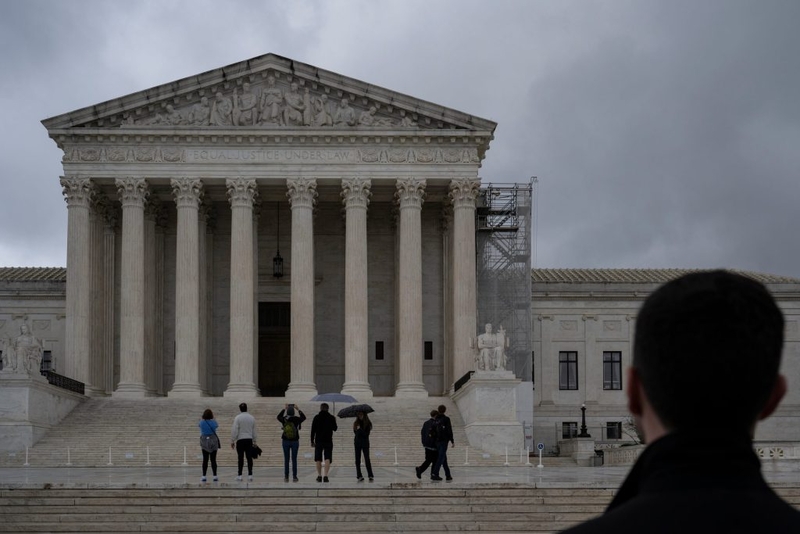
The U.S. Supreme Court on May 18, 2024 in Washington, D.C. (Eli Hartman/The Texas Tribune)
A California couple will maintain custody over the biological child they had through a surrogate in Texas after U.S. Supreme Court Justice Elena Kagan on Tuesday rejected a request to intervene in the high-profile case.
Kagan’s order did not explain why she rejected surrogate McKenna West’s request. The Alaskan nurse had sought conservatorship over the child, which would have given her a say in the child’s medical treatment, and wanted Kagan to block a lower-court ruling in the couple’s favor. Kagan oversees emergency court requests from California, where the couple’s custody battle with West originated.
Nausheen Gilkar and Omar Ahmed had hired West after the couple struggled to have a child. In April, the fetus West was carrying was diagnosed with hypoplastic left heart syndrome, a life-threatening condition where the left side of the heart is severely underdeveloped and that requires several surgeries.
Upon receiving the diagnosis, the couple asked West to terminate the pregnancy. West refused and instead moved to Texas, where abortion is banned, and requested a state district judge to grant her custody, saying she couldn’t trust the parents to provide medical care for the child she named Gabriel.
She gave birth to a boy whom the couple named Rumi on Aug. 12 in Dallas. In subsequent court hearings in Dallas, Gilkar and Ahmed confirmed they had considered abortion and said the dispute took a dramatic turn after West refused to come to California to meet with medical teams to discuss the child’s future care.
Matching court decisions in California, Texas courts also ruled against West’s request to obtain custody over the child.
“We are truly grateful that Rumi can continue receiving the treatment he needs to survive, and that he will not be stripped away from what has been described by doctors as the excellent care of his parents,” said Adam Wolf, an attorney for Gilkar and Ahmed, in a statement Tuesday. “Ms. West’s legal filings across three jurisdictions, state courts of appeals, and now the U.S. Supreme Court have sought to undermine Rumi’s parents’ right to provide him with the care he needs. Those efforts have been rejected by every single court.”
According to a brief filed by Rumi’s court-appointed attorney, the baby’s doctor at Children’s Hospital in Dallas testified that Gilkar and Ahmed have agreed to recommended treatment for their child. The doctor recommended that Texas courts allow Gilkar and Ahmed to bring Rumi back to Los Angeles, where they live, for care, according to court filings. The Texas Supreme Court has also declined to bar the biological parents from taking Rumi back to California.
While West is disappointed with Kagan’s decision not to intervene, she’s pleased that her legal fight has resulted in the biological parents acknowledging publicly their intentions to commit to lifesaving care, West’s attorney Lincoln Davis Wilson said
“That’s what McKenna has been fighting for from day One,” Wilson said.
But Wilson took issue with the parents claiming they are the only ones working to keep Rumi alive and healthy.
“Nothing could be further from the truth,” Wilson said. “After his birth, they remain under a court order to continue providing that care. Every life-saving decision has been made for them, not by them.”
Austin, TX