New Jersey is staring into a healthcare fiscal abyss
May 20, 2026 | 6:31 am ET
Description
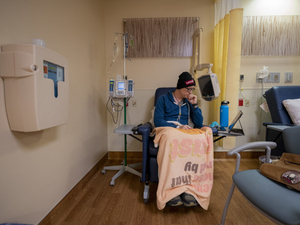
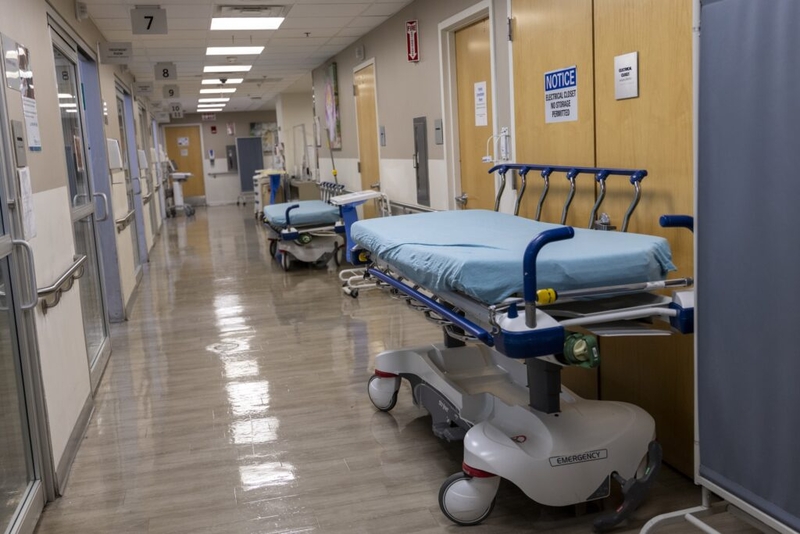
The federal One Big Beautiful Bill Act represents a deliberate dismantling of the financial infrastructure that keeps hospitals open, clinics staffed, and care accessible. (Photo by Anne-Marie Caruso/New Jersey Monitor)
By Cathy Bennett, president and CEO of the New Jersey Hospital Association
We’ve all seen the headlines about the One Big Beautiful Bill Act and its dire impact on healthcare. But the story being told about these federal healthcare cuts is too small. It is being told as a story about insurance — premiums, subsidies, and enrollment numbers. But what is happening to New Jersey’s healthcare system is more fundamental: a deliberate dismantling of the financial infrastructure that keeps hospitals open, clinics staffed, and care accessible. The math is catastrophic, and it is arriving in waves.
The first wave has already hit. When Congress allowed the enhanced ACA premium tax credits to expire on Dec. 31, 2025, New Jersey lost more than half a billion dollars in federal support for marketplace coverage. Nearly half of Get Covered New Jersey enrollees — working-class families, young people leaving their parents’ coverage, older adults not yet eligible for Medicare — had been paying $10 or less per month for their insurance premiums. Today, only 10% do. Those affordable premiums aren’t a handout – they’re a smart investment in keeping people healthy that saves on healthcare costs in the long term. Instead, New Jerseyans struggling to keep their coverage saw their premiums rise an estimated 174% on average. Nationally, Urban Institute economists estimate 4.8 million additional Americans will be uninsured by year’s end. New Jersey’s state subsidy program — roughly $215 million annually — has cushioned the blow, but it is a fraction of what was lost.
The second wave is larger and more structural. The One Big Beautiful Bill Act, signed into law on July 4, 2025, will cut approximately $3.6 billion in annual federal Medicaid funding from New Jersey alone — not a one-time reduction, but $3.6 billion every year. Roughly 350,000 New Jerseyans will lose Medicaid coverage outright. More will lose or fail to obtain NJ FamilyCare coverage because of new documentation requirements, work reporting mandates, shorter certification periods, and cost-sharing rules — a churning system of disruptions that serves no medical purpose.
Hospitals will bear the consequences. The federal government is cutting approximately $300 million in direct hospital funding from New Jersey and phasing down the provider tax financing mechanism that supports Medicaid reimbursements. In addition, starting in October 2026, the federal match for emergency Medicaid services provided to expansion-eligible immigrants will drop from 90% to the state’s standard 50% rate, further magnifying the instability created by uncompensated and under‑compensated care.
The arithmetic is cruel: As more people lose insurance, hospitals absorb more uncompensated care. As Medicaid reimbursements shrink, the cost of serving those who remain becomes harder to sustain. As provider capacity erodes, even insured patients find their coverage buys access to an increasingly strained system. It’s not a giant leap to the next, tragic impacts — healthcare service lines curtailed, at-risk facilities closed, access to care lost. The individual coverage problem and the institutional funding problem are not parallel crises — they are the same crisis, compounding in real time.
New Jersey has done more than most states to protect its residents. But state government cannot indefinitely substitute for the wholesale withdrawal of federal investment. We are not fine-tuning a program. We are watching the structural removal of the financial architecture that makes healthcare delivery viable in this state.
Legislators — federal and state — must reckon with this honestly. Restoring the enhanced ACA premium tax credits is the fastest way to stop the bleeding on the coverage side. Defending Medicaid financing mechanisms, including provider taxes and Disproportionate Share Hospital payments, is not a technical budget matter — it is a question of whether community hospitals remain open. And the state must be transparent about the timeline: These cuts are staggered through 2026, 2027, and beyond, each threshold worsening both the fiscal position of the system and the health of our communities.
The people who will be hurt are our neighbors, our co-workers, our own family members. They are the 350,000 who will lose Medicaid. They are the middle-income New Jerseyan who cannot afford premiums that doubled. They are the patient who drives past a closed emergency room.
This is the fiscal abyss. We are already at the edge. The question is whether those with the power to act will do so before we go over.
Cathy Bennett is president and CEO of the New Jersey Hospital Association, a trade association serving 400 hospitals, health systems, and post-acute care providers across New Jersey.
Trenton, NJ