NDGOP governor candidates show subtle differences in last debate before June 11 primary
Jun 07, 2024 | 10:44 pm ET
Description
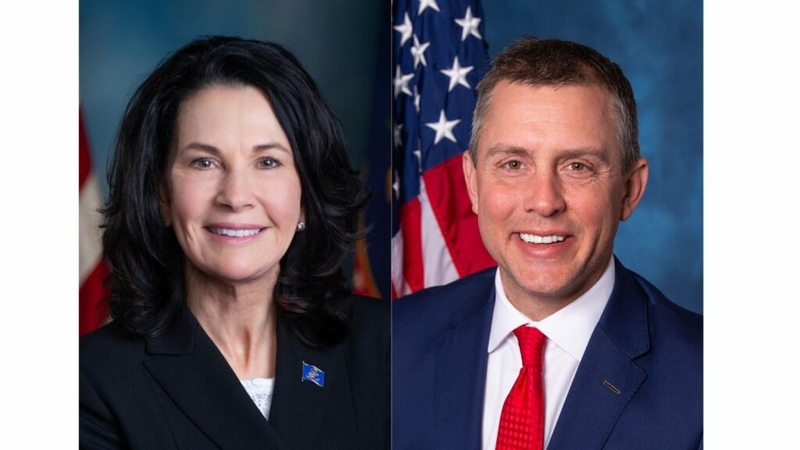
Republican governor candidates Tammy Miller and Kelly Armstrong. (Photos provided)
Republican candidates for North Dakota governor said it was unacceptable for the Fargo school superintendent to not enforce a law that affects transgender students, but the candidates differed in how they’d respond.
U.S. Rep. Kelly Armstrong and Lt. Gov. Tammy Miller were asked during the final debate ahead of Tuesday’s primary about Fargo Superintendent Rupak Gandhi’s decision to not enforce a law approved by legislators in 2023.
The law, House Bill 1522, prevents transgender K-12 students from using restrooms that align with their gender identity. It also prevents schools from withholding information about a student’s “transgender status” from parents and has provisions related to preferred pronouns.
More election news
For more coverage of the June 11 primary, visit our North Dakota Election 2024 page.
Gandhi told the Fargo School Board the state law may be in violation of federal law and said the district planned to prioritize what’s best for students, The Forum of Fargo-Moorhead reported last year.
Miller said, if she were elected governor, her office would “definitely get involved,” but was unsure on what her specific corrective action would be.
“A superintendent should not be allowed to make that decision,” she said during the debate hosted by WZFG The Flag. “This is a law that we have on the books and we have it on the books to protect our children and families.”
Armstrong said the best way to deal with a rogue superintendent is to call the Legislature and take away money from the district.
“You don’t only get to follow the laws you like,” Armstrong said. “If a law is passed by the Legislature, it absolutely has to be followed.”
Miller said taking away funding from an entire school district would punish students and she didn’t believe that was a viable option.
“I think there needs to be an approach for consequence with that superintendent and with the school board, not necessarily impacting the students,” Miller said.

Armstrong said laws need consequences.
“Writing something into code that makes you feel better without any enforcement mechanism is actually bad policymaking,” Armstrong said.”
The candidates also differed on grading North Dakota’s COVID-19 response.
Miller said she began working in state government on April 1, 2020 and, within her first week, she was embedded with National Guard units and working on the COVID-19 mission.
She rated North Dakota’s response to the pandemic evenly and said the state’s response wasn’t as strict, or too loose, compared to other states in the region.
“It was a 100-year pandemic and no one gave us a playbook,” Miller said. “Our business closures, our school closures, were some of the shortest in the country.”
Armstrong said everyone in government deserved some leeway during the pandemic’s early months due to its novel nature, but the public lost trust in its leaders as the months dragged on.
“I do think that when you are a small town business owner and you are not allowed to have your business open, but you are allowed to go to Walmart, or Target … we really created an animosity,” Armstrong said. “Civil liberties only matter when they matter.”
The candidates also debated how to address mental health challenges across the state at a time when it’s difficult to find licensed professionals to take those counseling positions.
Armstrong said providers should expand tele-health offerings.
“We have to deliver these services with the services we have, not the services we wish we had,” Armstrong said. “There are not enough people going to college right now to fill the open mental health, addiction counseling, school counseling positions that exist in the entire country.”
He added a public-private partnership student loan buydown program with a three-year commitment to a rural community would incentivize the workforce.
Armstrong, Miller debate shows difference of personality but not policy
Miller said the state needs to address licensure requirements for mental health professionals. She added she knows several people in the mental health field who are working under supervision even though they have more than 20 years of experience.
“Why are they qualified to practice in Nebraska for 20 years and they can’t practice in the state of North Dakota?” Miller said.
She said she’d like to see universal licensure across an array of career fields to make it easier for professionals to relocate.
In his closing statement, Armstrong highlighted how proud he was to be North Dakotan.
“This place is really special and we need to make sure we can continue to grow, continue to give those opportunities,” he said. “But we have to make sure we do it our way. Because our way is pretty damn good.”
Miller said she’s traveled to more than 50 communities during the campaign and learned a lot from school teachers, business leaders and curious individuals at every stop.
“We’ve listened, we’ve learned and we’ll take that learning to the governor’s office,” Miller said. “Now is the time for voters to decide.”
Bismarck, ND