Nashville promises massive return on Super Bowl spending
May 28, 2026 | 6:01 am ET

Description
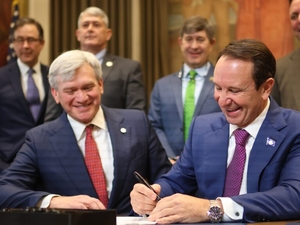
Nashville's tourism industry is expecting an enormous financial return from the 2030 Super Bowl, which was announced at a ceremony, pictured here, on May 19. (Photo: John Partipilo/Tennessee Lookout)
Nashville is planning to pour $60 million into Super Bowl LXIV while expecting a greater return on the investment than any event the city’s ever held, according to the Nashville Convention & Visitors Corp.
Much of the title game budget is expected to be funded through the city’s tourism-related tax revenue, and the rest will come from public-private partnerships managed by the host committee chaired by former Gov. Bill Haslam and CBS broadcaster Jim Nantz. The host committee and Music City Major Events Board, chaired by Haslam, will raise money through corporate sponsorships, hospitality packages and private donations.
The Convention & Visitors Corp. could not give a final figure Wednesday on the amount of sales tax revenue set to go toward the game, saying it is too early in the process.
The committee will use a new state law allowing it to tap excess tax revenue of more than $30 million from Nashville’s tourism development zone to hold the National Football League’s title game in 2030.
Most of the $60 million is to be spent on city services, public and private safety and security, transportation, local staffing, practice facilities, decorations and marketing and stadium operations.
The Super Bowl event could generate $386 million in direct spending for the state of Tennessee and some $706 million in total economic impact, according to a 2025 study by Tourism Economics, which was commissioned by the Nashville Convention & Visitors Corp. The overall total is based on money spent by people attending the game and related activities as well as the ripple effect on the area’s supply chain, and regional income increases stemming from the event.
But some economists say the game doesn’t always provide the forecasted financial boost.
“The direct spending information could probably be verified, but some of the economic impact things they talk about are really based on hypothetical input-output models,” said Michael Edwards, a North Carolina State professor who studies the financial impact of Super Bowl games.
The city’s tourism agency said in a statement to the Lookout that it doesn’t share projections before events it has never hosted, preferring to measure financial benefits through direct visitor spending.
The weeklong affair will include private and NFL activities, and Nashville is likely to hold its own events as people converge on the city, though the new enclosed $2.1 billion stadium will hold only 60,000 fans, about 9,000 fewer than the current stadium.
“We know the city and state will see a significant return on investment, greater than any event Nashville has hosted to date,” the Convention & Visitors Corp. said in a statement. “The marketing (return on investment) is impossible to fully quantify.”
CBS broadcaster Jim Nantz, a Nashville resident who will co-chair the city’s host committee with former Gov. Bill Haslam, said at last week’s Super Bowl announcement that the combined audiences for game seven of the World Series, game seven of the NBA Finals, College Football National Championship, NCAA Final Four basketball game and Republican and Democratic national conventions don’t come close to matching Super Bowl viewership.
The game is the single, most-watched event in the nation, drawing more than 127 million viewers this year and reaching more than 195 countries and territories worldwide, which should boost the city’s international appeal, the Convention & Visitors Corp. said.
Nashville officials said they want to create a new standard for the Super Bowl by making the week’s activities leading up to the game unlike any other ever held.
The city is no stranger, though, to holding big events, including Tennessee Titans games, the Southeastern Conference basketball tournament, concerts and the 2019 NFL Draft, which drew a then-record crowd of 600,000 over three days and is said to be the impetus for landing the Super Bowl.
The draft, which was held at the end of Broadway and First Avenue, brought $133 million in direct spending and $224 million in total economic impact, according to the NFL and Nashville Convention and Visitors Corp., both draft records at the time.
More than $30 million in excess money from a tourism development zone fund is to be part of the bid package, according to Haslam, who told the Lookout the host committee will be responsible for security, executive hotel rooms, media facilities and some parking, among a long list of items.
The state also created a major events fund two years ago with $25 million to go toward events with an impact of at least $10 million.
Government contributions toward the new stadium totaled $1.26 million in revenue bonds, sales and hotel tax diversions and state contributions, with the state kicking in $500 million in bonds and the Metro Sports Authority issuing $760 million in revenue bonds, which would be paid back using sales tax revenue from inside the stadium, 50% of the state and local sales tax in an area surrounding the stadium, a 1% countywide hotel privilege tax, stadium rent in the form of a $3 charge on every NFL ticket sold, and continuation of a $3-per-ticket tax in effect at Nissan Stadium.
Stockard on the Stump: Tennessee, Nashville pour untold resources into Super Bowl LXIV
Nashville is in the midst of revamping the east bank of the Cumberland River neighborhood where the stadium is located with a massive public works project that includes new roads, street improvements, utilities and greenways. Nearby, a new Tennessee Performing Arts Center is to be constructed near the foot of the John Seigenthaler Pedestrian Bridge.
Challenging projections
The promise of a Super Bowl is often held out to cities to push them toward constructing new NFL stadiums.
Edwards raised questions about the economic impact of the 2024 Super Bowl played at Allegiant Stadium in Las Vegas, where the state provided $380 million to construct the new stadium and the economic impact of the game was placed at more than $1 billion.
Those types of projections assume that nobody would have traveled to Las Vegas to attend the game or stay in hotels without the Super Bowl, Edwards said. Even if the money is spent, the studies don’t take into account “incremental change,” instead starting at zero and totaling up spending the week of the game, he added.
Edwards also questioned whether Nashville and the state of Tennessee would be able to offset government spending to pay for Super Bowl week.
“That doesn’t mean that type of investment isn’t worth it from a city branding perspective or a feel-good factor for the community, because certainly there are some intangible benefits,” Edwards said. “But strictly on an economic perspective, there’s no evidence to suggest that these cities recoup from an economic basis directly from hosting the Super Bowl.”
Most of the spending is made in a “limited footprint” and doesn’t last, he said.
A Forbes article painted a different picture of the Las Vegas game that brought in $1 billion worth of spending, according to a report for the Las Vegas Convention and Visitors Authority.
That figure topped the city’s projected $515 million in visitor spending and the ripple effect expected to bring in a total of $799 million, including $62 million in state and local taxes.
Super Bowl visitors spent twice as much as regular visitors, an average of $2,660, according to the article, and fan turnout at the week’s events easily exceeded the number who could attend the game, according to the Forbes article.
Some 29,000 people went to the opening night activities at Allegiant Stadium, and the Super Bowl Experience with interactive exhibits attracted 200,000 fans over four days to the Mandalay Bay Convention Center. The NFL, NFL Partners and other groups put on multiple events as well.
In all, about 260,000 people converged on the city for Super Bowl week and didn’t attend the game, while 6,000 members of the media visited, according to the article.
Besides giving the city an opportunity to promote itself as more than a gambling destination, Las Vegas organizations took advantage of the event to make economic recruiting pitches to executives from across the country.
Chris Streeter, a professor of sports management at Nichols College in Massachusetts where his students study Super Bowl economics, said, “Typically, those huge, triple-digit million-dollar numbers are a little over-inflated, typically don’t always paint a clear picture of the true economic impact.”
Usually, the ultimate numbers are a fourth to half of the projections, he said, and are hard to track because they don’t account for every factor.
Nashville is a tourist destination already, Streeter said, making it hard to determine whether that amount of spending wouldn’t have been generated without the Super Bowl.
Streeter also said spending at large hotel chains goes back to the company headquarters, except for hotel taxes in Nashville’s case.
Reaping sales tax revenue to pay for the stadium brings some “economic viability,” Streeter said.
Nashville’s budget also will support programs such as NFL Source, which focuses on investing in local underrepresented businesses and making a long-term impact on communities, according to the Convention & Visitors Corp.
“The infrastructure and the building itself, while they’re investing … specifically for the Super Bowl, it will be a long-lasting facility that (the) Titans will be able to use and the fans will be able to enjoy for many years,” Streeter said.
But that depends on whether the government money going into the stadium is designed to hold a Super Bowl or for a “bigger economic picture for Nashville itself,” he said.
Adam Friedman contributed to this report
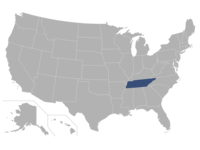
Nashville, TN