More SC homeowners can get state aid to protect roofs from hurricane damage
Jun 11, 2025 | 11:00 am ET
Description
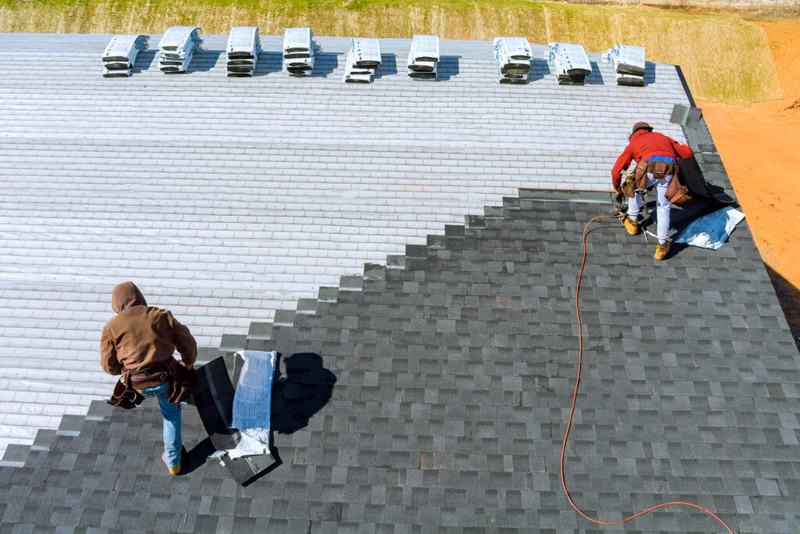
Aerial view in worker hands installing bitumen roof shingles with air hammer and nail. (File photo by Getty Images)
COLUMBIA — The state is pumping millions into a program that allows coastal South Carolinians to strengthen their roofs against hurricanes and other high wind events.
The SC Safe Home grant program aims to protect homes against natural disasters, in turn lowering their insurance costs. The state Department of Insurance normally awards about $3.5 million annually to homeowners, spokesperson Diane Cooper told the SC Daily Gazette.
But the Legislature provided a big boost in the budget that takes effect July 1: An additional $5.5 million will more than double the grants to $8.9 million in the upcoming fiscal year.
The boost comes as federal forecasters predict above-normal activity this hurricane season, which started June 1 and extends through Nov. 30.
“One of the major complaints I hear from my constituents is the rise in insurance premiums for wind and hail, or hurricane floods,” Sen. Tom Davis told the Gazette. “I’m always looking for ways that we can try to control the site and insurance premiums.”
The Beaufort Republican is one of the program’s original backers, pushing for its creation during his tenure as Gov. Mark Sanford’s chief of staff. Since its 2007 inception, the Safe Homes program has doled out more than 8,000 state-funded grants worth a total of $40.7 million to homeowners looking to reinforce their homes.
Homeowners can get SC grants to strengthen roofs, windows against hurricane damage
This fiscal year, 598 grants worth up to $7,500 were awarded.
The vast majority of homeowners use the money to retrofit their roof. Homeowners can also get up to $3,000 to install hurricane shutters. In all, they report saving 24% on their insurance premiums, according to the state Department of Insurance’s 2024 annual report.
With the Legislature providing more money for the program, more houses can be retrofitted.
Of the additional $5.5 million, only $2.5 million is recurring, meaning it will continue in future budgets indefinitely. That’s enough for roughly 250 grants annually.
The $3 million in one-time aid will boost the total additional grants to an estimated 650 in 2025-26, Cooper said.
The actual number of grants may be higher, depending on whether the agency needs to hire people — and if so, how many — to handle the additional workload, she said.
Regardless of the exact number of grants, it should be enough to prove the program lowers costs, Davis said.
He hopes legislators then turn the full $5.5 million into a recurring item in the budget.

“If our assumptions are correct and that retrofitting leads to a decrease in people’s premiums, that one-time money could be made recurring,” said Davis, chairman of the Senate Finance subcommittee for natural resources and economic development.
According to the National Institute of Building Sciences, the nation saves $6 in future “disaster costs” for every $1 spent on mitigation.
The program, started in the aftermath of Hurricane Katrina, awards grants based on the homeowner’s income.
Following Katrina and other hurricanes that hit the Gulf in Texas, insurers started refusing to cover hurricane-related wind and hail damage along the coast.
The 2007 Coastal Property Insurance Reform Act was legislators’ response.
Since 2012, the number of companies writing property insurance policies has increased by more than 100, according to the Department of Insurance’s annual report.
In addition to the roof retrofits, the state also provides income tax credits to homeowners who fortify their property, worth a combined $2,500.
Since the grants don’t cover the entire retrofitting costs, the tax credits further help make the projects affordable, Davis said.
The director of the insurance agency credits Davis for the budget boost.
He’s “been a tireless advocate for strengthening coastal resilience and protecting South Carolina families,” Michael Wise, the agency’s director, said in a news release. “His leadership was critical in making this additional funding a reality, and we are grateful for his commitment to mitigation and public safety.”
Columbia