Braun eyes property tax breaks for seniors, assessment changes
May 27, 2026 | 11:53 am ET
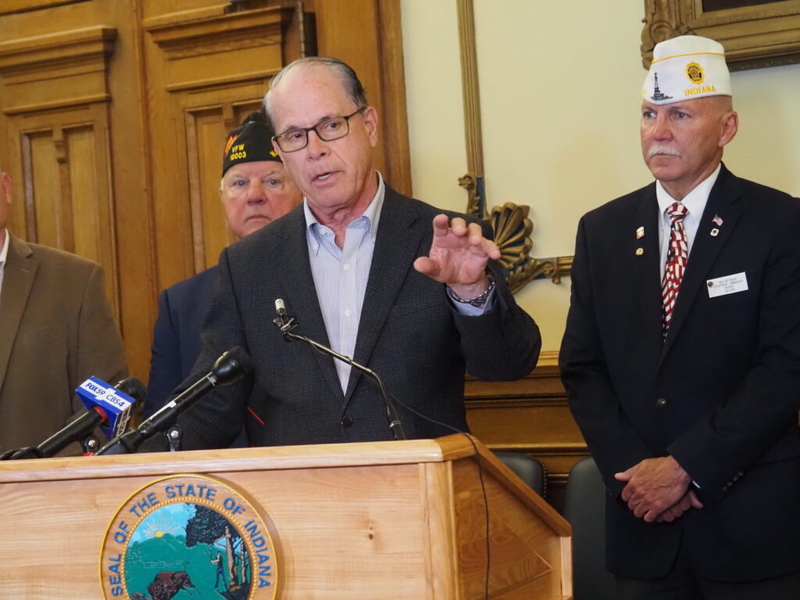
Description
Indiana Gov. Mike Braun speaks at a property tax news conference at the Statehouse on Wednesday, May 27, 2026. (Photo by Leslie Bonilla Muñiz/Indiana Capital Chronicle)
Indiana Gov. Mike Braun plans to push lawmakers on property tax relief in the next legislative session, particularly for older adults who’ve paid off their mortgages.
“Once you get to 65, maybe you ought to have some relief from your own government to not have property taxes after that,” he told reporters at a Wednesday news conference. “So I’ll be looking for enterprising legislators to see if they’re hearing that, too.”
“The other thing I hear is, you know, once you’ve paid your mortgage off, why should you then have a fixed cost?” he continued. “And generally, that’s going to be later in life. … With a 25, 30-year mortgage, you’ll be approaching retirement.”
Braun maintained that he doesn’t want to “ever starve” local units of government, but said government expenses shouldn’t rise beyond what taxpayers can afford.
Property taxes go to counties, cities and other units of local government, not the state.
Under last year’s Senate Enrolled Act 1, they’re expected to take $386 million less this year than they would’ve without the changes — and about $394 million less in 2027 — according to a fiscal impact analysis by the nonpartisan Legislative Services Agency.
Most governments will still receive new dollars, however.
Braun said he’s also heard “a lot of complaints” about Indiana’s property tax assessment process.
Indiana moved to a market-based assessment system in 2002 after a series of Indiana Supreme Court decisions.
He encouraged Hoosiers to file appeals with their county assessors but hinted at action.
“We need to figure out if, in fact, the assessment process gives an opaque way for somebody to have a hike in a property tax bill,” Braun said.
Lawmakers plan to review the state’s property tax assessment system ahead of the next legislative session.
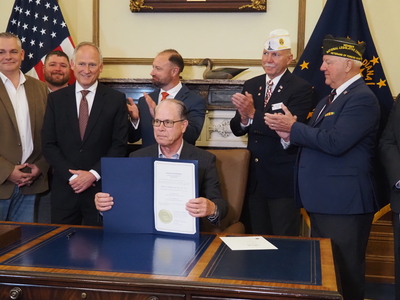
He spoke during a ceremonial signing of this year’s Department of Local Government Finance law, House Enrolled Act 1210.
The new law increases the property tax deduction for totally disabled veterans from $14,000 to 100% of assessed value and removes a $240,000 assessed value cap, meaning those Hoosiers will pay no property taxes on their primary residences, regardless of value.
“The fact that veterans don’t have to rent their property from the government anymore — 100%, totally disabled veterans — I think, is a big deal, and that’s why we’re here to celebrate,” said Jacob Adams, the director of the Indiana Department of Veterans Affairs.
The latest language on veteran relief rewrites changes from Senate Enrolled Act 1 after veterans groups argued the changes actually meant less help.

Indianapolis, IN