Mike Reese starts as McNeese president, will remain state senator for now
Jul 02, 2026 | 2:45 pm ET
Description
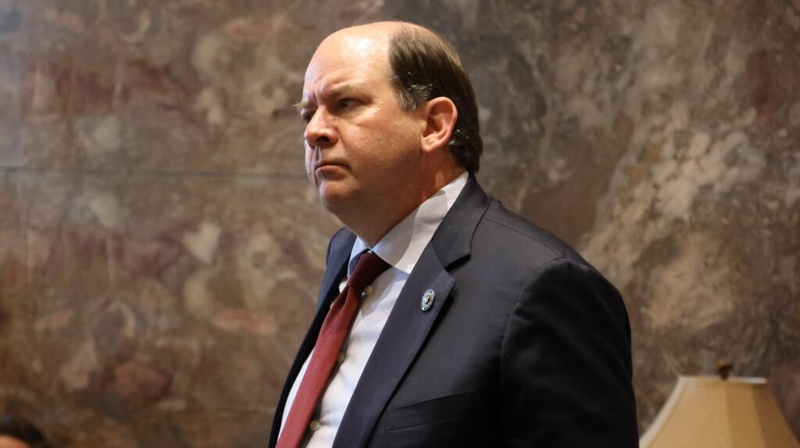
Sen. Mike Reese listens to debate on the floor of the Louisiana Senate on May 27, 2025. (Wes Muller/Louisiana Illuminator)
McNeese State University’s new president is being paid a $300,000 annual salary and will keep his side gig — as a state senator— for the time being.
Unlike other Louisiana politicians who have landed jobs leading colleges and universities, state Sen. Mike Reese, R-Leesville, will remain in the legislature at the same time he holds the top job at McNeese.
According to his contract, Reese will receive the same compensation as his predecessor, Wade Rousse, who left the job to become the LSU System president. Reese is also paid $16,800 a year as a lawmaker. Reese has no previous professional experience in higher education.
Reese’s contract also includes a $1,000-per-month car allowance and a $3,000 monthly housing stipend until McNeese’s presidential residence is available, at which point Reese will be required to live on campus. Damage to the president’s house from hurricanes Laura and Delta in 2020 is still being repaired.
Rousse opted to live in McNeese student housing while serving as its president.
In an interview, Reese said he did not know when he would leave his Senate seat and would not commit to doing so before the next regular session in April. Senate President Cameron Henry, R-Metairie, said he asked Reese to stay in his elected office so he can chair a study committee that’s looking into the higher education funding formula.
That committee must hold its first meeting by Sept. 1 and submit its report to the Board of Regents and the four higher education systems by Feb. 26.
Reese’s new boss, University of Louisiana System President Rick Gallot, said he told Reese he would have to take leave from McNeese to handle his legislative duties.
Despite state laws that generally prohibit individuals from being employed or holding office in two separate branches of government, Gallot said he believes Reese’s dual-employment is legal, based on his conversations with counsel, existing attorney general’s opinions and state law.
“We’ve done what I would consider our due diligence … and we do believe that it is not prohibited for him to continue to serve in the Senate as well as as president,” said Gallot, himself a former state senator.
Though some lawmakers have held legislative seats and worked in higher education, which falls under the executive branch, the jobs they hold tend to be lower on the totem pole and are filled without direct involvement of the politically appointed state boards that oversee universities.
For example, state Rep. Barbara Carpenter, D-Baton Rouge, is currently the dean of international education at Southern University.
Other elected officials who have been hired as campus leaders, such as former Sen. Joe Bouie, now Southern University New Orleans chancellor, resigned shortly after being appointed.
Gallot said he believes it will be beneficial to the UL System to have one of its campus presidents leading the funding formula task force.
Higher education funding has been under scrutiny in Louisiana. Funding formula benchmarks related to minority student completion are the subject of an investigation from the U.S. Department of Education. Some legislators have also said the funding formula state colleges and universities unfairly puts some institutions at a disadvantage.

Baton Rouge, LA