Maryland’s energy affordability crisis is a crisis of leadership
Oct 08, 2026 | 8:54 pm ET
Description
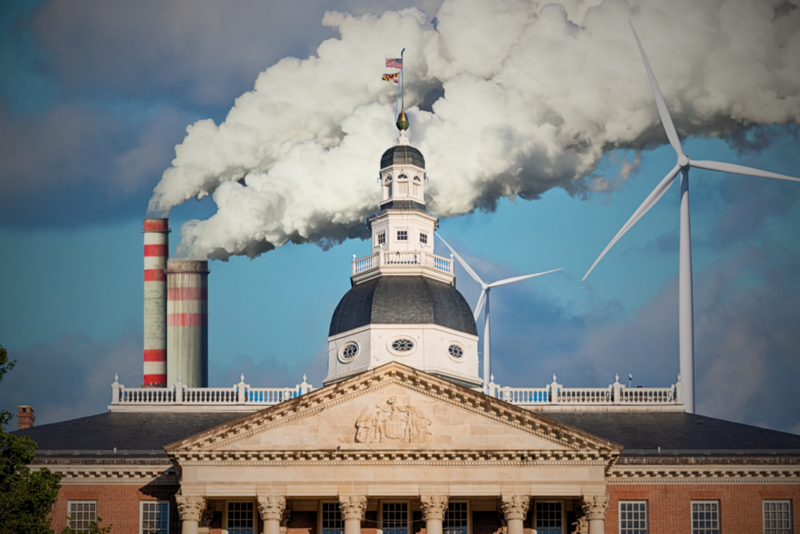
If they want to rein in utility rates, writes Randy Altschuler, Maryland leaders should focus on increasing power generation in the state, and insist that funds intended for energy programs be spent on energy programs. (Photo illustration by Danielle E. Gaines/Stock.adobe.com images from esbobeldijk, martin33, and vasanth)
A recent Maryland Matters article on rising utility rates included an important acknowledgment from Annapolis: Despite passage of the Utility RELIEF Act earlier this year, lawmakers know their “work is still not done.”
Maryland cannot control every force pushing energy prices higher: global conflicts, regional energy markets, growing demand, transmission costs and other factors all play a role. That makes it even more important for state leaders to address the costs and policies they can control. Unfortunately, they are making matters worse and as a result Marylanders now pay the third-highest residential electricity prices in the nation.
Maryland needs more affordable, reliable electricity generation. For years, state leaders have increased renewable-energy requirements without creating the business or regulatory environment that would enable Maryland suppliers to meet those needs. As a result, residential electricity prices increased nearly 40% between January 2023 and June 2026, one of the largest increases nationally and the highest among our neighboring states.
One of the clearest warning signs that Maryland’s existing policy is out of balance can be found in a little-known state fund called the Strategic Energy Investment Fund, or SEIF.
Maryland requires electricity suppliers to obtain increasing amounts of qualifying renewable energy. When there are not enough qualifying renewable energy credits available to satisfy those requirements, suppliers have to make Alternative Compliance Payments (ACPs) instead. The cost for those ACPs flow directly down to the Maryland ratepayer through increased electricity rates.
These compliance payments go into SEIF, which was created to support energy efficiency, renewable energy generation and relief for Maryland ratepayers. Since it was created in 2008, SEIF payments have skyrocketed: In 2022, they totaled $86.6 million, and two years later, they had more than quadrupled to $362.3 million. State budget officials estimate another $336.9 million in both fiscal 2026 and fiscal 2027.
Nobody would look at a compliance cost quadrupling in two years and conclude everything is working as intended.
It is a warning light on the dashboard.
In fact, the Department of Legislative Services says these payments are expected to remain elevated unless additional qualifying renewable capacity comes online to meet Maryland’s renewable requirements.
Despite the warnings, Annapolis continues to fail to address the underlying issues. To make matters even worse, they are using the SEIF funds to provide what state budget analysts themselves describe as “budget relief.” Over the last two years, more than $500 million has been diverted from SEIF to fund budget deficits, not renewable energy or ratepayer relief.
What has happened to the SEIF illustrates the underlying problem – the lack of a coherent, realistic and affordable energy policy.
We deserve better and it begins with two straightforward principles.
First, we need to move aggressively to increase affordable and reliable power generation here in Maryland. That means a truly all-of-the-above strategy that recognizes the role of renewables, and other technologies capable of providing the electricity Maryland needs. Requirements to use renewables should mirror the amount of additional renewable energy that is coming online.
Second, the money generated through energy policies should remain focused on solving Maryland’s energy problems. If ratepayers ultimately bear the costs created by these programs, those resources should be used to increase in-state power generation, improve reliability and reduce the burden on ratepayers, not provide a convenient source of money for leaders in Annapolis to use for unrelated state spending.
As the founder of my own company, I learned that if costs keep rising and your strategy doesn’t produce the intended result, you have to quickly change course.
Maryland cannot control global energy markets or every decision made by regional grid operators. But Annapolis can control Maryland’s energy mandates and Maryland’s energy policies.
That is where leadership begins.
Marylanders need leaders willing to solve our affordability crisis by confronting the costs we can control, increasing affordable and reliable energy supply, and putting ratepayers first.
Until then, Maryland’s energy affordability crisis will remain exactly what it is: a crisis of leadership.
Annapolis, MD