Minnesota urban/rural divide: We have more in common than we presume
Oct 08, 2026 | 10:54 am ET
Description
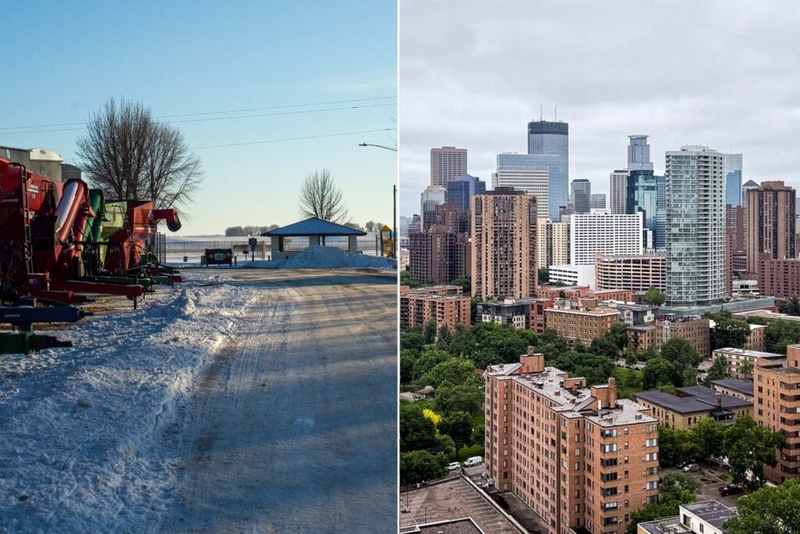
Vermillion, Minnesota, left, and downtown Minneapolis, right. (Photos by Nicole Neri and Glen Stubbe/Minnesota Reformer)
I grew up in Twin Valley, a town of 723 in the northwestern part of our state. I was born in St. Paul, and I live in Minneapolis today. In my life I have had a rare first-hand experience in seeing the differences between Greater Minnesota and the Twin Cities.
And what I have learned first and foremost is that we have a lot more in common than we think.
There are differences. For the most, for instance, Greater Minnesota has a lower cost of living. In the Twin Cities, we’re all aware of the big-time sports, entertainment and large-scale events.
But many of my neighbors in both places hold numerous inaccurate ideas about the other. The Twin Cities were often so revered by young people where I grew up that if I had even received a pen from Minneapolis, I would consider it a treasure. I would also hear among others the significance of making a trip four hours southeast to the Twin Cities. A highlight of grade school was our sixth-grade class trip (a tradition still continuing today) in which we spent a night in the Twin Cities and went sightseeing.
But at the same time, people in Greater Minnesota often considered the Twin Cities to be out of touch. People were worried that metro progressivism was dismissive of small-town Minnesota issues.
I was also warned that people in the big city were not welcoming, and that hospitality belonged in the country alone.
But though they may be geographically distant, I have seen that people in Minneapolis typically have lots of interest in the state outside the metro. At the University of Minnesota, people regularly discuss life, upbringings and issues in Mankato, Duluth, Fergus Falls, Moorhead, International Falls and everywhere in between. In my experience, people from the cities, the suburbs and exburbs are as warm and welcoming as those in my hometown.
As an active political canvasser, having knocked well over 1,000 doors across the Twin Cities, I’ve been offered beverages, welcomed to barbeques, introduced to family members, and so much more by neighbors who truly care about others.
Simply put, Minnesota nice is statewide.
Living in the Twin Cities and being active in my community, I have also been made aware of local perceptions held both for and against those in Greater Minnesota. Many people in the Twin Cities admire Greater Minnesota for its natural landmarks, small-town nice, local culture, affordability and simple quiet. People in the cities view Greater Minnesota as a place of retreat. It’s the destination for trips to the Boundary Waters, annual visits to the family cabin or a hunting trip.
But people in the cities also fall into the trap of viewing their Greater Minnesota neighbors as all close-minded and conservative. Many also believe Greater Minnesota is economically stagnant, and economic opportunity limited.
These perceptions are distorted. Sure, Greater Minnesota favored President Donald Trump heavily in 2024, but political identity is not uniform. In my hometown, for example, Trump won 54% of the vote, with Kamala Harris taking 42%. Take 10 people, and at least four were Harris voters. When I mention this to people, they are surprised at the result in a small town in the most conservative congressional district in our state. The majority of our city also voted for Sen. Amy Klobuchar for reelection.
Greater Minnesota is anything but economically stagnant and lacking in opportunities. Agriculture, mining, manufacturing and tourism are all significant avenues of economic growth. There are also numerous well-renowned colleges driving economic growth, including Minnesota State in Moorhead, where I graduated in 2025, MSU Mankato, Rochester Community and Technical College, and more. To be sure, many small towns are struggling with tariff-fueled inflation, increasing gas prices and working-age immigrant families leaving our communities due to Operation Metro Surge.
When I first moved to Minneapolis, these misconceptions were on my mind. But what I found in the end was that we have more commonalities than differences. Simply put, I know that my friends in the cities would get along great with my friends in the country.
We can overcome these misconceptions.
That starts with thinking twice before jumping to conclusions about our fellow Minnesotans.
With all that is happening in our country right now, we have a choice to make in our state: We can be productive and build for a better tomorrow, or we get nothing done.
I say we work together and build up for the future of Minnesota.

Saint Paul, MN