El-Sayed, Rogers trade barbs, accusations during first televised U.S. Senate debate
Oct 08, 2026 | 10:43 pm ET
Description
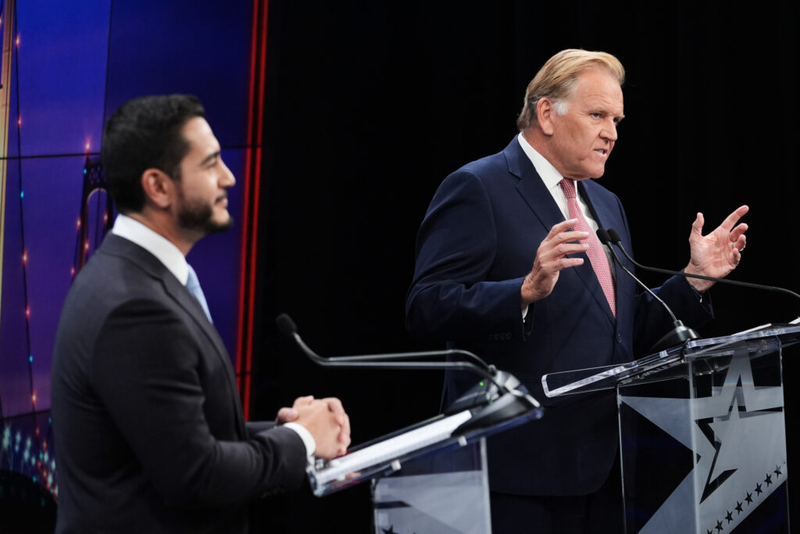
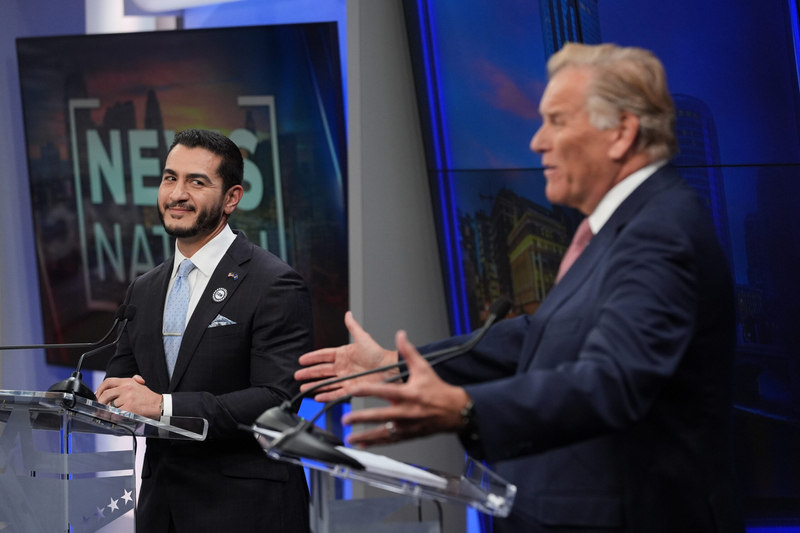
Republican nominee for U.S. Senate Mike Rogers, right, speaks during a televised debate with Democratic nominee for U.S. Senate Abdul El-Sayed, at WOOD-TV, on Thursday, Oct. 8, 2026, in Grand Rapids, Mich. (AP Photo/Paul Sancya, Pool)
GRAND RAPIDS — After months of circling each other on the campaign trail, former Republican U.S. Rep. Mike Rogers of White Lake and Democratic nominee Abdul El-Sayed met face-to-face on Thursday for the first debate of the cycle in Michigan’s competitive U.S. Senate race.
Hosted by WOOD-TV 8, the forum covered a wide range of issues including healthcare, housing, tariffs, ending the war in Iran, support for Israel and mass surveillance, giving El-Sayed and Rogers a chance to further draw contrast between their respective campaigns.
That said, the debate quickly devolved into a series of personal attacks with each candidate digging deep into their respective campaign bags to hit each other on their records, their wealth, who is funding their campaigns, and the decisions they’ve made on the campaign trail.
At the top of the hour, moderator Rick Albin asked the candidates about the price of gas, and if they would support suspending the gas tax.
El-Sayed noted that the Iran war was driving much of the high prices that Americans are dealing with. Rogers also said he believed the nation needed a pause on the gas tax given the lack of resources going through the Strait of Hormuz. El-Sayed agreed that if the war didn’t stop now, the Iranian regime would choke out the strait entirely.
From there, the attacks began, and grew in intensity as the debate carried on. Albin worked hard to reign both in, but struggled to control the tenor of the debate as Rogers and El-Sayed repeatedly and forcefully pushed back on each other’s statements and tried to score political points.
Rogers opened his attacks by saying that El-Sayed’s healthcare and economic policies would raise prices nationwide, particularly in Michigan.
“We can’t afford Abdul,” Rogers said.
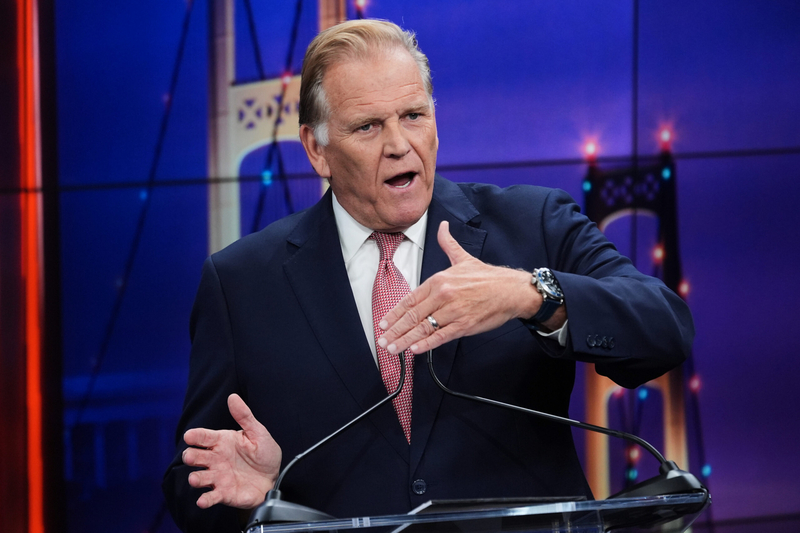
In a question on whether he believed the federal government should enact price controls, El-Sayed said it was worth considering. The Democrat then noted his belief that Rogers had a direct line to Trump and had the ability to potentially persuade the president to end the war, but hadn’t because he didn’t want to face his wrath.
Rogers punched back by saying that El-Sayed was not who he says he is, adding that he was “the best con man” he’s ever seen.
El-Sayed countered by saying that Rogers had nothing to run on and a record of tying himself to Trump.
“It’s about whether you can see your doctor, and whether you can trust your next U.S. Senator,” El-Sayed said. “You’re running because Donald Trump called him and asked him to run.”
Rogers said he was running because of high prices and job losses over the past decade, spanning two presidential administrations. He also accused El-Sayed of not wanting to talk about how he would pay for this key campaign planks, such as Medicare for All, because he didn’t have that part of the plan worked out.
Before Albin could move to the next question, El-Sayed interjected to note that the loss of jobs and hikes on prices in goods over the last 30 years was due to Rogers’ support of the North American Free Trade Agreement.
“You did that man,” El-Sayed said. “That was your policy.”
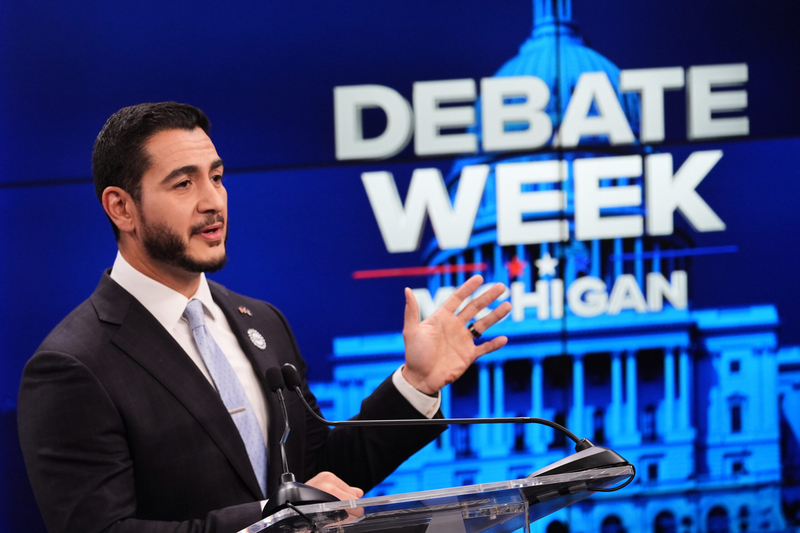
Albin questioned Rogers about his changing position on Canadian tariffs, noting that Rogers has shifted his stance throughout the campaign on Trump’s trade war with Canada.
Early in the campaign, Rogers praised Trump’s efforts on encouraging businesses to stay on American soil through tariffs on other nations, including some U.S. allies like Canada. That later changed to Rogers saying that he supported those that created investments and that some of those tariffs were too high, and that he would encourage the administration to bring some of them down.
Now, with the race winding down, Rogers has released advertising saying that the Canadian trade war was causing harm to Michigan and that it needed to end now.
Rogers said on Thursday that he wants to see a deal down with Canada and that it did need to end.
“I have made those phone calls this week to take care of that,” Rogers said.
He then immediately went back to attacking El-Sayed, saying again that he “wants to raise the cost of everything you touch.”
El-Sayed was asked if there was a Trump tariff policy that he would keep, and noted that the UAW has advocated for smart tariffs tied to industrial policies that would “make sense, or be used to protect our own market.” He then called Trump’s tariffs “hamfisted.”
El-Sayed said Rogers was flip-flopping on the tariffs because his polls were lagging.
“Be serious, my guy,” El-Sayed said.
Rogers said El-Sayed wanted to fight every tariff, but he used an anecdote that manufactures he talks to have said they were able to add shifts because of Trump’s trade tactics.
Rogers accused El-Sayed of receiving corporate money, despite El-Sayed’s statements that he had rejected such contributions. Rogers also alleged that El-Sayed received support from Senate Minority Leader Chuck Schumer, financier George Soros and the Muslim Brotherhood.
Telecom industry gave Mike Rogers nearly $100K while he pushed to deepen government data sharing
El-Sayed criticized Rogers’ work with telecommunications companies after his time in Congress, including Telefónica, which El-Sayed linked to surveillance practices in Venezuela.
The candidates also argued over their wealth, with Rogers saying El-Sayed was a millionaire who owned luxury property in Dubai. El-Sayed responded that Rogers had a “McMansion” in Florida that he took off the market because he knew he was going to lose. El-Sayed also accused Rogers of having two yachts in Florida, which Rogers denied.
@michiganadvance Michigan Advance Senior Reporter Ben Solis asked both @Abdul El-Sayed and Mike Rogers whether their debate was instructive for voters. Two very different answers. #MISEN ♬ original sound – Michigan Advance
This pattern continued through questions on U.S. Immigration and Customs Enforcement, AI data centers, and on the Iran war more directly.
The exchange grew so heated that Albin called a commercial break. It was reported that Rogers and El-Sayed continued to fight off camera about Rogers’ Florida home. When asked after the debate about that exchange, El-Sayed claimed Rogers told him he was planning to rent the home instead of going back to live there. Rogers did not address that exchange in a scrum following the debate. A request for comment on the off-camera exchange from the Rogers campaign was not returned at the time of publication. A comment will be added to this story once it is received.
The debate became more focused on policy during the second half.
On the actions of Immigrations and Customs Enforcement officers, Rogers said that one thing he would have done differently if he had control of ICE were the raids seen so publicly across the U.S. He said that his time in the FBI taught him that raids of that nature should be quick, decisive, and without public fanfare. He admitted that ICE agents could have made adjustments and said that they had after incidents like what happened earlier this year in Minnesota — where two civilians were shot and killed by immigration officers.
That said, Rogers noted that murders were down in the U.S. and that it was because he believed ICE was first and foremost targeting murderers for deportations.
El-Sayed said that he does want to abolish ICE, but agreed that someone convicted of murder deserved to be deported. However, he said the nation didn’t have to do that by also violating the U.S. Constitution in pursuit of those goals.
“ICE is not about enforcement … they killed two people,” El-Sayed said. “We have to obey our constitution.”
On Iran, El-Sayed accused Rogers of being a ‘cheerleader’ for war throughout his congressional career.
“When you have an international problem, he’s got a war for that,” El-Sayed said, noting that could be dangerous as the U.S. has so many foreign entanglements.
Rogers said El-Sayed refused to condemn the Iranian regime and its Revolutionary Guard at a recent campaign stop, and accused him of not being able to condemn the Temple Israel attack earlier this year.
El-Sayed said that was false, and that Rogers was wrong to say that he hadn’t.
The debate again turned personal in the second half, when both candidates brought up each other’s family members — with Rogers suggesting that El-Sayed’s birth mother had connections to organizations that funded terrorism, and El-Sayed kicking back to ask what his mother did. Rogers said his mother worked for a chamber of commerce.
After the debate, Michigan Advance asked both candidates whether the personal attacks had allowed voters to hear the substantive discussion of issues they needed to make a decision before the Nov. 3 election.
“Even his top staff have said he is a manufactured candidate,” Rogers told the Advance. “He tells one group one thing and two hours later another group completely something different.”
El-Sayed said he wished that they did have a better chance to do so, because it was important to him in the campaign to run on the issues. El-Sayed has told the Advance in the past that he doesn’t like the mudslinging, nor the horserace fascination people have with politics.
“He wanted to make this about everything except the policy,” El-Sayed said.
Both candidates are set to participate in a final debate Oct. 21, hosted by WXYZ-TV.
Lansing, MI