Celebrating Congaree: 50 years in the life of a forest
Oct 08, 2026 | 2:55 pm ET
Description
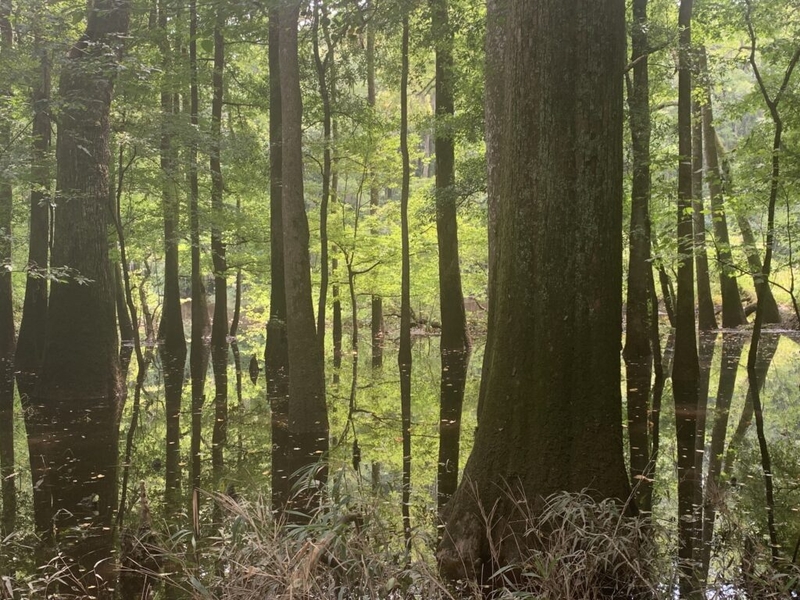
Congaree National Park covers more than 26,000 acres in Richland County. It was initially preserved in 1976 as Congaree Swamp National Monument. It was redesignated as a national park in 2003. (Photo by Skylar Laird/SC Daily Gazette)
Some trees in Congaree National Park were already centuries old when the United States was founded, so five decades might seem like only a brief moment in the life of the forest.
As the park marks its 50th anniversary, that span tells a larger story, one that is not just about forests and floodplains but about what we choose to value and protect.
Congaree exists today because a group of South Carolinians in the 1970s refused to let it disappear. At the time, timber prices were climbing, and the old-growth giants of the Congaree floodplain were at risk of being logged.
Inspired by journalist and conservationist Harry Hampton, a local grassroots coalition formed to publicize the significance of these endangered ecosystems and rally for their protection.
With backing from national environmental groups and bipartisan political support, their efforts culminated in the establishment of Congaree Swamp National Monument in 1976 and its redesignation as Congaree National Park in 2003.
For more than 20 years, my research at Congaree has exposed me to a complex living system that continues to yield new scientific insights. I’ve introduced groups of students, teachers, and community members to the park and organized workshops and symposia around it.
‘Just wonderful’: USC musicians perform at Congaree National Park for country’s 250th birthday
Like many who spend time there, I’ve come to see Congaree not just as a place of study but as a source of perspective.
Congaree protects one of the largest remaining expanses of old-growth bottomland hardwood forest in the country. Its loblolly pines rise 170 feet above the forest floor, making them some of the tallest trees east of the Mississippi River.
The park is home to thousands of other species, from iconic bald cypress and alligators to lesser-known Rafinesque’s big-eared bats and golden orb-weaver spiders.
And each spring, synchronous fireflies transform the forest into a weekslong light show that draws visitors from across the country.
But Congaree’s value extends beyond its ecology. It’s also a place where people can experience an old-growth forest firsthand by hiking its trails, paddling its waterways or simply spending time in a landscape that feels increasingly rare.
In a world where many natural systems have been fragmented or lost, Congaree preserves a sense of continuity that is difficult to find elsewhere.
As part of the National Park System, Congaree shares a mission to protect natural and cultural resources while making them accessible to the public. Maintaining that balance between access and long-term protection remains just as important today as it was a half-century ago.
The park’s rare landscape invites visitors to learn about the natural world or simply spend time outdoors. Its value is not tied to any single use but rather to the collective benefits it provides, including economic.
Roughly 250,000 people visit Congaree each year. In 2024, visitor spending on lodging, dining and other goods and services supported 134 jobs and contributed $17.6 million to the local economy.
Congaree’s anniversary provides an opportunity to reflect on its past, but it should also remind us that national parks and other protected places require our continued support as visitors, benefactors, volunteers, conservationists and advocates.
In a forest where many trees are centuries old, the effects of today’s decisions may not be fully visible for decades.
Congaree stands as a reminder that some places are worth protecting not only for what they offer today but for what they can continue to offer in the decades ahead.
Columbia