Major bill to set standards for college athletes’ pay passes US Senate
Description
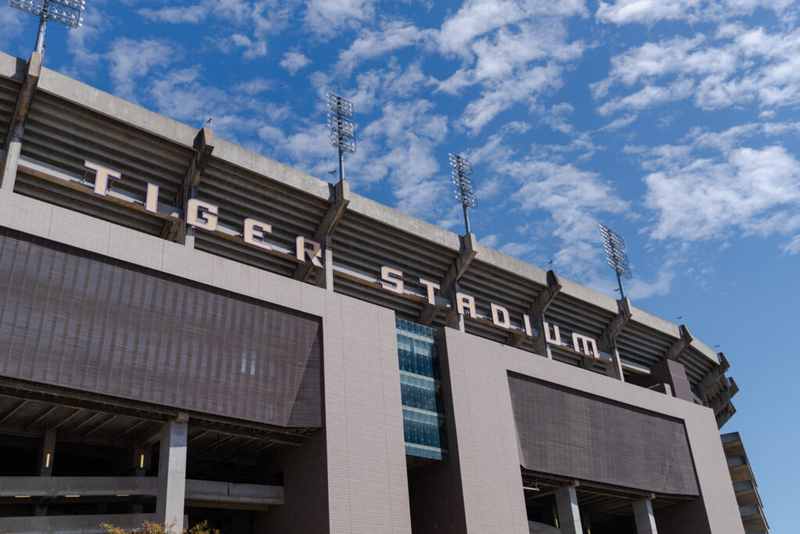
Clouds pass over Tiger Stadium on March 20, 2023, on Louisiana State University's campus in Baton Rouge (Matthew Perschall/Louisiana Illuminator)
WASHINGTON — A bipartisan measure to overhaul the college sports landscape got a step closer to becoming law Monday after passing the U.S. Senate.
The bill — which sailed through on a 77-22 vote — would set a national framework for college athletes’ compensation, provide certain antitrust protections to the NCAA, establish a five-year eligibility timeline for athletes and bar professional athletes from competing in college athletics.
Senators voted on several amendments to the bill Monday night. One of the adopted amendments, introduced by GOP Sen. Tim Scott of South Carolina, would require colleges, conferences and athletic associations to disclose any foreign funding they receive for college athletics that exceeds $600.
Another amendment, sponsored by Wisconsin Democratic Sen. Tammy Baldwin, would stop the measure from preempting state laws, specifically related to personal injury, wrongful death and similar claims. Senators adopted the amendment, 96-1.
The measure now heads to the U.S. House, which is not scheduled to return from its weeks-long campaign break until after the midterm elections in November.
The bill faces opposition from some Democrats for not distinguishing student-athletes as employees with labor rights.
President Donald Trump has been a staunch supporter of the legislation, which he last month dubbed a “great” bill. The administration expressed its support for the bill, which has undergone multiple changes, in an Aug. 6 statement of administration policy.
The Senate Commerce, Science and Transportation Committee’s leaders, GOP Sen. Ted Cruz of Texas and Democratic Sen. Maria Cantwell of Washington state, introduced the bill earlier this year, with Republican Sen. Eric Schmitt of Missouri and Democratic Sen. Chris Coons of Delaware as original cosponsors.
“This bill puts an end to the chaos plaguing college athletics,” Cruz said on the Senate floor ahead of the vote.
“It protects NIL opportunities because student-athletes deserve the opportunity to benefit from their talent without being taken advantage of by unscrupulous agents and backdoor deals,” the Texas Republican said. “It creates clear, enforceable rules for eligibility and transfers, it protects our traditions and rivalries, it prevents the most powerful and wealthy conferences from breaking away to form a super league, but most importantly, it protects our student-athletes.”
Supporters see the bill as a chance to “save” college athletics, which continues to grapple with the fallout of the NCAA’s 2021 guidelines allowing athletes to profit from their name, image and likeness, as well as the patchwork of state NIL laws, gender inequity in compensation deals and the NCAA’s controversial transfer portal, among other major issues.
A federal judge in June 2025 also approved the terms of a nearly $2.8 billion antitrust settlement, which paved the way for schools to directly pay athletes.
Labor concerns
Meanwhile, opponents argue the legislation, which is notably neutral on the classification of athletes as employees, would undermine the labor rights of college players.
Sen. Cory Booker, a fierce critic of the measure, said the bill “was actually shaped by millions of dollars in lobbying from the NCAA, other powerful interests that control that industry,” during floor remarks prior to the vote.
The New Jersey Democrat, who played tight end for the Stanford University football team, added that “at its core, it’s a bill that undermines the rights of young people who pour their blood, sweat, tears, countless hours of work and more, into their craft.”
The bill has also drawn fierce opposition from the Congressional Black Caucus and NAACP.
The major voting bloc rallied behind the NAACP’s call in May that urged pushback against GOP-led redistricting efforts in Southern states via college sports, including a boycott of public universities by athletes and supporters.
All States Newsroom content is free to republish. Read our republishing policy for more information.