In a closed-door vote, Republicans pick Sen. Evan Vickers to be next Senate president
Nov 07, 2026 | 12:46 am ET
Description
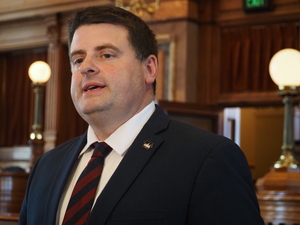
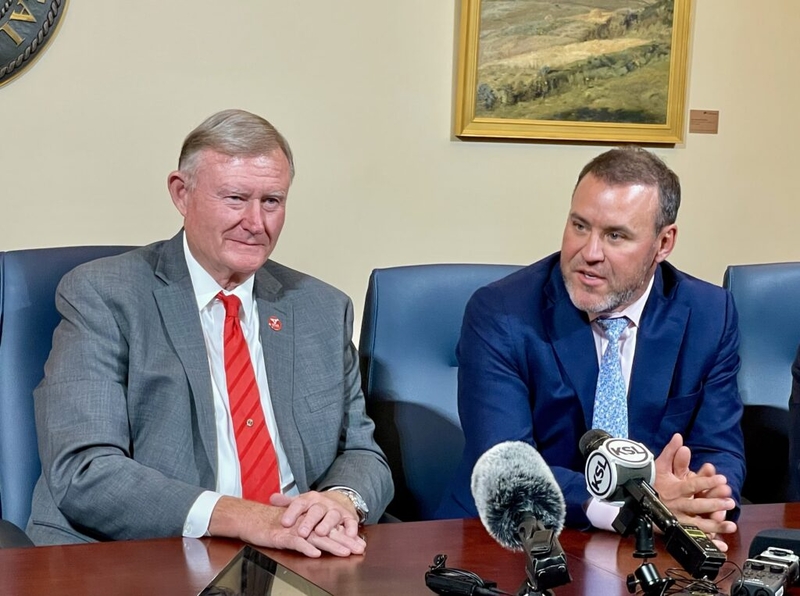
Newly-elected Senate President Evan Vickers, R-Cedar City, (left) and House Speaker Mike Schultz, R-Hooper, speak to reporters after their caucus' closed-door leadership elections at the Utah Capitol in Salt Lake City on Nov. 6, 2026. (Katie McKellar/Utah News Dispatch)
Sen. Evan Vickers, a longtime senator from southern Utah, will take outgoing Senate President Stuart Adams’ place as the Utah Senate’s top Republican.
That’s what the Senate GOP caucus decided in a closed-door leadership election late Friday at the Utah Capitol in Salt Lake City.
As for the House — where Republicans are currently on track to lose about 16 seats to 14 Democrats and two unaffiliated candidates — House Speaker Mike Schultz was chosen to remain that chamber’s top GOP leader.
Senate Democrats also caucused behind closed doors to pick their next slate of leaders for 2027. While they’ve seen drama in recent days after voting to remove Sen. Kathleen Riebe from their caucus over allegations of harassment and discrimination, their slate of leaders remained mostly the same, picking Sen. Luz Escamilla to continue serving as minority leader.
While the Senate Democrats were caucusing, FOX 13 reported Utah Highway Patrol troopers — who provide security at the Capitol building — were called into the Senate Minority Caucus offices by Sen. Jen Plumb, D-Salt Lake City. About 45 minutes later, Riebe left the Senate Minority Caucus room alone.
Senate Democrats did not hold a media availability after their closed-door elections. House Democrats are expected to pick their next slate of leaders later in the month, on Nov. 16.
Vickers was described by his colleagues as a “common sense, fiscal conservative” legislator who also acts as a “collaborator” across party lines. Vickers, on some issues, has been viewed as more moderate than some of his GOP counterparts.
The new leadership picks came days after an election that brought a historic blue wave of voters that ousted more than a dozen Republican legislators, including the only other front-runner who would have ran against Vickers for the Senate presidency: Senate Majority Leader Kirk Cullimore, R-Sandy.
Outside review details discrimination complaint against a Utah Democrat
Election results weren’t final as of Friday evening — they aren’t official until after the canvass two weeks after the election. But with Cullimore still trailing Democratic challenger Shana Anderson by nearly eight percentage points as of Friday night, when another major batch of ballots were tallied, Senate Republicans moved ahead with their leadership elections without him.
Before Cullimore’s upset, the race between him and Vickers among Senate Republicans was neck and neck. Vickers said he was “caught off guard” when he saw Cullimore trailing his opponent on election night.
“Both of us thought that we had enough to win,” he said of the Senate leadership spot, “so we’ll never know how that (would have) turned out.”
Vickers threw his name in the race to be Senate president earlier this summer, after Adams’ unexpected loss to his primary Republican challenger, Stephanie Hollist — an upset that sent shockwaves through the Legislature, leaving a leadership void that Senate Republicans would need to fill.
Vickers, R-Cedar City, served as Adams’ second, as majority leader, for years before he lost that position to Cullimore in 2025.
Vickers is a pharmacist who owns several stores in Cedar City. His medical background has informed many of his legislative focus areas, but some of his most notable legislative efforts have involved medical cannabis regulation.
Why Sen. Evan Vickers, of southern Utah, wants to be the state’s next Senate president
Stepping into the powerful role of Senate president, he’s also expected to bring new and influential representation to southern and rural Utah. Adams and Cullimore both represented areas on the Wasatch Front, from Layton and Sandy, respectively.
Vickers has served 18 years in the Legislature (four in the House and 14 in the Senate), including six years as Senate majority leader before he lost the position to Cullimore. At the time, he said it was a close race and “a little painful,” but he told Utah News Dispatch in July that it was “one of the best things that happened to me” because he was able to act as an observer in the Senate and “see what was working and what wasn’t.”
Sitting shoulder to shoulder with Schultz late Friday, Vickers told reporters based on this week’s election, it’s clear “the public has lost some trust.”
“I think we have to be real about that. We have to be humble about that,” Vickers said. “We’ve lost their trust in a certain way.”
Political pundits have attributed Utah’s blue wave to a combination of an intense rebuke of President Donald Trump and his administration and a frustration with how Utah’s Republican-controlled supermajority has handled redistricting, ballot initiatives, unions and other issues, along with ongoing outcry over data centers and development.
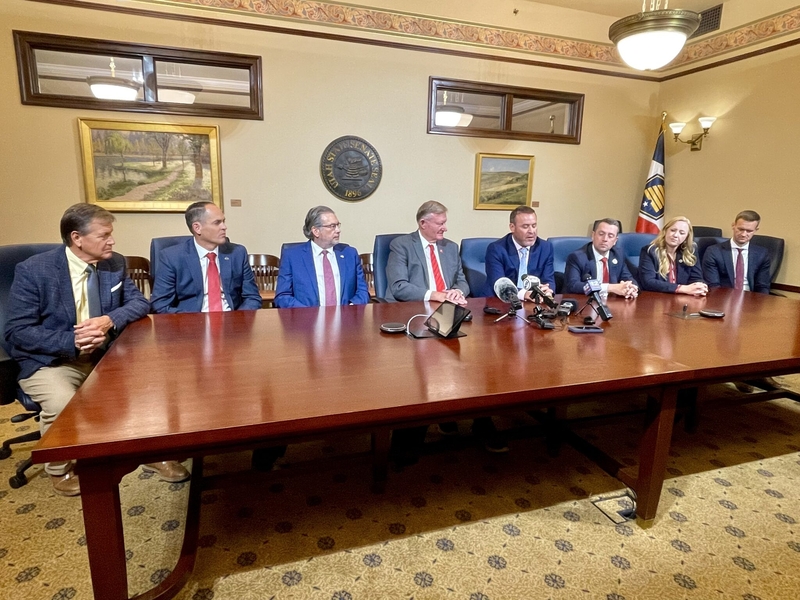
Vickers said there’s “still a lot of good things going on in the state of Utah,” pointing to a strong economy compared to other states. “But that message and what we’ve been doing has not been getting out to the public. We’ve got to do a better job in talking to the public, getting ideas from the public, and then responding to their concerns.”
Schultz said Tuesday’s election results — which flipped more Republican seats in one year than the Utah Legislature has seen in decades — was a “sobering moment for me.”
“It is humbling, you know,” Schultz said. “There’s a deep sense of reflection that has to happen. … I’ve done a lot of reflecting over the last few days around what we’ve done, what we haven’t done, what we can do better, and how we’re going to do better moving forward.”
While the Republican two-thirds, veto-proof supermajority is on track to be broken when legislators convene in their next general session in January, the House GOP will still hold a simple majority. And while Senate Democrats are pacing to pick up two seats from Republicans in the Senate, that body will still be controlled by a GOP supermajority.
‘Blue tsunami’ hits Utah: House Republicans on pace to lose 17 seats, breaking supermajority
Still, Vickers said it’s apparent from the election that Utahns not only want their House and Senate to work together, but also “we need to be including the minority in the discussions.”
Vickers pointed to the late Sen. Karen Mayne, D-West Valley, who died in 2024.
“As my good friend Karen Mayne taught me, she said, ‘You know, senator, if you involve us in the discussion, you’ll have more of two things: You’ll have better policy, and you’ll have more votes,” he said. “So we’ll see how that goes as we navigate through these next couple of years together.”
Vickers and Schultz said they both share the same goal, and that’s how they’ll decide what policies or what funding requests get prioritized.
“We have one question: Is it good for the state of Utah?” Vickers said. “That’s the question we’re going to answer.”
They said they plan to focus on making life more affordable for families and maintaining Utah’s quality of life.
But while Democrats’ numbers have surged in the Legislature, House Majority Leader Casey Snider, R-Paradise, made sure to point out that Republicans continue to hold a majority “by significant margins” in the House.
“We’ve lost great men and women, but we still place confidence in the confidence that is given us from the majority of residents of this state, and we still believe in conservative policies of low taxes, small limited government, doing what we can for families and affordability,” Snider said. “Those are still the policies that Utah wants to see. Our job moving forward is to make sure that that is better communicated.”
Salt Lake City, UT