Maine voters opt for red flag law, expanding options for confiscating a firearm
Nov 04, 2025 | 9:57 pm ET

Description
Arthur Barnard, whose son died in the 2023 Lewiston mass shooting, embraces Maine Gun Safety Coalition executive director Nacole Palmer after it was announced voters approved a red flag gun law. (Photo by Eesha Pendharkar/ Maine Morning Star)
Maine voters have decided to expand the ways to temporarily confiscate firearms from someone deemed a threat, backing a referendum Tuesday to establish a so-called red flag law on top of the state’s existing yellow flag statute.
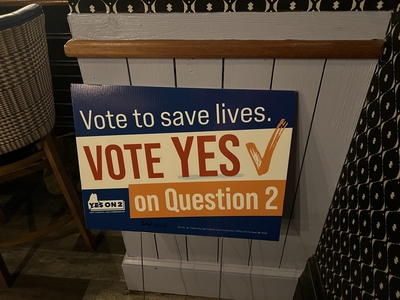
Question 2 on Tuesday’s ballot asked voters whether they would like the state to adopt an extreme risk protection order that would allow family or household members to directly petition a court to temporarily confiscate someone’s firearms. It passed with 58.7% of voters in support.
Maine now joins twenty-one other states, including four in New England, that already have a red flag law on the books.
The addition of a red flag law does not replace Maine’s existing yellow flag law, which isn’t used anywhere else in the country and allows law enforcement to take guns away from people after a mental health evaluation. The passage of Question 2 means both processes can be used in the state.
At the polls Tuesday, voters who backed Question 2 had a range of opinions about gun reforms.
Robin Berry, a Democrat from Oxford, said, “I don’t think machine guns should be allowed in anybody’s house.”
In between his shifts in emergency service, Isaac Tardif of Oxford also voted in favor of Question 2 because in his field he has personally seen situations where he thinks it would help.
While he has concerns that some people might take advantage of the ability to remove one’s firearms, he ultimately believes that the potential for harm from gun violence outweighs that.
A few minutes later, Brandon Yap of Oxford exited the polls and explained why he voted against Question 2.
“I felt like it was infringing on the Second Amendment,” Yap said.
After the polls closed, about 30 people gathered in Portland to support Maine’s red flag law, including several activists who have worked on the campaign for a year, volunteers and Maine Gun Safety Coalition board members.
Just before 10 p.m., the room erupted in applause as the onlookers celebrated the win.
“Maine has won. Together, we have done something that we were repeatedly told was impossible,” said Nacole Palmer, executive director of the coalition. “Today, we have taken the safety of our communities into our own hands by finally passing common sense, responsible gun legislation that will save lives and help keep our kids and communities safe.”
Arthur Barnard, a citizen sponsor of the proposal, has been outspoken about the need for stronger gun regulations since his son, Arthur Strout, died in the 2023 Lewiston mass shooting.
“I just knew that there were more people with the common sense to take these steps in this state,” he said in a speech after the results were announced. “I wish we could do a nationwide vote like this because I think the majority of the nation wants safer gun laws.”
Margaret Groban, a former federal prosecutor and Maine Gun Safety Coalition board member, said the citizen-led initiative “will go a long way to trying to prevent suicide and homicide in the state.”
“It’s a commonsense response to Lewiston and it’s our best way to honor the victims,” she said.
In a statement, U.S. Rep. Chellie Pingree said that by adopting a new red flag law, “Mainers took a meaningful step to prevent gun violence. This measure will give families, courts, and law enforcement the tools they need to intervene when someone poses a serious risk to themselves or others—while preserving the rights of responsible gun owners.”
The effectiveness of Maine’s current yellow flag law was called into question after the October 2023 mass shooting in Lewiston after an independent commission found that it could have been used on the perpetrator, Robert Card II, months before he killed 18 people and injured 13 more.
During the commission’s investigation, law enforcement reported the yellow flag law was cumbersome, but the statute has been updated in the two years since and law enforcement has received additional training.
As of early October, the yellow flag law had been used more than 1,100 times. Lt. Michael Johnston of the Maine State Police said 81 of those occurred between 2020, when the law was implemented, and late 2023. More than 1,000 uses occurred in the past two years at a rate of 1.5 per day, he said.
“We could have saved 19 lives,” Barnard said, noting that he believed Card was also a victim and that had a red flag law been in place, that shooting may not have happened.
After the Maine Legislature failed to pass several more restrictive gun safety measures in the wake of the shooting, the Maine Gun Safety Coalition launched the referendum effort and in January delivered more than 80,000 petition signatures in support of the red flag proposal.
Gov. Janet Mills voiced her opposition to the proposal before Tuesday’s election, pointing to the increased use of the yellow flag law as evidence of its effectiveness.
In a statement late Tuesday, the governor said she hopes “that this measure will strengthen public safety as proponents have argued. My administration will work with law enforcement and the public to implement this new law, along with our existing extreme risk protection law, to best ensure the safety of Maine people.”
Emma Davis contributed to this report.
- November 5, 20256:44 amThis story was updated to include a statement from Gov. Janet Mills.
Augusta, ME