Louisiana moves to set up homelessness courts, with critics saying it won’t help
Jul 30, 2026 | 3:27 pm ET
Description
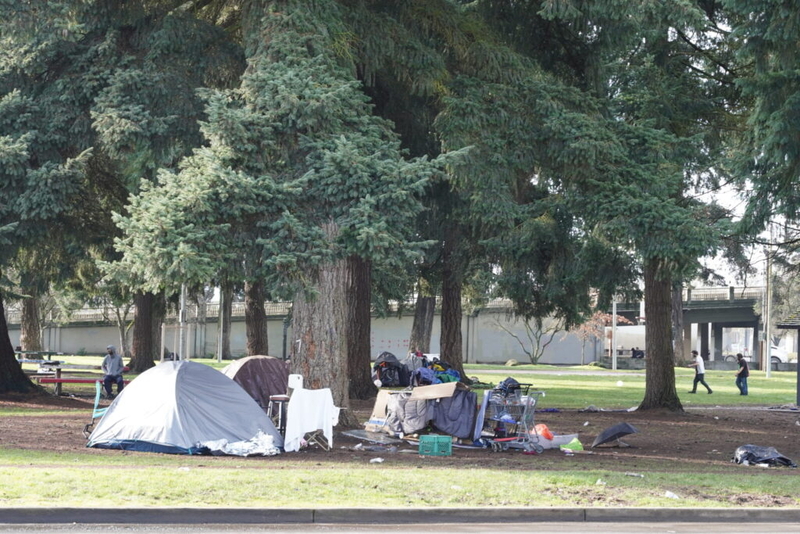
A makeshift campsite for people experiencing homelessness in downtown Salem, Oregon, is pictured on Jan. 29, 2024. (Ben Botkin/Oregon Capital Chronicle)
Advocates and service providers for the homeless worry a new Louisiana law that criminalizes unauthorized sleeping outdoors will make it even harder for people who struggle to find permanent housing.
Act 788, sponsored by Rep. Debbie Villio, R-Metairie, was dubbed the Streets to Success Act. It prohibits public camping or sleeping overnight in public areas without permission. It also allows local judges to create homelessness courts where defendants can be connected with housing and other support services rather than punished with fines or jail time.
Penalties in the new law include fines up to $500, jail time up to six months or both. It also allows for the option of court-ordered participation in drug treatment or mental health programs.
Defendants would be required to either pay the cost of their treatment in rehabilitation programs or, if they can’t afford it, perform unpaid community service. A judge could also waive these costs.
Successful participation in a homelessness court program could allow those charged to have their conviction set aside and prosecution dismissed.
The law has been widely criticized. The National Homelessness Law Center called it “one of the cruelest anti-homeless bills in the country.” Advocates for unhoused people have spoken out against the law, saying it would do more harm than good to people living on the streets.
“When folks have nowhere else to go, they do have to sleep outdoors,” said Joe Heeren-Muller, coordinator for the Louisiana Advocacy Coalition on Homelessness.
“It’s not, generally speaking, because of a stubborn insistence that living outdoors is in their best interest, but it’s simply because they lack the opportunity and the means to secure a safe and affordable indoor habitation,” he added.
Defenders of the new law argue it creates a pathway to access needed services, such as substance abuse rehabilitation and mental healthcare, for people experiencing homelessness.
In a written statement to the Illuminator, Villio said the law doesn’t criminalize homelessness but instead creates “necessary external pressure to compel individuals into critical mental health and addiction treatment services rather than leaving them unassisted on the street.”
Advocates disagree, saying the problem is driven by lack of access rather than the lack of a law that compels people to get the help they need.
“There’s a lack of accessible and affordable treatment for people. There’s no reason to think that the courts are going to make that more accessible,” Heeren-Muller said.
Under the new law, local governments can vote on whether they will allow outdoor sleeping and camping in specific, publicly-owned areas, and they would have to approve any designated areas annually. But in order to first approve it, the governing body needs to show there aren’t sufficient beds available in homeless shelters and that nearby property values wouldn’t be affected.
The majority of the new law went into effect when Gov. Jeff Landry signed it June 9. The portion that allows designated outdoor sleeping zones will go into effect Jan. 1.
Louisiana’s new law follows on the heels of a recent U.S. Supreme Court decision in an Oregon case, Grants Pass v. Johnson, that allows municipalities to penalize unauthorized sleeping in public areas. Justices decided, in a 6-3 vote, the law didn’t constitute cruel and unusual punishment.
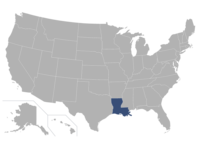
There are 3,688 people experiencing homelessness in Louisiana, according to the latest counts from the U.S. Department of Housing and Urban Development. That represents about eight out of every 10,000 people in the state. The count found 42% of those people were unsheltered, meaning they were on the streets or living in vehicles, while the rest were in shelters or transitional housing.
The HUD report didn’t include people staying with family or friends, or in similarly unstable housing situations that could lead to becoming unsheltered or in need of more direct assistance.
Baton Rouge, LA