Minnesota set to fight in Texas courtroom to extradite ICE agent charged in Minneapolis shooting
Aug 25, 2026 | 2:10 pm ET
Description
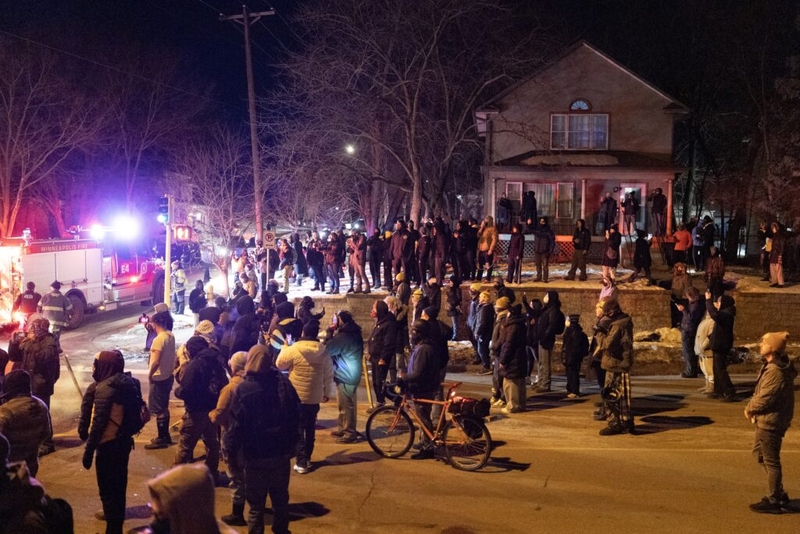
Residents confront federal agents following a shooting incident on Jan. 14, 2026 in Minneapolis, Minnesota. (Photo by Scott Olson/Getty Images)
An attorney from the office of Minnesota Attorney General Keith Ellison is set to appear in federal court in Texas on Tuesday to argue for the extradition of a U.S. Immigration and Customs Enforcement agent charged with shooting a Venezuelan man during Operation Metro surge.
ICE agent Christian Castro is charged with four counts of second-degree assault and one count of falsely reporting a crime in the shooting of Julio Cesar Sosa-Celis in north Minneapolis in January. Castro has been in a Texas county jail since May 29, when he was arrested by the Texas Rangers, a state law enforcement agency. He has not entered a plea in the case, and court records do not list an attorney to speak on his behalf.
A federal law prohibits law enforcement agencies from detaining fugitives awaiting extradition for longer than 90 days. That means Castro could be released from custody as soon as Thursday. Minnesota authorities allege that he is in a relationship with a woman in Mexico, who is living in a home Castro owns — making him a potential flight risk.
But Texas Gov. Greg Abbott, a Republican, has so far refused to sign the paperwork to facilitate the extradition. Last week, he said he would not sign the papers until the administration of Democratic Gov. Tim Walz acknowledges “their fault in the fraud that took place, and they fully repay the United States of America for the fraud they committed.”
Republicans in Minnesota and beyond have seized on Minnesota’s wide-ranging investigations of fraud in social safety net programs, going back years.
In a legal filing submitted to the court Monday, Abbott’s office said the governor last month ordered his Secretary of State to investigate “whether Mr. Castro is a fugitive based on public reports and a preliminary investigation indicating he may have been ordered to return to Texas by ICE.” Castro may not be a “fugitive,” the state of Texas argued, because he didn’t flee from Minnesota — he was reassigned to Texas by ICE.
This investigation was news to Minnesota law enforcement officials, who replied in a brief Tuesday arguing that the Supreme Court has made it clear that the Constitution affords “no discretion to the executive officers of the asylum State.”
The U.S. Department of Justice filed a “statement of interest” in the case, confirming some of the facts underpinning Abbott’s argument. ICE ordered Castro to return to Texas after the shooting over concerns for his safety, given that protesters were “following ICE officers and using aggressive and sometimes violent tactics, including doxxing, to interfere with officers carrying out their duties,” according to an affidavit from an ICE field office director.
Minnesota reiterated its request that the judge order Texas officials to facilitate the extradition — or, at least, order that Castro remain in jail until the extradition matter is settled.
Castro is accused of firing his gun through the closed front door of a Minneapolis home, hitting Sosa-Celis in the leg. Three other people were inside the house, Hennepin County Attorney Mary Moriarty said, and one of the bullets was found embedded in the wall of a child’s bedroom.
Castro is also charged with falsely reporting a crime because he accused Sosa-Celis and another Venezuelan immigrant of assaulting him with a broom and a snow shovel before Castro opened fire. The U.S. Department of Justice charged the two immigrant men with assaulting a federal agent, but the charges were dropped after surveillance footage disproved Castro’s claims.

Saint Paul, MN