Private sales among Indigenous homeowners could reduce tribal housing shortage, advocate says
Aug 25, 2026 | 2:30 pm ET
Description
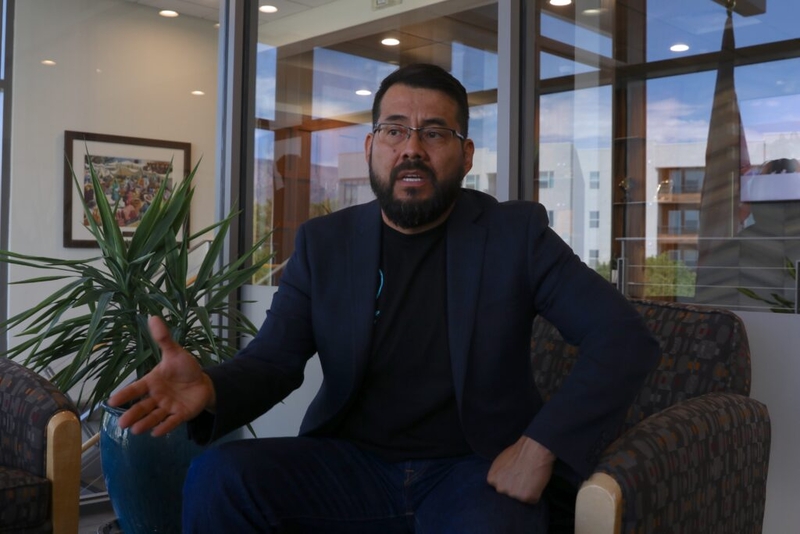
Christopher Billey, executive director of the Tribal Homeownership Coalition of the Southwest, told lawmakers on Aug. 24, 2026, that enabling private sales between tribal members could help Indigenous governments reduce tribal housing shortages. (Photo by Danielle Prokop for Source NM)
An advocate for tribal homeownership told state lawmakers this week that establishing a private market on tribal lands could help address the long reservation waitlist for homes.
Tribal-run housing authorities oversee most of the housing stock on tribal lands. But approximately 10% of tribal housing stock belongs to individuals or families, according to Christopher Billey, executive director of the Tribal Homeownership Coalition of the Southwest.
Those homeowners largely do not realize that their homes are assets that grow in value and often sell them for less than they are worth, or even abandon them.
That’s because of a “missing link” for private sales on tribal lands, Billey told state lawmakers on the state Legislature’s Mortgage Finance Authority Oversight Committee during a Monday meeting.
“Then we see the houses boarded up,” he said. “There’s no clear cut process for this.”
Meanwhile, waitlists for tribal housing continue to grow.
Billey said Monday that a survey his organization conducted over the last two years of more than 300 tribal members in Arizona and New Mexico shows that growing demand exists among Indigenous working professionals and others willing to pay fair-market rates. Nearly three-quarters of them said they want to buy homes in their tribal communities, he said.
Billey’s organization, which began as a subsidiary of the New Mexico Mortgage Finance Authority, is working with homeowners, as well as tribal governments and local and state agencies, to establish a housing market similar to the one that exists off the reservation.
That means helping tribal homeowners acquire clear titles to their properties and navigate other legal hurdles. He pointed to a case study his organization conducted regarding a home on the Navajo Nation in Lechee, Arizona, that owners wanted to sell after the Navajo Generating Station closed.
That house would have sold, informally, for roughly $30,000, but Billey’s organization helped homeowners list Arizona’s Multiple Listing Service, which enabled it to be advertised on sites like Zillow or Realtor.com.
In response, multiple Navajo prospective homebuyers — a “park ranger, teachers, working professionals, and returning college students” — inquired about buying the home. Ultimately, in January of 2025, the home sold for $170,000 to a business owner, and county and state officials recorded the sale, providing a data point for comparable sales analyses in the area going forward.
About two months ago, Billey’s organization helped facilitate a similar sale on the Jemez Pueblo in New Mexico, marking what he said is the state’s first-ever, market-rate sale outside of a housing authority between tribal members.
Officials from Jemez Pueblo did not immediately respond to Source NM’s request for comment Tuesday about the transaction.
He said he hopes the transaction will spur the creation of a housing market and spur related economic growth from housing-related industries like construction, inspections and licensing.
Billey told Source NM after the meeting that creating a private housing market on tribal land also represents a “double-edged sword,” offering both the benefits and drawbacks of a housing market that suffers booms and busts and speculation.
But tribal sovereignty means governments have an opportunity to design markets that reflect their values, he said, and take into account the failures of the housing market outside of tribal lands.
“It cuts both ways, right? We have seen a number of folks who have been taken advantage of, but at the same time, we’re also trying to notify the tribal legislators and the tribal executives , saying, “Hey, this is already happening at this level. Can we create policies and regulations that helped protect buyers, sellers, and homeowners?”
Santa Fe, NM