A Louisiana law change will erase an ethics fine for just one person
Jul 31, 2026 | 12:39 pm ET

Description
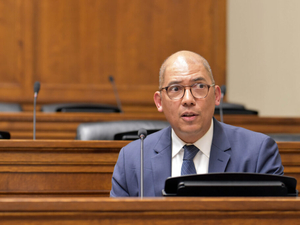
The Louisiana Legislature voted for a law change that benefits only one person, state Rep. Steven Jackson, D-Shreveport, by erasing a $1,000 ethics fine he faces. (Allison Allsop/Louisiana Illuminator)
The Louisiana Legislature voted for a law change that benefits only one person, state Rep. Steven Jackson, D-Shreveport, by erasing a $1,000 ethics fine he faces.
Act 777 will likely force the Louisiana Board of Ethics to revoke a financial penalty Jackson has been fighting for years.
“When we went through our cases to see what this [new law] would affect, there’s only one potential late fee that this affects, and it’s by Rep. Steve Jackson,” Ethics Administrator David Bordelon said at the board’s July meeting.
As recently as June, the ethics board voted unanimously to enforce the $1,000 penalty over Jackson’s objections. But Bordelon said in an email this week that he believes the new law will compel board members to revoke the fine regardless of what they desire.
A spokesperson for Jackson, Ashley Crawford, questioned whether he really was the only person who benefited from the law change.
“[A]ny assertion that no other individual may be affected is mere speculation unless every potentially impacted matter has been reviewed,” Crawford wrote in an email Thursday. “If such a comprehensive review has been completed, we would expect that effort to be reflected in the Board’s upcoming annual audit or otherwise documented by the Board.”
Jackson was first hit with the fine in 2023 because he failed to submit a personal financial disclosure form required from candidates running for the Louisiana Legislature. He didn’t turn in the paperwork until January 2026, when the ethics board threatened to increase his fine if it wasn’t filed immediately.
This $1,000 fee is just one small part of a larger set of disputes Jackson has had with the ethics board going back to 2015 and his first race for the Caddo Parish Commission.
In January, Jackson told the ethics board he had paid between $10,000 and $15,000 in penalties over several missed deadlines for ethics and campaign finance reports required for political candidates and elected officials. That was before another $6,720 in fines was levied against him, including the disputed $1,000, for another set of violations earlier this year.
One of the first pieces of legislation Jackson sponsored as a freshman legislator was a 2024 law that exempted political candidates from having to file personal financial disclosure forms if they had previously submitted the same form as an elected official.
Had that statute been in place when Jackson first qualified as a Louisiana House candidate in 2023, he would not have accrued the fine he’s now seeking to vacate. At the time he signed up for the statehouse race, he was a Caddo Parish Commissioner.
This year’s law change helps Jackson because it makes the law he sponsored and passed in 2024 retroactive to a time before he missed the deadline and was assessed his late fee.
Sen. Katrina Jackson-Andrews, D-Monroe, added the amendment to Act 777 that is forcing the ethics board to rescind Jackson’s penalty. Jackson and Jackson-Andrews are not related.
In an interview Thursday, Jackson-Andrews said she inserted the amendment at the request of another legislator but not Jackson. She doesn’t remember who the person was. The senator said she didn’t know the amendment would benefit Jackson financially until after the Legislature had approved it.
“I wouldn’t have offered an amendment for a $1,000 fine,” Jackson-Andrews said.
State Rep. Chris Turner, R-Ruston, sponsored the underlying legislation with the amendment that benefits Jackson.
Turner said Jackson told him, during this year’s legislative session, that Jackson-Andrews had amended Turner’s bill. Turner said he didn’t know at the time the amendment helped Jackson specifically.
“I did not know it would benefit him,” Turner said.
At this month’s meeting, ethics board member La Koshia Roberts said legislators could have contacted their staff to ask about the effects of the bill before voting it into law.
“I thought it was interesting that some of those legislators claim to not know that it would impact one of them individually yet not one bothered to call the staff to inquire about it,” she said.
Bordelon said the ethics staff tries to make themselves available to answer questions about legislation before it becomes law.
“We try to provide that information to know … what changes in law, how many cases this could affect, who it could affect,” he told the ethics board this month. “And just the way this bill was handled, that didn’t happen.”
Turner said the ethics board could also have contacted him if they had concerns about the legislation.
The board is likely to take up the issue of Jackson’s late fee at their meeting on Aug. 7.
Baton Rouge, LA