Lawmakers’ last minute scramble for a facility for those incompetent to stand trial
May 26, 2026 | 6:42 pm ET
Description
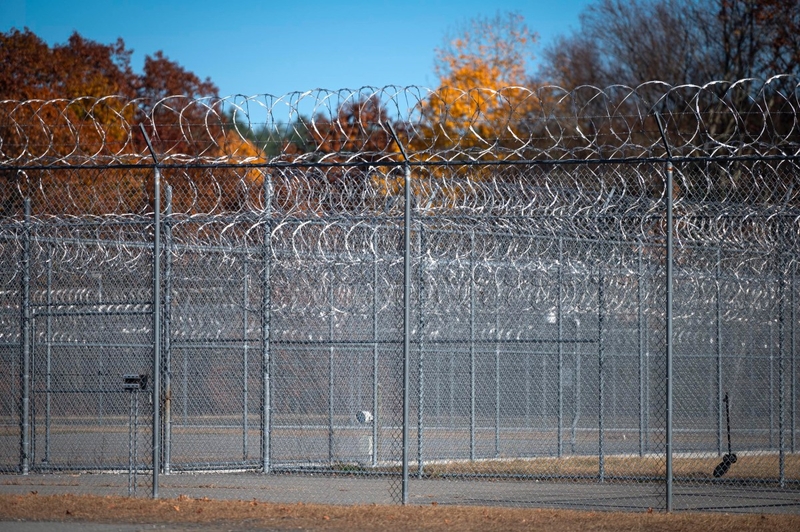
Part of the security fence at the Southern State Correctional Facility in Springfield seen on Friday, October 25, 2024. Photo by Glenn Russell/VTDigger
Racing a ticking clock
Is it better to take an imperfect step forward or do nothing at all?
That question underscored House lawmakers’ debate over creating a short-term “forensic facility,” which aims to be a stopgap at the intersection of Vermont’s mental health and criminal legal systems.
One issue is that a handful of people in Vermont accused of serious crimes have been found mentally incompetent to stand trial, leaving them to sit in jail — sometimes for years — with no access to services for rehabilitation.
Another issue is that other people, who have been found incompetent to stand trial or not guilty by reason of insanity for crimes they committed, have slipped through the cracks of Vermont’s mental health system and gone on to commit other violent crimes while on court orders to receive outpatient mental health treatment.
Lawmakers have been considering a bill, S.193, that would create a facility to address both groups of people, providing rehabilitative services to those in prison and giving the state grounds to lock up people who aren’t currently held in jail but who could pose a safety risk to others.
Almost all states have similar facilities, Karen Barber, general counsel for the Vermont Department of Mental Health, previously told VTDigger.
But, with no real plan to build a new facility, lawmakers are debating if they should carve out a part of a state prison to provide clinical mental health and competency restoration services.
Lawmakers have already kicked the can on the issue for years and are racing a ticking clock as they near adjournment. Gov. Phil Scott and his administration have turned up the pressure, tailoring a press conference earlier this month to urge lawmakers to greenlight the facility this year.
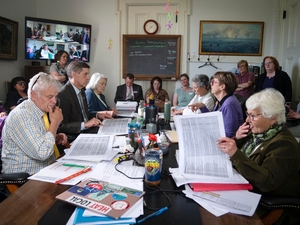
During a joint meeting Tuesday between the House Judiciary Committee and the House Corrections and Institutions Committee, some representatives agreed that a prison didn’t seem like the most rehabilitative setting to provide clinical services.
“There’s nothing therapeutic, there’s nothing clinical. It’s a jail cell,” said Rep. Troy Headrick, I-Burlington, during the committee meeting.
Headrick said he didn’t support the version of the bill the committees considered Tuesday. And Rep. Alice Emmons, D-Springfield, who chairs the Corrections Committee, emphasized that a prison isn’t designed for clinical treatment.
Rep. James Gregoire, R-Fairfield, had a different message for the committees: “Do not let perfection get in the way of the step that needs to be taken.”
The version of the bill the committees considered Tuesday morning was designed to make it clear that placing the programs within a state prison would be a short-term fix — and a step toward creating a permanent facility.
Under a version of the bill that was passed by the Judiciary Committee later in the day, the program would have to be up and running by July 2029. Although the program is slated to be run within a prison, the Vermont Department of Corrections “shall not operate or staff” the program under the bill.
The broader Agency of Human Services would be responsible for the program’s staffing. And under the bill, the proposed facility would only run so long as it has the available resources and staffing.
The bill will have to be passed on the House floor, with the proposed spending attached, then be passed by the Senate once again, before it reaches the governor’s desk.
— Charlotte Oliver
In the know
Gov. Scott signed several bills into law Tuesday, including H.512, which caps most ticket resale prices at 10% above face value in an effort to restrict a sometimes exploitative secondary market. He also signed H.739, a first-in-the-nation ban on paraquat, an herbicide that has been linked to Parkinson’s disease.
— Shaun Robinson
After exhaustive floor debate Friday, the House approved a heavily amended version of S.190, which aims to expedite the Green Mountain Care Board’s ability to implement reference-based pricing and target its savings on two health insurance groups: public school employees and plans bought on Vermont’s Affordable Care Act marketplace. Reference-based pricing is essentially a method to cap the amount hospitals can charge payors, based on some benchmark reference point, often Medicare rates, for instance.
The bill made it through the House largely along party lines. Eighty-seven representatives voted for the bill, with 44 against it. It now makes its way back to the Senate.
The bill has faced serious pushback from Gov. Scott’s administration. Kaj Samson, the commissioner of financial regulation, alongside the secretary of human services and AHS’s Medicaid director, wrote a letter last week to Black and Sen. Ginny Lyons, D-Chittenden Southeast, outlining concerns that by specifically singling out two insurance groups, the savings would not be shared equitably across all commercial payors, as the Green Mountain Care Board’s charge in Vermont law stipulates.
What’s more, they worry that lowering the premiums for the marketplace plans would also result in fewer federal dollars coming into Vermont as marketplace subsidies — because those subsidies are calculated based both on the plan buyer’s income and on the marketplace rates.
Given these concerns, many have predicted that Scott may not sign the bill, if and when it reaches his desk. However, last week a spokesperson from his office declined to confirm that before the governor sees the final bill.
— Olivia Gieger
On the move
A conference committee signed off Tuesday on its compromise version of this year’s transportation policy and funding bill, H.944. The legislation would set out details of a new state program to charge electric vehicle drivers a fee based on how many miles they drive, among other measures. It now needs just a final vote in the House and Senate.
— Shaun Robinson
The Legislature passed a bill, H.606, that creates a stricter process for handling firearms that someone has been court ordered to give up.
Under current Vermont law, someone who is ordered by a court to give up their firearm can have someone else store their gun in the interim. Current law allows someone to pass their firearm off to a law enforcement agency, a federally licensed firearm dealer or somebody else designated by the owner.
The bill would create stricter provisions to pass a gun off to another person, requiring that person to pass a background check and sign a document with the court acknowledging the responsibility. The bill also has other provisions on rules for firearms storage.
House lawmakers passed the bill on a voice vote Tuesday, agreeing to the Senate’s changes to the bill.
In the Senate, the bill was notably stripped of its provisions that sought to largely ban machine guns and machine gun parts in Vermont, in line with federal law. The Senate stuffed similar provisions into another bill, S.329, which sought to create a statewide ban on firearms in bars and was widely expected to be vetoed by Gov. Phil Scott if it passed the Legislature.
— Charlotte Oliver
On the trail
Another Democrat is running for state auditor this year.
Dan Towle, of Huntington, was at the Statehouse on Tuesday pitching his primary bid to be the state’s top fiscal watchdog. At least two others are already in the race: Tim Ashe, the current deputy state auditor and former Senate president pro tempore, as well as Nicholas Graeter.
On the Republican side, perennial candidate H. Brooke Paige is seeking the auditor job, again, as well as attorney general, secretary of state and state treasurer, according to campaign filings. The GOP has little real chance of winning any of those four statewide offices.
Meanwhile, there’s an even more crowded Democratic primary field in Windsor County. At least six candidates are vying for the county’s three Senate seats, one of which is open due to Sen. Alison Clarkson’s retirement.
The four non-incumbents running are Rep. Elizabeth Burrows, D-West Windsor; Ben Brickner; Heather Chase; and Chris Dube.
Thursday at 5 p.m. is the deadline for major party candidates to declare they’re running in this year’s primaries.
— Shaun Robinson
Correction: A previous version of this newsletter misstated which chamber Tim Ashe led.
Read the story on VTDigger here: Lawmakers’ last minute scramble for a facility for those incompetent to stand trial.

Montpelier, VT