Keohokalole Derides Dark Money. A New Super PAC Is Backing Him
Aug 03, 2026 | 6:01 am ET
Description
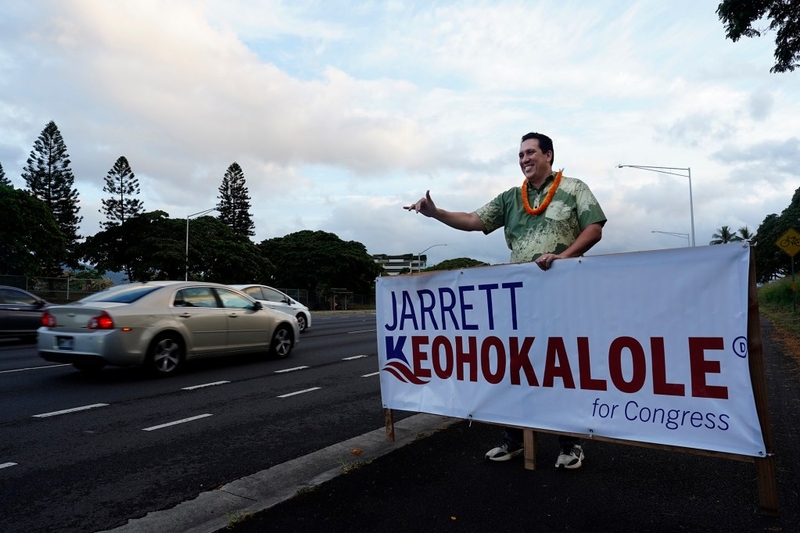
Photo courtesy of Honolulu Civil Beat
Hawaiʻi State Sen. Jarrett Keohokalole has spent much of his campaign deriding the influence of outside money in politics.
Now he’s the one benefitting from it.
Future Progress, a Washington-based super PAC, reported spending $75,000 on digital advertising last week in support of Keohokalole, who’s challenging U.S. Rep. Ed Case in the Aug. 8 primary.
So far it’s been the only super PAC to weigh in on the race. Where its money is coming from, however, remains a mystery since the super PAC won’t be required to disclose its donors until after voters have cast their ballots.
Keohokalole said he has no ties to Future Progress and that “every dollar my own campaign raises is fully disclosed and public.”
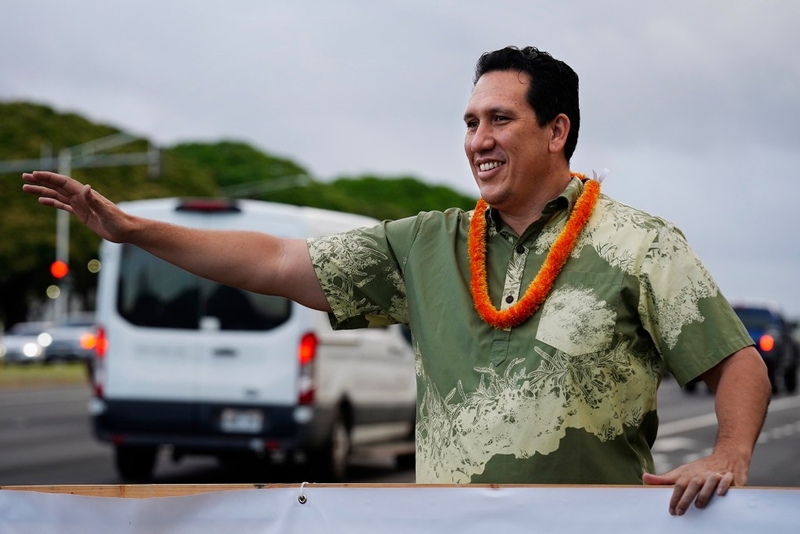
“I don’t control outside groups and I can’t coordinate with them,” Keohokalole said. “Anyone spending money to influence this race should disclose their donors, whether they’re supporting me or my opponent. My campaign’s books are open as they should be.”
A number of super PACs across the country have begun deploying similar tactics to Future Progress in that they drop into races late so that voters don’t get to learn who is bankrolling them, according to Erin Chlopak, the senior director of campaign finance at the Campaign Legal Center.
These “pop-up” super PACs, Chlopak said, “are a particularly insidious way to prevent voters from accessing accurate information about election spending, and they are often deployed at the direction of deep-pocketed special interests.”
Campaign spending records show Future Progress has a history of supporting Democrats and opposing Republicans, including President Donald Trump in 2024.
Since 2020, the super PAC has reported raising more than $1.8 million. Most of that money came from unions, in particular the International Union of Operating Engineers. Its largest single individual contributor during that span was Sander Levin, a former U.S. representative from Michigan who contributed $185,000 to the PAC in 2022 when it was backing his son Andy Levin’s bid for reelection.
The new filings with the Federal Election Commission show that Future Progress hired the same media vendor, Hamburger Group Creative, that Keohokalole has been using to run his own digital ad campaign.
Hamburger Group Creative was founded by Martin Hamburger, a D.C.-based consultant who has a long history of playing in Hawaiʻi politics, including as a consultant for the Pacific Resource Partnership during the 2012 Honolulu mayor’s race.
Federal law prohibits candidates from coordinating with super PACs, and Hamburger said there is a firewall within his firm that makes sure there is no crossover.
Brian Foucart, the treasurer for Future Progress, declined to comment.
John Hart, a professor of communication at Hawaiʻi Pacific University, described Future Progress’s decision to hire Hamburger’s firm as “sloppy.” At best, it forces Keohokalole to answer uncomfortable questions about dark money, Hart said. At worst, it shows a potential violation of campaign rules.
“The most charitable thing I could say is that the optics on this are terrible,” Hart said. “It obviously looks bad. I think most voters are going to look at this and go, ‘Hmmm.’”
For Keohokalole, the influx of outside money adds a new layer of irony to his bid to unseat Case. Throughout the campaign, Keohokalole has touted his efforts to pass state legislation designed to blunt the impact of Citizens United and make it harder for corporations and other artificial entities, such as unions, to influence Hawaiʻi’s elections.
Known as Act 11, the new law has been widely praised as a means to bring more transparency and accountability to the electoral process and limit outside influence on local races. Already it faces significant hurdles and has been challenged in court on First Amendment grounds. The law also doesn’t take effect until 2027, which means it has no bearing on this year’s election.
Indivisible Hawaiʻi Statewide Network, a progressive group that endorsed Keohokalole in part because of his role in getting the bill passed, has described the legislation a victory of “sunshine over dark money.”
Lisa Gibson, an organizer for the group, said the fact that a super PAC is getting involved in the race between Case and Keohokalole just goes to show how essential Act 11 is to protect Hawaiʻi’s elections. She added that Indivisible Hawaiʻi has “full confidence” in Keohokalole’s promise to eliminate dark money from elections.
“We trust that he will take whatever steps necessary in this situation to remain true to this campaign promise,” Gibson said.
Colin Moore, a political scientist at the University of Hawaiʻi, said the fact that a super PAC is coming out in support of Keohokalole at this junction is certainly ironic, but he doesn’t necessarily think it’s the candidate’s fault that it’s happening in his name.
“Outside spending is a routine part of competitive congressional elections, and candidates have very little power to prevent groups from entering a race on their behalf,” Moore said. “I suppose Keohokalole could publicly ask the group to stop, but it would be a rare candidate indeed who greeted favorable advertising with outrage.”
Moore added that the amount of money that’s being spent is relatively small compared to the huge sums being thrown around on the mainland. It’s also unclear how much of an impact it will have given that it’s coming in so late in the campaign.
“They probably see this as a small investment for a potentially huge win,” he said.
Honolulu, HI