TPS for up to 350,000 Haitians officially ends as judge applies Supreme Court order
Aug 05, 2026 | 12:23 pm ET
Description
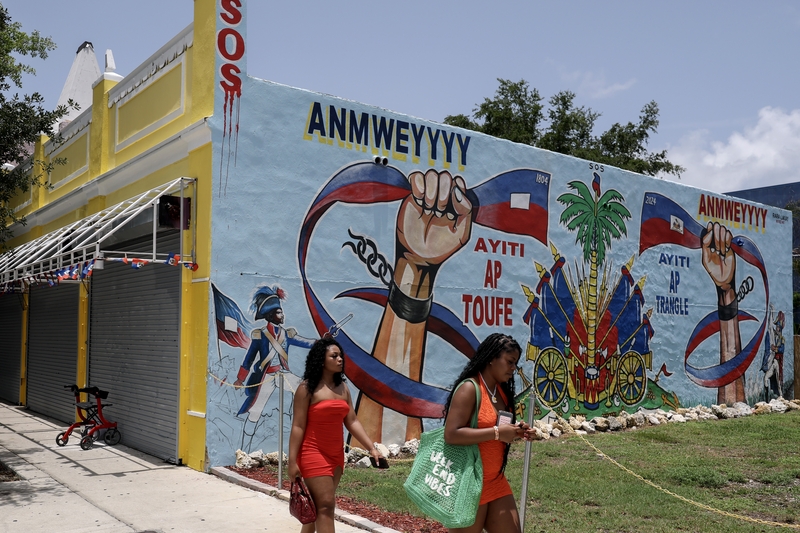
Pedestrians walk through the Little Haiti neighborhood of Miami on June 6, 2025. (Photo by Joe Raedle/Getty Images)
WASHINGTON — A federal judge lifted a stay Wednesday on the termination of temporary protections for hundreds of thousands of Haitians in order to comply with a U.S. Supreme Court ruling that cleared the way for the Trump administration to remove their legal status and open them up for deportations.
The order from U.S. District Judge Ana C. Reyes means that between 330,000 to 350,000 Haitians living in the United States have lost their Temporary Protected Status, even while legal arguments on a racial discrimination claim continue.
Reyes’ order, in U.S. District Court for the District of Columbia, brought the case into compliance with a 6-3 Supreme Court decision that Haitians and Syrians were not entitled to postponements of their status while litigation continues.
The June Supreme Court ruling also said courts could not review the Homeland Security secretary’s decision to end TPS.
As part of President Donald Trump’s mass deportation campaign, the administration has moved to revoke the legal status of millions of immigrants, including those with TPS, which is given to nationals who hail from countries deemed too dangerous to return to.
The State Department has a “do not travel” advisory for Haiti due to gang violence and kidnappings.
Work authorization for Haitians expired last week, along with some driver's licenses for immigrants residing in Ohio and Florida, two states that have passed laws that tie eligibility for a driver's license to immigration status.
Racial animus
The remaining legal argument is whether the Trump administration’s decision to end TPS for Haiti was based on racial animus, which would violate the U.S. Constitution's equal protection clause.
On the campaign trail, then-presidential candidate Trump singled out Haitians living in Springfield, Ohio, claiming that their legal protections were illegitimate and falsely accusing them of eating house pets.
Conservative Justice Samuel Alito, who wrote the majority decision in June, said that the Haitians' arguments that their equal protection claim that their protections were terminated on a racial animus were unlikely to prevail in court.
Discovery issues
The attorney who represented the Haitian TPS holders before the Supreme Court, Geoffrey Pipoly, told States Newsroom this week that he was not expecting Reyes to issue a new stay to halt the ending of protections.
Pipoly and his team had not yet obtained enough evidence through discovery, a process that can take months, to try and secure another stay, he said.
Pipoly said the documents produced by the Department of Justice so far were limited and heavily redacted.
“They're just taking this exceptionally robust view of privilege in a way that I've never seen a government defendant exert privileges before,” he said. “What's behind those redactions is going to influence the scope of our ongoing equal protection claim. But we're going to have to litigate what's behind those redactions.”
Reyes in her Wednesday order also denied the administration’s request to issue a stay on the discovery process and ordered both parties to submit a briefing schedule.
All States Newsroom content is free to republish. Read our republishing policy for more information.