Average Black Hills Energy customer faces potential $45 increase in monthly bill
Aug 25, 2026 | 7:03 pm ET
Description
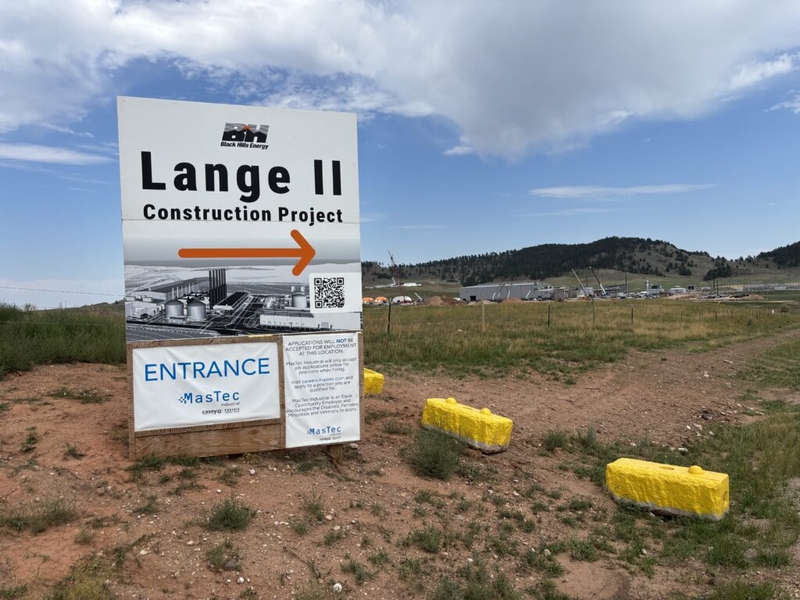
A sign identifies the location of the Lange II natural gas-powered electrical generation plant under construction in northwestern Rapid City, South Dakota, on Aug. 25, 2026. (Photo by Seth Tupper/South Dakota Searchlight)
The average Black Hills Energy residential electric customer in South Dakota faces a monthly bill that will be $45 higher if state regulators approve a pending rate increase and surcharge.
The company’s latest application this month seeks to add a monthly surcharge of $19.70 for the average residential customer, to recoup costs for the $320 million construction of the Lange II natural gas-powered electrical generation plant in northwestern Rapid City. The company has said the plant will meet growing power demands from current customers following the planned retirement of the 1960s-era Ben French plant, and is not in response to any proposals for data center construction.
“Our most important responsibility is providing safe, reliable energy to our customers and communities,” said Wes Ashton, vice president of South Dakota and Wyoming utilities for Black Hills Energy, in an Aug. 5 news release. “Lange II will replace the Ben French units as a critical system resource to serve customers while enhancing the reliability of our Black Hills Energy electric system.”
Relief from energy bills unlikely as utilities request billions in rate hikes
The company plans to start collecting the surcharge in December, when the new plant is expected to start delivering power. If the state Public Utilities Commission has not made a decision by then, the company could collect the surcharge on an interim basis, subject to refunds for customers later if the commission rejects or reduces the surcharge. The commission would then review the surcharge annually.
The surcharge would come on top of a general rate increase that Black Hills Energy is requesting of about $25 per month for the average residential customer. That proposal would generate $50.6 million in additional annual revenue for the company, which serves roughly 75,000 customers in western South Dakota and also serves customers in seven other states. The company has said the rate increase is justified by infrastructure investments, inflation and the lack of a rate increase since 2014.
“Our electric base rates have been unchanged for more than a decade, allowing our customers to experience rate stability, which is a priority for us,” said Lynn Kendall, regional public affairs manager for Black Hills Energy. “We are requesting this rate review because it’s necessary for us to update rates to account for the critical investments and improvements we’ve made to our system over the past 12 years, while also accounting for the increased operating costs to serve our customers.”
The company began collecting the higher rate on an interim basis Aug. 18, because the Public Utilities Commission did not make a decision within a 180-day review period. Customers would receive refunds if state regulators ultimately reject the increase or approve a smaller increase.
Rapid City resident John McKee submitted comments to the commission about the proposed rate increase in March, writing that the increase would “directly and materially affect my household’s financial obligations, energy access, and long-term cost stability.” He warned that higher rates could impose “significant financial burdens” on residential customers.
Commission documents show that if both requests are approved at the proposed amounts, the average residential customer’s monthly bill would rise from $98.96 to $143.70 — a 45% increase.
A group representing some of Black Hills Energy’s largest South Dakota customers, including Monument Health, manufacturers, and mining and materials companies, has filed comments in both commission proceedings. The group wrote that the proposed surcharge would “greatly increase” its members’ cost of doing business.
In addition to its surcharge and rate request to the Public Utilities Commission, Black Hills Energy’s parent company, Black Hills Corp., is pursuing a merger with Sioux Falls-based NorthWestern Energy. Among the states affected by the merger, Montana is the only one in which regulators have not yet approved it.

Pierre, SD