Judge asks New Mexico, Meta to be ‘pragmatic’ as bench trial ends
May 26, 2026 | 6:11 pm ET
Description
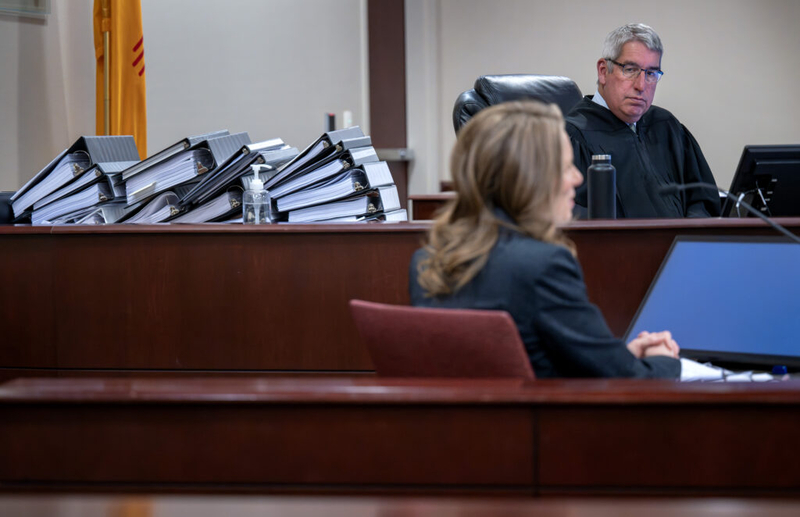
New Mexico First Judicial District Chief Judge Bryan Biedscheid listens to testimony on May 22, 2026, the final day of the second phase of New Mexico’s case against Meta, held in Santa Fe. (Eddie Moore/Albuquerque Journal)
A New Mexico state district judge on Friday asked state prosecutors and social media giant Meta to be “pragmatic” in their written closing statements, which must be submitted by June 12.
The second phase of the state’s trial against Meta — a bench trial without a jury — wrapped after two weeks of testimony. New Mexico Department of Justice attorneys allege Meta’s platforms — including Facebook, Instagram and WhatsApp — constitute a “public nuisance” to teen health within the state. Among its list of demands, NMDOJ requested the court order the company to operate differently for its youth users; issue monetary relief; and appoint an independent monitor.
First Judicial District Judge Bryan Biedscheid wrapped the trial with the same reservations he mentioned at its onset: “I am not a legislative, executive and judicial branch rolled into one that is going to put some overarching, new governmental mechanism in place,” he said.
New Mexico Department of Justice rests case in second phase of Meta child safety lawsuit
The bench trial follows a Santa Fe jury’s March 24 verdict finding Meta violated New Mexico’s Unfair Practices Act, and misled the public on the risks of its sites for underage users’ mental health and risk of sexual exploitation. The verdict, which Meta said it will appeal, also ordered the company to pay $375 million in damages.
In a statement issued after the bench trial’s conclusion, New Mexico Attorney General Raúl Torrez expressed optimism about the state’s prospects.
“New Mexico’s victory, and the $375 million in civil penalties, changed the legal landscape for Big Tech, establishing that they can — and will — be held accountable when they violate laws that protect kids,” Torrez said. “It is time for Mark Zuckerberg to finally prioritize child safety, and I am looking forward to hearing the judge’s ruling on the changes Meta must make to protect children in New Mexico.”
Attorneys for Meta have argued New Mexico’s requests, if granted, would violate free speech for the platform and its users and have called the proposed changes unlawful and redundant with existing protocols.
“Throughout this trial, the New Mexico attorney general has continued his misguided strategy of proposing mandates that would risk leaving teens less safe, infringe on parental rights, and stifle free expression. Even the judge has noted those mandates could be an ‘overreach,’” an unnamed Meta spokesperson said in a statement provided to Source NM. “The state’s case ignores the hundreds of apps teens use daily and fails to provide scientific or legal justification for their demands of Meta. We remain committed to providing safe, age-appropriate experiences and have already launched many of the protections the state seeks, including 13 safety measures this past year.”
Meta officials previously said they would consider withdrawing Facebook and Instagram platforms from the state if the judge granted state prosecutors’ operation requests.
Biedscheid asked both parties to seek a middle ground in their final requests.
“I am hoping that what I’m going to get are ideas that I can put together, that maybe are less maximalist than some that I have seen in the last three weeks, and more along the lines of, ‘here’s what actually might be reasonable.’”
He concluded that he is more comfortable changing the “mechanics of the platforms, rather than the content of the platforms,” citing federal law and the U.S. Constitution.
“I do have concerns still about, most importantly, I’d have to say, the degree to which I am a court dealing with one party,” Biedscheid said. “So much of what I’ve heard is about the entire industry of social media as a whole.”
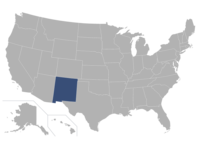
Santa Fe, NM