Michigan health officials sunset early vaccination recommendation after measles outbreak ends
May 26, 2026 | 5:55 pm ET
Description
iStock / Getty Images Plus
Michigan health officials are no longer recommending infants receive an early dose of the measles, mumps and rubella vaccine, announcing Tuesday they had phased out their previous guidance aimed at reducing the spread of measles in several Michigan counties.
At the beginning of April, the Michigan Department of Health and Human Services began recommending early vaccination for infants 6 to 11 months old residing in Washtenaw, Monroe, Wayne, Oakland, Jackson, Livingston or Lenawee counties, after eight cases of measles were identified in Washtenaw and Monroe counties.
While the vaccine is routinely given to children between 12 and 15 months old, the department recommended early vaccination to provide additional protection to infants in the midst of the measles outbreak.
As no additional cases were identified as a result of the outbreak in Washtenaw County, the early vaccination recommendation ended on Saturday, May 16. Between April 8, when the guidance was issued, and when it ended, 2,371 doses of the measles, mumps and rubella vaccine were administered to infants 6 through 11 months within the counties facing risk of transmission.
State health officials urge vaccination amid measles spread in southeast Michigan
“The increase in early MMR vaccines helped protect Michigan babies during this measles outbreak,” Natasha Bagdasarian, the state’s chief medical executive, said in a statement. “Measles is incredibly transmissible and because people can transmit the virus before they experience symptoms, we made this recommendation to keep the most vulnerable members of our communities safe, after a recent outbreak of measles in southeast MI.”
Bagdasarian advised residents to protect their families and communities by staying up to date on all vaccines.
Measles is one of the most contagious diseases in the world. Measles symptoms usually appear seven to 14 days after exposure and can include a high fever above 104 degrees Fahrenheit, a cough, runny nose, red and watery eyes, and white spots inside the mouth two to three days after symptoms start.
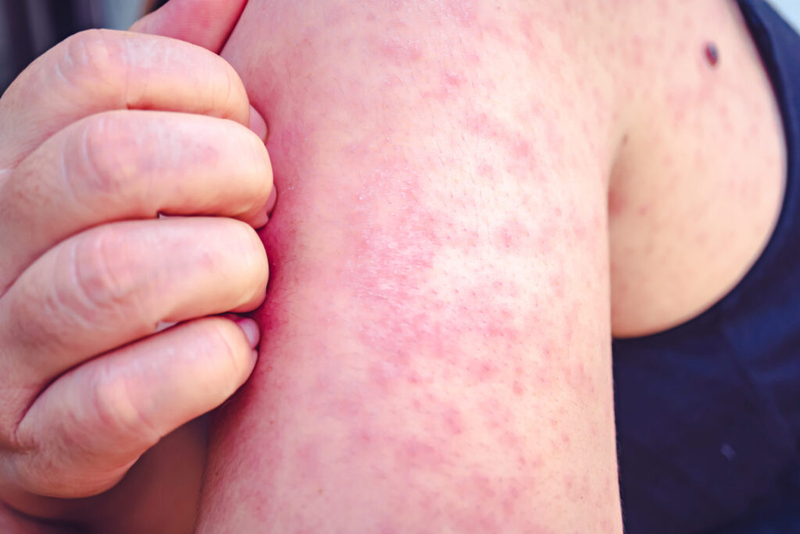
Three to five days after symptoms appear, individuals with measles will develop a rash that appears on the face and spreads downward across the body, though immunocompromised patients may not develop a rash. Measles infection can lead to severe complications including hospitalization, lung infection, brain swelling and death.
The Department of Health and Human Services recommends individuals with a measles infection, or who have been exposed call a health provider, so they can make arrangements to evaluate the patient if needed. Likewise, the department advises anyone in need of an emergency room to call ahead and let them know they may have measles.

Lansing, MI