Bill to hide public money paid to college athletes nears final passage
May 26, 2026 | 5:27 pm ET
Description
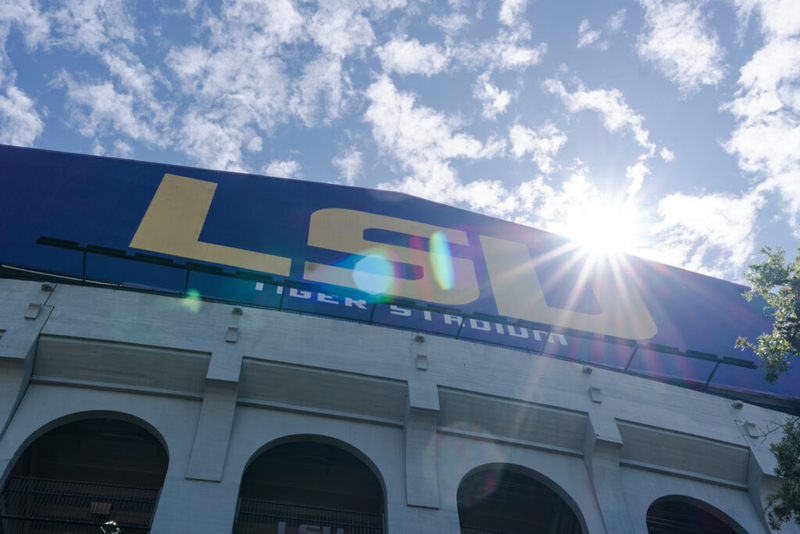
Clouds pass over Tiger Stadium on Monday, March 20, 2023, on LSU’s campus in Baton Rouge, La. (Matthew Perschall for Louisiana Illuminator)
Louisiana legislators are rapidly advancing a bill that would hide details on how much public money is being paid to college athletes.
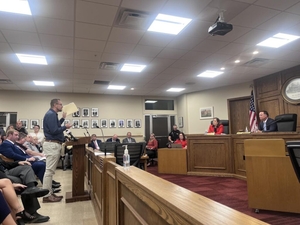
House Bill 608 by Rep. Tehmi Chassion, D-Lafayette, passed the Senate Tuesday on a 22-13 vote. Because it was amended in the Senate, it has to go back to the House for another vote.
The bill has received significant support from the LSU athletics department, with some of its leaders working to secure votes for the bill. Executive Deputy Athletics Director Julie Cromer and Senior Deputy AD Heath Schroyer have appeared at committee hearings to advocate for the proposal.
The legislation would create a new exemption in the state’s public records law to conceal how much public money universities pay directly to student athletes. The payments are allowed under new “revenue-sharing” rules the NCAA implemented after it settled a lawsuit last year brought by student-athletes seeking compensation.
We have jumped the shark on this, and I think it's time that we just say, ‘Enough is enough.'
Revenue sharing is separate from name, image and likeness deals athletes enter into with private entities. These NIL records are already exempt from public disclosure.
Regardless of its source, all revenue a state university receives is public money. For each athletics department, it is a mix of self-generated revenue such as ticket sales, tax dollars and, for some, student fees. There are currently no exemptions in Louisiana law for sharing records with the public that detail how state money is spent.
Ahead of Tuesday’s vote, several senators spoke against Chassion’s bill, highlighting the double standard being created, as how much universities pay students who aren’t athletes is public record.
“These are now professional athletes getting paid more than many actual professional athletes,” Sen. Greg Miller, R-Norco, said. “We have lost sight of our priorities. We have jumped the shark on this, and I think it’s time that we just say, ‘Enough is enough.’”
“University professors and the university presidents, we all know how much they get paid,” Miller added. “But athletes who are getting paid millions of dollars … we’re not going to be able to see what they get paid because we’re trying to protect them. Who are we really trying to protect?”
Sen. Beth Mizell, R-Franklinton, also spoke against Chassion’s bill after her bill, Senate Bill 135, died in committee last week after several university athletic departments signalled their opposition.
Her legislation would have removed the existing $20 million cap on sports gambling tax revenue the state directs to an early childhood education fund and placed it on the Supporting Programs, Opportunities, Resources and Teams (SPORT) Fund, which gives tax money from the same source to Division I college athletics programs.
Under existing state law, both receive 25% of the revenue from onsite and mobile sports gambling, but only early childhood education has the $20 million cap. State college athletics programs are slated to receive approximately $24 million, which would exceed the $20 million cap Mizell wanted to place on their allotment.
Mizell described college athletics as a “luxury” in comparison to early childhood education.
Though Chassion’s bill is not currently in effect, every public university in Louisiana with a Division I athletics program has denied the Illuminator’s request for their revenue-sharing records, citing existing exemptions to public records disclosure in state law. The Illuminator, WAFB-TV and Tiger Rag are suing LSU over the denial of this request.
The move to hide how public money is being spent on college athletes comes as higher education officials acknowledge the detrimental impact athletics spending has had on campus budgets and as lawmakers call for increased scrutiny of university finances.
Gov. Jeff Landry and legislative leaders announced Tuesday they are setting up a task force to study how the state finances higher education.
Chassion’s bill also adds to lawmakers’ efforts in recent years to expand exemptions to Louisiana’s public records law, which exists to provide transparency into policy and spending decisions in state government and all of its offshoots, including higher education. Several pieces of legislation have been filed this year to create or widen public records exemptions.
While LSU barely turns a profit on sports, the overwhelming majority of athletic departments in Louisiana are bleeding money. This includes the University of Louisiana at Lafayette, where its $10 million athletics deficit was a major contributing factor to the school’s nearly $50 million budget hole for 2025-26. The school has budgeted $726,000 for revenue sharing with its athletes this year.
Chassion’s bill has gained approval as the Congressional Black Caucus and the NAACP have called for Black athletes and fans to withhold “athletic and financial support from public universities in states that have moved to limit, weaken, or erase Black voting representation” following the U.S. Supreme Court’s ruling in Louisiana v. Callais. The decision invalidated a major tenet of the Voting Rights Act of 1965 that allowed minority voters to fight discriminatory election policy and practices.
The Congressional Black Caucus’ opposition has nuked the chances of passing the federal SCORE Act in the current Congress. The legislation seeks to allow student-athletes to receive compensation, but it would bar them from being recognized as employees and provide broad antitrust immunity to the NCAA and college sports conferences. It is widely supported by university administrators, including LSU President Wade Rousse.
Chassion is a member of the Louisiana Legislative Black Caucus, which has vocally opposed the adoption of a new congressional map that removes one of Louisiana’s two majority-Black districts in the wake of the Callais ruling.
Only two Black senators voted against Chassion’s bill: Democrats Sam Jenkins of Shreveport and Katrina Jackson-Andrews of Monroe.
Baton Rouge, LA