Housing is critical infrastructure. Indiana communities must align to deliver it.
May 18, 2026 | 5:00 am ET
Description
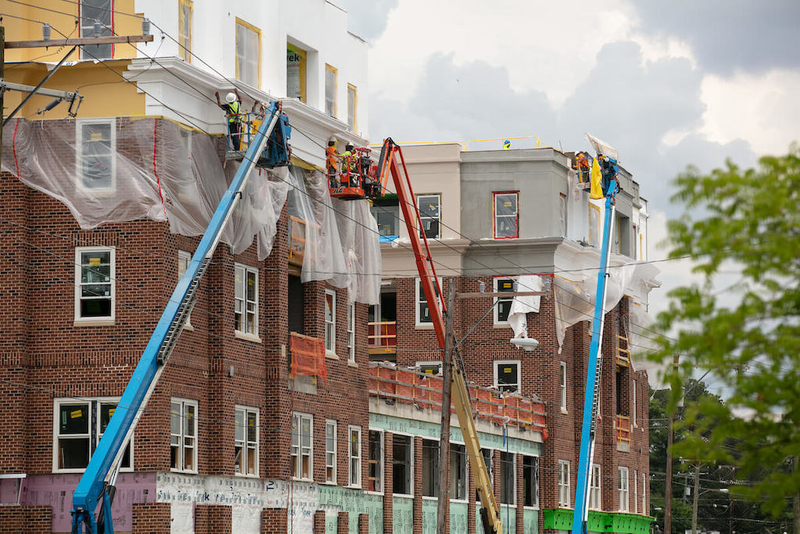
Indiana has an estimated deficit of about 30,000 homes. (Photo by Parker Michels-Boyce/Virginia Mercury)
The national housing shortage has become a significant economic constraint in the Hoosier state and across the U.S. Over the next decade, the places that relieve that constraint will be the places that win the race for population and economic growth.
Indiana’s supply gap is now big enough and costly enough to require dramatic housing policy reforms. All levels of government are working to address the problem, from bipartisan federal legislation making its way through Congress with support from Indiana’s senators to recently passed state legislation and action in Indiana communities.
As House Enrolled Act 1001 — the Indiana legislature’s recently passed housing legislation — goes into effect July 1, it will put the onus on local communities to take steps toward increasing housing supply and density.
In the months ahead, it will be up to local elected leaders to seize the opportunity. Our state’s vitality and economic growth depend on it.
Indiana housing overhaul bill advances by one vote as senators warn of ‘one-size-fits-all’ risks
Indiana has a supply gap
For too many Hoosiers, affordable housing has fallen out of reach. Housing is not just a quality-of-life concern. It is foundational to residents’ well-being, and it is critical infrastructure to a community — as vital as energy, water, schools, or roads. How we address it will shape our region’s ability to succeed over the next generation.
Housing underpins nearly every element that makes a region work. Without it, employers can’t recruit, workers can’t stay, and families can’t build stability. Commutes get longer, household budgets get tighter, and neighborhoods become less economically diverse when housing supply fails to keep pace with demand.
Housing affordability pressures are math, not ideology.
Indiana added roughly 125,000 new homeowner households over the past five years, according to the Indiana Association of REALTORS, yet permitted fewer than 99,000 single-family or duplex units in the same period, leaving an estimated deficit of about 30,000 homes. That imbalance shows up in rising prices and, ultimately, in who gets to live and work in our communities.
Buying an average-priced home in 2025 required an estimated household income of $85,000, well above the state median of $72,000 – and the average home price to income ratio has nearly doubled over the last decade.
Homeownership is only part of the picture. Indiana’s renters face a documented shortage of affordable and available homes: effectively half of Indy’s renters spend more than 30% of their income on housing and a quarter spend more than 50%. Those burdens affect health, education, and family stability.
Housing costs are a problem in metro areas nationally, but unlike many cities, the Indy region still has time to correct the course on housing if we act intentionally.
Local solutions will lead the way forward
HEA 1001 ultimately empowers and challenges local communities to take the lead on increasing housing supply. We’ve already seen communities around the state pioneer positive changes toward housing growth.
For example, Indianapolis allows dense multi-unit construction right along transit lines. Through its expedited permitting process, Noblesville has added thousands of housing units in recent years. Carmel made recommendations to address community housing needs in 2024 and is now working to implement them as part of a mayoral advisory group.
And South Bend has rolled out a program to pre-approve certain building types at no cost, easing the process of new construction on underutilized, vacant, or blighted land. These communities are building momentum, but so much more remains to be done.
A key provision of HEA 1001 requires all cities, towns, and counties to conduct public hearings to evaluate their development ordinances to determine if they are adequately promoting housing development, taking into consideration factors such as density, rules around accessory dwelling units, lot sizes, setbacks, and more.
This marks a departure from the law’s original language, which created state-defined standards on things like setbacks, parking requirements, and density.
Reasonable people can disagree about which approach is best, but the core goal — making it easier to build the housing Indiana needs — is hard to argue with.
The question before local communities is simple: what new ideas will they bring to the table to grow housing supply?
Building nothing simply is not an option. Housing is critical infrastructure, and the ability to access it will shape whether the Indy region excels or declines over the next generation.
By acting with urgency and collaboration, we can make Central Indiana the most livable region in the nation.
Indianapolis, IN