House Education Committee passes cyber student safety bill after heated debate
Jun 10, 2026 | 6:44 pm ET

Description
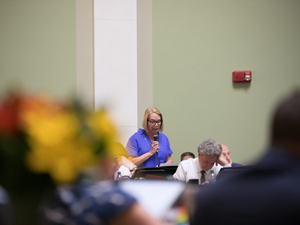
The House Education Committee passed a measure to assure the welfare of cyber charter school students following a heated debate Wednesday (Photo by Tim Lambert/Capital-Star)
A proposal to make online charter schools responsible for assuring the wellbeing of their students sparked tense debate Wednesday as GOP lawmakers warned it would ultimately leave parents with fewer choices for their children’s education.
Traditional students are seen every school day by dozens of faculty and staff, state House Education Committee Chairman Peter Schweyer (D-Lehigh) said. They can pick up on and are required to report signs of abuse or neglect, such as self-harm, drastic weight loss or injuries.
Cyber charter teachers must check in with their students at least once a week under rules passed by the General Assembly in 2024.
But the lack of a clear and enforceable process to respond to concerns creates a dangerous disparity, he said.
“This is a matter of student safety and student safety is of the utmost importance,” Schweyer said
Opponents of Schweyer’s House Bill 2602, questioned his motive and rejected his explanation that it would impose requirements similar to those traditional public schools must follow.
“I think it actually targets a mode of education that 70,000 kids and their parents choose, perhaps with the goal of eliminating that option altogether,” said Rep. Joseph D’Orsie (R-York) , arguing that the bill was unconstitutional because it did not apply equally to traditional schools.
The measure would require cyber students to appear on camera at all times during live online instruction. If a student fails to do so, they would be marked absent.
It would also establish triggers for reporting suspected abuse, protocols for communicating with students’ caregivers and authorities, and state-level reporting requirements. Consequences for schools that fail to follow the law include the loss of funding or non-renewal of a charter.
It passed with a 14-12 vote in the Education Committee with every Republican voting “no.” The bill now goes to the House chamber for consideration.
Cyber charter schools are online public schools funded with taxpayer money from each student’s home school district. First permitted by a 2002 amendment to the charter school law, there are now 14 cyber charters in the commonwealth that enroll more than 65,000 students.
They’ve come under criticism in the General Assembly as a state audit and scrutiny from public education advocates have highlighted excessive surpluses and spending uncharacteristic of public schools. A change in the funding rules for cyber charters in last year’s budget endorsed by Gov. Josh Shapiro trimmed about $178 million from their budgets and returned a substantial amount to school districts’ coffers.
Republican lawmakers, who generally advocate for alternatives to traditional public schools, have criticized the push to hold charter schools accountable as an attack on educational choice.
https://penncapital-star.com/education/audit-finds-pennsylvania-cyber-c…
Noting that his bill was the third attempt in as many years to pass a student welfare law for cyber charters, Schweyer anticipated opposition and admitted he has been a tough critic of insufficient state oversight provided by the charter school law. He argued that recent episodes of child abuse and neglect show cyber charters need to be held accountable for their pupils’ safety.
In Lehigh County last year, twin 15-year-old boys were discovered severely malnourished when one of them was found on the front lawn of their home, nearly naked in frigid weather. Investigators, who charged their mother and step father with felony child endangerment, said the children weren’t enrolled in a brick and mortar school and hadn’t been seen by teachers on a regular basis or received medical care in years.
In Chester County, 12-year-old Malinda Hoagland died of starvation and multiple blunt-force injuries in May 2024. Investigators said she had been chained to a desk in her bedroom, beaten and starved. Local school officials said that after they reported concerns about Malinda’s welfare, her father withdrew her from the district and enrolled her in a cyber charter school where her continued abuse went unreported.
“This legislature has a history of acting when bad things happen to kids. That is a bipartisan statement that is not new with this legislation,” Schweyer said.
Rep. Barbara Gleim (R-Cumberland) said she worried about the impact of the bill on cyber charter students who had left traditional schools to escape bullying.
“A large portion of students who attend the cyber charter school were bullied in their home school district, and now the bully is coming after them, spurred on by a political agenda,” Gleim said.
Schweyer objected, noting Gleim’s remark was the second by a Republican to question his intent, a violation of House rules and attempted to end the debate, and call a vote. Rep. Bryan Cutler, the ranking Republican committee member, prevailed upon Schweyer to allow discussion to continue with a warning not to question the motives of other lawmakers.
Speaking at the conclusion of the debate, Cutler said he believes that everyone involved cares about kids and student outcomes.
“We often had a saying in law school that, unfortunately, sometimes bad facts make bad law, and I’m worried that that’s the path we’re going down here,” Cutler said, adding that the main objection to the bill appeared to be that it applies only to cyber charters.
Cutler said he would be open to discussion as budget negotiations continue toward a June 30 deadline and would consider a version of the measure that would apply more broadly to all public schools.
“I’m all for standards,” he said. “It’s just that whatever those standards are, I want them to be applied equally across all venues and all types of schools.”
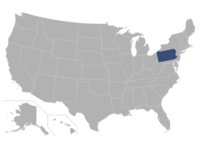
Harrisburg, PA