College of Charleston may spend extra $5.2M to house students amid dormitory shortage
Jun 10, 2026 | 5:47 pm ET
Description
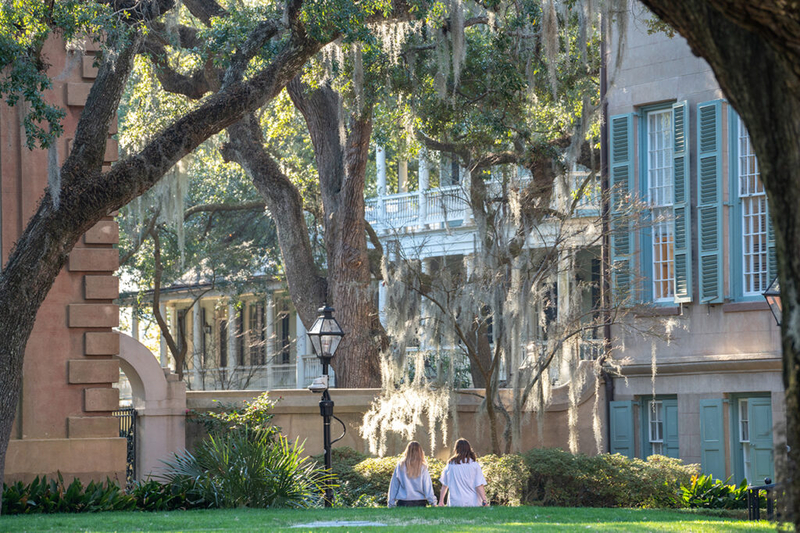
Students walk to class on the College of Charleston campus (Photo courtesy of the College of Charleston)
COLUMBIA — The College of Charleston could spend $5.2 million it didn’t expect to pay to house students as it runs out of space on campus.
The housing crunch at the public college on the Charleston peninsula comes amid a record number of applications. The incoming freshman class is expected to top 2,600 students, compared to about 2,300 last school year.
In a fast-growing city where the apartment market has long been tight, it is university policy to guarantee on-campus housing to any returning upperclassmen who wants to sign up, so long as they meet application deadlines, according to Paul Patrick, the school’s interim vice president for business affairs.
But with so many new students this year, that guarantee created issues.
“At what point do you say, ‘There is no room at the inn?’” Senate Finance Chairman Harvey Peeler asked during a Wednesday meeting of a legislative fiscal oversight board where the college sought permission to look for outside lease options.
Patrick said college leadership is having the conversation about whether or not to continue that policy into the future.
“Because we are getting more and more pressure from incoming students, we may not be able to guarantee housing for return (students),” he said.
Ultimately, the oversight board (the Joint Bond Review Committee) signed off on the ask. The college still needs the approval of the five-member State Fiscal Accountability Authority chaired by the governor.
An estimated 150 to 170 students will need to live in the alternative housing, Patrick said, but the school is looking for space for as many as 275 students should the need arise.
The switch has already caused consternation among parents of students, with people posting about the issue in an online parents’ forum.
Parents also said their students were given the option of choosing from rooms in four hotels, two of which were located across the Ashley River in West Ashley.
According to the state Department of Administration, which acts as the leasing agent for all state agencies, bids have been returned from eight different properties. The agency is in the process of negotiating the terms.
Patrick said those properties include condos and apartments. He did not disclose the locations due to ongoing negotiations.
The school also said it would charge students at the rate of the housing they previously selected. For the dormitories mentioned in the parent forum, those rates range from $5,700 to $6,500 for the school year.
But the college is prepared to spend nearly $19,000 per bed on outside rentals, which means the school may only recuperate a third of what it spends on each bed — an uncovered expense of up to $3.7 million of that more than $5 million contract.
The College of Charleston is not the only school in the state that has had to turn to outside housing options.
Lander University received approval from the state’s fiscal oversight boards last June to rent out 200 beds in Greenwood. The cost of that contract, however, was less than a sixth of what the College of Charleston could spend.
And the University of South Carolina rented space in privately-owned apartment buildings to house students for several years. However, the completion of the new Campus Village dormitory complex in fall 2023 was “a huge relief valve” for that issue, according to spokesman Jeff Stensland.
The College of Charleston also is an outlier in its housing guarantee policy. The state’s other large colleges — USC and Clemson University — all allow upperclassmen to apply to live on campus. But there is a set allotment of rooms, which are available on a first come, first served basis.
Coastal Carolina University actually requires both first and second-year students to live on campus, though it has relaxed that requirement some as housing demand has grown.
Only freshmen are guaranteed on-campus living.
But the rental costs and housing stock around those colleges are also vastly different.
The average rent on the peninsula is between $2,500 and $5,000 per month, according to industry data from CoStar Group.
In downtown Columbia, it’s closer to $1,500 to $1,700. In Conway, it’s about $1,400. The average in Clemson is about $650.
Columbia