UNO’s future as a research institution in doubt as it rejoins LSU System
Jun 10, 2026 | 5:54 pm ET

Description
A recently unveiled LSU New Orleans logo (UNO photo)
Whether the University of New Orleans will retain its status as a research university after it rejoins the LSU system is uncertain, LSU System President Wade Rousse said.
Rousse said restoring the UNO’s financial stability is a priority as it becomes LSU New Orleans on July 1.
“I think that faculty is committed to remaining and keeping the [research] status,” Rousse said in an interview. “… From my perspective, from the system level, I worry about finances, so we are 100% focused on how do we increase revenue, how do we manage expenses.”
UNO is the only public research university in New Orleans and one of five public colleges in Louisiana to earn a research ranking from the Carnegie Classification of Institutions of Higher Education. UNO’s R2 rating denotes “high” research activity, one step behind the R1 status LSU and the University of Louisiana at Lafayette hold with “very high” research activity.
Louisiana Tech and Southern University are also R2 schools.
Maintaining UNO’s status as an urban research institution has been a top priority of faculty throughout its move from the University of Louisiana System to LSU. UNO was founded in 1958 as a satellite campus of LSU before moving to the UL System in 2011, with proponents of that moving saying the New Orleans school needed to move outside the shadow of the state’s flagship campus.
UNO’s transfer back to the LSU System is happening in response to a long-running enrollment decline at the New Orleans school, which has caused a fiscal crisis. The school had a student body of around 17,000 before Hurricane Katrina, with an immediate drop to around 6,000 after the August 2005 storm. For the fall 2025 semester, its total enrollment was 5,670.
Rousse said LSU New Orleans is on track to enroll 6,000 students for this fall semester.
“We have a budget built for 6,000 in the fall that would allow us to have a cash balance and get through the following year and start to rebuild to what we think can be something incredible,” Rousse said.
Last year, the Louisiana Legislature gave the LSU System approximately $20 million to aid in UNO’s transition. Rousse said most of that went toward paying outstanding bills.
Last year, the LSU System restructured to absorb all of its research-intensive campuses into its main campus. The leaders of LSU’s medical schools in New Orleans and Shreveport, the Pennington Biomedical Research Center and the LSU AgCenter now report directly to LSU Chancellor Jim Dalton.
LSU New Orleans is not part of the restructuring. But Rousse said that if LSU is successful in stabilizing UNO, in two or three years it would consider folding the school into its research portfolio.
Unifying LSU’s research institutions under Dalton is being done to boost the university’s total research spending figures in its quest to become a top 50 research university.
Rousse told the state Board of Regents Wednesday LSU has already taken several steps toward shoring up UNO’s finances.
The physical footprint of the campus has dropped from 2.9 million to 2.5 million square feet, which Rousse said has saved the university more than $2 million on electricity bills and maintenance expenses.
Rousse has also instructed the UNO facilities staff to save money by addressing maintenance issues on campus with scavenged parts from the closed buildings.
“If you need an air condition pump, if you need a door knob … you need to go get it off of those two buildings that we have taken offline,” Rousse said.
LSU New Orleans has increased its enrollment by offering seats to applicants who didn’t get accepted to its main Baton Rouge campus. They will be offered a transfer path to the flagship school on the condition they perform well.
Rousse said he was also able to lower costs by eliminating six programs and restructuring three others.
Eliminated or soon to be eliminated are bachelor’s degrees in international studies, mathematics, and elementary special education, though this degree will likely remain on the books in case a need arises in the future.
Also being eliminated are master’s degrees in tax accounting and special education instruction for elementary and secondary education.
The bachelor’s in art history will be recreated as a studio art degree, which will have the option of art history as a minor. The bachelor’s degree for film and theater will eliminate the theater track and become a bachelor’s of film arts, offering theater arts as a minor. The master of fine arts in film and theatre will also be redesigned to focus on film.
Rousse said no faculty have been terminated through program cuts so far.
UNO will be led by an interim chancellor, Jeanette Weiland, effective July 1, after President Kathy Johnson accepted a job as the executive vice president and provost of St. Louis University.
Rousse said LSU would launch an official search for her replacement starting Monday.
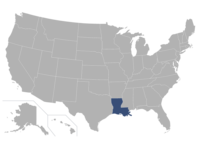
Baton Rouge, LA