Hawaiʻi Schools’ New Cellphone Ban Is Here. What Are Teens Saying?
Aug 11, 2026 | 6:01 am ET
Description
Photo courtesy of Honolulu Civil Beat
Sophomore Olena Aleka-Hanohano has already noticed a change at McKinley High School. Students seem friendlier, they are treating their teachers with more respect and staying better focused in the classroom.
The biggest difference from her first year of high school: Students are no longer allowed to use their phones during class.
"When I walk into class now, I don't see everybody glued to their phones anymore," she said. "It's honestly kind of heartwarming to see everybody getting along."
This school year marks the start of Hawaiʻi's statewide cellphone policy, which bans the devices during the school day for elementary and middle school students. In the high schools, students can't use their phones during class but can check them during recess, lunch and passing periods.
The policy includes exceptions for students who need to use their phones for health-related reasons or in cases where teachers explicitly permit kids to use their devices for learning. Schools may allow students to use their phones during emergencies or threats to their safety, and parents can call schools' main offices if they need to contact their kids, according to the policy.
"As cellphone use has become more common among students, schools are seeing the challenges that constant digital access can create during the school day," Superintendent Keith Hayashi said in a letter to parents in May. "We are taking steps to help students stay focused in class and strengthen in-person connections at school."
High school students interviewed by Civil Beat said the policy's implementation varies among classes. Some teachers allow students to stow their phones in their bags, while others have lockers or collection boxes to hold them for the duration of class. Schools can also set consequences for breaking the policy, which range from verbal warnings from teachers to the confiscation of phones to the main office after repeated offenses.
Students say it’s a significant change from past years, when they typically kept their phones in their pockets and would check their notifications, scroll on social media or listen to music during class.
"Once we go into class, it's like our phone is always in our hands," McKinley senior Orsalyn Kasio said about her classes last year. "The teacher just keeps talking while everyone is just glued to their phone."
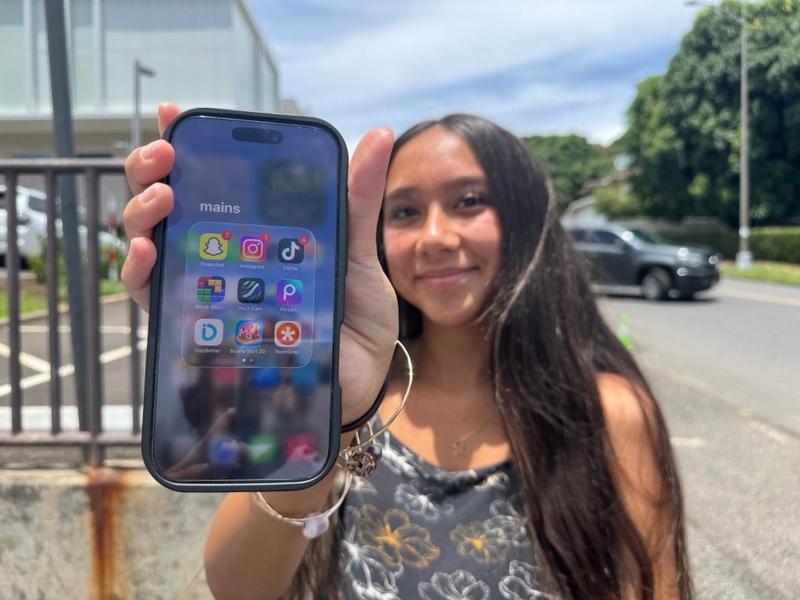
At Roosevelt High School, freshman Amelia Barnett said the new policy has reduced distractions in class, since she can't see new notifications or feel her phone buzz when it's in her backpack. When she's done with class, she said, Instagram is typically the first app she'll open on her phone.
So far, Barnett said, her classmates have been good about following the new policy. She's hopeful they'll develop good habits that will last them the rest of the year.
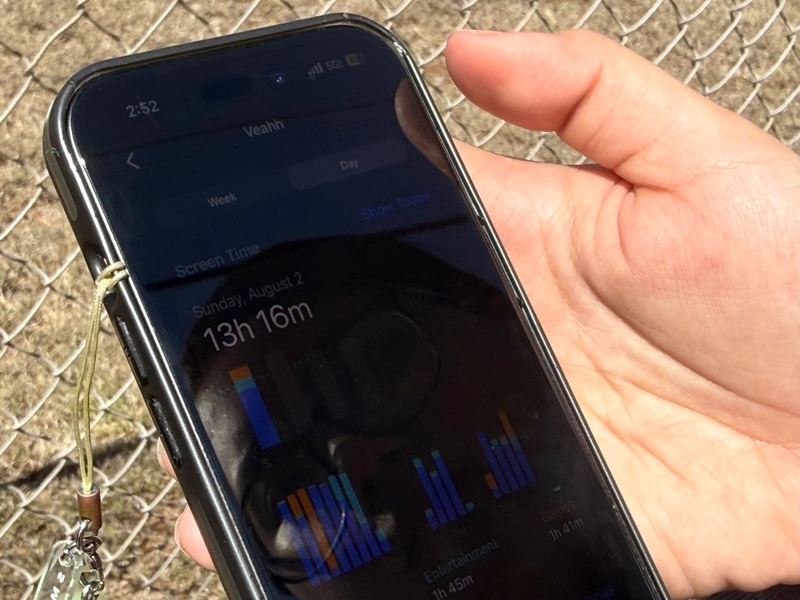
Naeveah Rubi, a sophomore at Farrington High School, said she logged over 13 hours of screen time on the Sunday before the first day of school. On the second day of school, she had only logged an hour and 19 minutes by the time school let out. The new policy has discouraged her from reaching for her phone and has encouraged her to participate in class more, Rubi said.
Not all teens are sold on the policy. Some students say they've seen their peers sneak out their phones without drawing the attention of their teachers during the first few days of the school year. Others say they would like easier access to their phones in the case of emergencies.
At Campbell High School, senior Joshua Tom said he understands the value of the policy and agrees that students tend to socialize more when their phones are stored in their backpacks. But some teachers take the policy a step further and collect students' phones in boxes or pouches, he said, meaning they're out of reach until the bell rings.
During an emergency like a lockdown or fight on campus, Tom said, he would want better access to his phone to contact his parents. Some teachers would also permit students to use their phones once they were done with classwork in the past, Tom said, and he would use the time to coordinate club meetings or after-school activities with his classmates over text.
"When some of the teachers at our school have their own interpretations and they take the phone away, it's really, in my perspective, just a safety issue," he said. "Especially if an emergency happens, we can't contact anyone."
Others would like the policy to go further by banning cellphones for the entirety of the school day.
On Maui, parent Laura Wagner hasn't given her fourth grader a phone. Older kids who have them could benefit from unplugging from them for the full school day, she said. Students can easily go on social media and bully their peers during passing periods or lunch, Wagner said, and she would rather see students socializing during their free time instead of worrying what their peers are saying about them online.
As a mental health counselor who works with teens, Wagner said the ban is a step in the right direction.
"Every teenager that I've ever worked with, even as much as they use their phone and they use social media, they say life is so much harder for us now as teenagers because of social media," she said. "Even if they're using it, it's as if they wish it didn't exist."
McKinley High School Principal Ron Okamura said he wants to see how the first year of the new policy goes but would be open to more requirements preventing high schoolers from using cellphones for the entirety of the school day. Like Wagner, he thinks a day-long ban would reduce students' time on social media and cut back on incidents of cyberbullying.
He's hopeful younger students will learn better habits about moderating their cellphone use as they move through elementary and middle school, so they'll be able to use their devices more responsibly by the time they come to high school.
"As the younger kids start moving up to high school, it's not going to be something that they're so totally dependent on like they are now," Okamura said. "It's ingrained upon them, during school: You don't use your cellphone."

Honolulu, HI