The government gave these Minnesota immigrants permission to live and work here — then detained them
May 22, 2026 | 7:00 am ET
Description
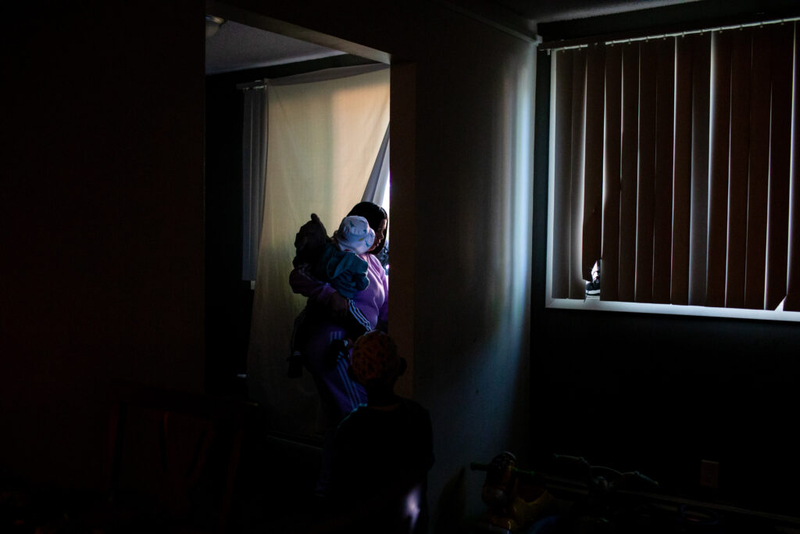
Genesis Mendoza holds her youngest son Moises, 2, while passing luggage out the window as she prepares to leave their Burnsville apartment and attempt to self-deport Wednesday, May 20, 2026. (Photo by Nicole Neri/Minnesota Reformer)
Lea este informe en español.
Willi Rondon was arrested in his apartment parking lot by immigration agents nearly six months ago. His wife, Genesis Mendoza, was in the passenger seat and their 2-year-old son in the back.
Rondon didn’t get out of the car when agents first asked him to. A Spanish-speaking agent shouted at them: “Get out, a**hole — if you don’t, I’m taking her too, and your kid’s going to stay here crying,” Mendoza remembers him saying.
Rondon begged the agents not to touch his wife as she unbuckled her son from his car seat, clutching him to her chest. The agents hit Rondon, Mendoza said, before unbuckling him, dragging him out of the car, loading him into the back of a van and driving away.
Rondon was a delivery driver with a valid work permit. He’s like hundreds of Minnesota residents arrested by immigration officials despite holding a valid work permit — which, while not necessarily an indicator of its holder’s underlying immigration status, demonstrates that the person pursued legal methods of entry and immigration.
In other words, immigrating “the right way.”
In an analysis of more than 1,100 habeas corpus petitions — lawsuits filed by people who say they were wrongly detained — the Reformer identified 273 individuals with valid work permits who were arrested by immigration authorities during the immigration crackdown known as Operation Metro Surge. That number is almost certainly an undercount, given that many immigrants were removed from Minnesota — or the U.S. — before they could challenge their detention, while other immigrants may have held work permits that were not mentioned in the court documents. Others may not have had access to attorneys to file such lawsuits.
They are a Burnsville school custodian and a Columbia Heights restaurateur. They work for major corporations like Medtronic and Amazon. They are childcare workers, tradesmen, salesmen and home cleaners. They were arrested at Home Depots, construction sites, gas stations and outside their children’s schools.
Mendoza worked at McDonald’s until giving birth to her youngest child Moises. Rondon worked as a roofer until his back gave out, then became a delivery driver for Instacart and other apps.
The Department of Homeland Security issues work permits to immigrants with a range of statuses, including refugees, people with pending asylum claims and recipients of Deferred Action for Childhood Arrivals, or Dreamers. Applicants must pay a fee — now more than $1,000 for asylum seekers — and submit various immigration and identification documents to receive the permit.
Work permits used to grant asylum-seekers some security and stability while they waited, often for years, for overburdened immigration judges to return a decision on their case.
“Under this administration, having a work permit does not matter anymore,” said Karen Bryan, a Twin Cities immigration attorney.
DHS did not respond to the Reformer’s emailed questions for this story.
Rondon and Mendoza are originally from Venezuela, but left the country nearly a decade ago due to political violence and economic collapse. They lived in Ecuador, Chile and Peru before deciding to head north. They trekked through the roadless, perilous Darien Gap with an infant and a 6-year-old, nearly losing them both along the way. Their son, Mateo, spent a month intubated in a Guatemalan hospital with a lung infection he developed in the jungle. Aranssa, the oldest, was nearly carried away by a river current.
After arriving in relative health at the Mexican-American border in 2023, the couple scheduled an appointment with immigration authorities to apply for asylum, spent a few days in detention at the border, then were released with permission to live and work in the U.S. while their cases were pending.
They built a life. Rondon got a Minnesota driver’s license and started each day driving the older children to school. Aranssa, a disciplined student, quickly picked up English. Mateo received services to address his speech delay. Mendoza relished the time spent at home, mostly with Moises, trying to stay present for her kids’ fleeting childhood.
After his arrest, Rondon spent over a month in a Texas detention center before he was deported to Venezuela in February.
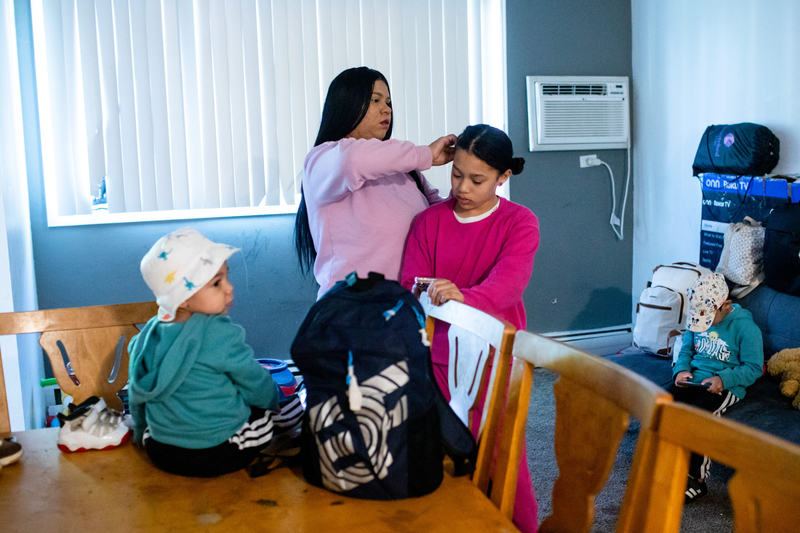
Without her husband’s income, Mendoza has had no way to provide for her children. Since the arrest, she has hardly left the house, keeping the blinds drawn and the children quiet in their ground-level apartment. Aranssa, the 10-year-old, waits for the sun to set before running out of the building with a trash bag, tossing it in the dumpster before sprinting back to the security of the apartment.
Mendoza couldn’t eat or sleep for days. Her kids keep asking where their father is. They’re surviving on donated food, some of which is expired, and the boys have suffered vomiting and diarrhea. COPAL, a Latino advocacy group, and a local church paid her rent for a few months, but funds are running dry, the landlord is angry and Mendoza knows she can’t continue living like this.
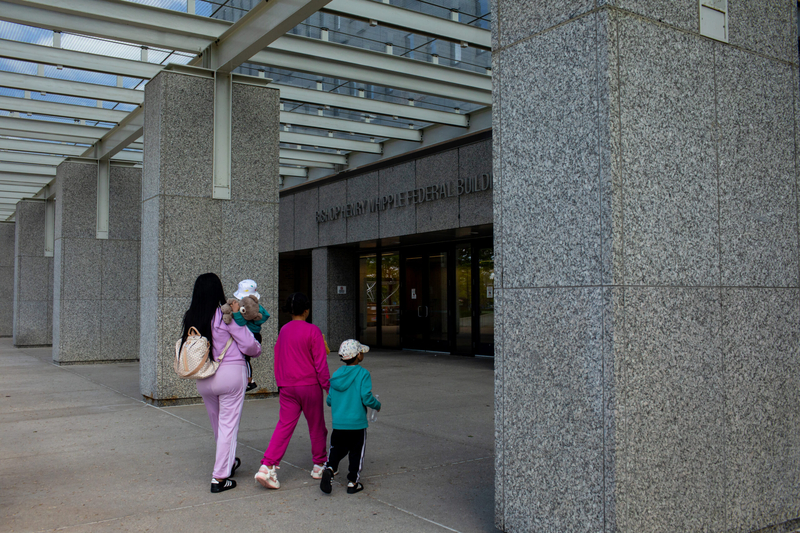
On Wednesday morning, some of the women who have been supporting Mendoza’s family arrived at the apartment. Mendoza loaded the kids into borrowed car seats, and together they drove to the headquarters for ICE in Minnesota — the Whipple Federal Building.
The jailed sheriff
A former sheriff spends his days in a jail cell in southwest Missouri, though he has committed no crime.
In his home country of Liberia, Jarvis Felton took a job in law enforcement because it was one of the few occupations that offered economic stability in one of the poorest countries in the world, according to Felton’s brother, James Ellis.
Felton arrested and contributed to the prosecutions of gang members, according to court documents. When those gang members were pardoned by a newly-elected president, Felton’s family faced retribution in the form of “assault, arson, kidnapping and rape,” according to a lawsuit challenging his detention.
He went into hiding, then flew to the U.S., where he requested asylum and received a work permit. He took a job at Medtronic as a machine operator and drove for Uber and Lyft on the side. At times he also worked at an assisted living facility. His work paid for his family’s housing and his kids’ school back in Liberia, and he was working with attorneys to find a way to bring them to the U.S.
He has no criminal history aside from a couple traffic tickets.

Immigration agents arrested him on Dec. 6, the first week of Operation Metro Surge, after he dropped off a client at the airport, according to his pastor, Rev. Shawna Horn of the Brooklyn United Methodist Church. Six days later, DHS sent him to Greene County Jail on the outskirts of Springfield, Missouri, where he’s living among people accused of assault, domestic violence and kidnapping.
Federal law requires DHS to detain immigrants who are “seeking admission” to the country, which has historically applied to people arrested near the border. In July, DHS issued a memo changing its stance on the law, arguing that immigrants around the country must be detained while their immigration cases are processed. The result is more people detained for longer. In late January, more than 70,000 people were in immigration detention, a 75% increase since the start of President Donald Trump’s second term.
Courts have split on the legality of the new DHS policy, with the federal appeals courts covering Minnesota, Missouri and Texas backing DHS’s interpretation of the law. The Supreme Court is likely to decide the issue.
When Horn walked into the Greene County Jail and asked to see Felton, an officer laughed.
She’d driven 10 hours from the north Minneapolis suburbs to the jail, thinking the whole way of Jesus’s words: I was in prison, and you visited me. Religious leaders seeking to provide pastoral care to detainees typically wait weeks, even months, for permission to enter the jail, the staff told her. Religious leaders around the country — including in Minnesota — have sued the federal government for denying pastoral care to ICE detainees and won.
Horn was driving back to the jail later in the day, this time with her collar on, planning to pray for Felton outside, when her phone rang. In “an act of God,” the officer told her, she would be allowed to visit.
With a Bible and thick glass between them, Horn read Felton the words Paul the Apostle wrote from a Roman prison: “Do not be anxious about anything, but in every situation, by prayer and petition, with thanksgiving, present your requests to God.”
Inside the jail, Felton has created his own ministry, Horn said, sharing scripture and his commissary purchases with other inmates. Despite a period of illness and an aversion to the processed cafeteria food, he has kept in good spirits, Horn said, relying on his faith to carry him through.
“He genuinely has a spirit of gratitude — always — even now, which is surprising,” Horn said.
But his brother said “he’s not doing good.”
“You don’t want to be in jail. He’s been there too long,” Ellis said.
He remains in detention while his attorneys fight to keep him in the U.S.
‘That’s where the torture begins’
The first two times immigration agents stopped Alex, a Guatemalan asylum seeker in his 50s, he showed the officers his valid work permit, and they let him go.
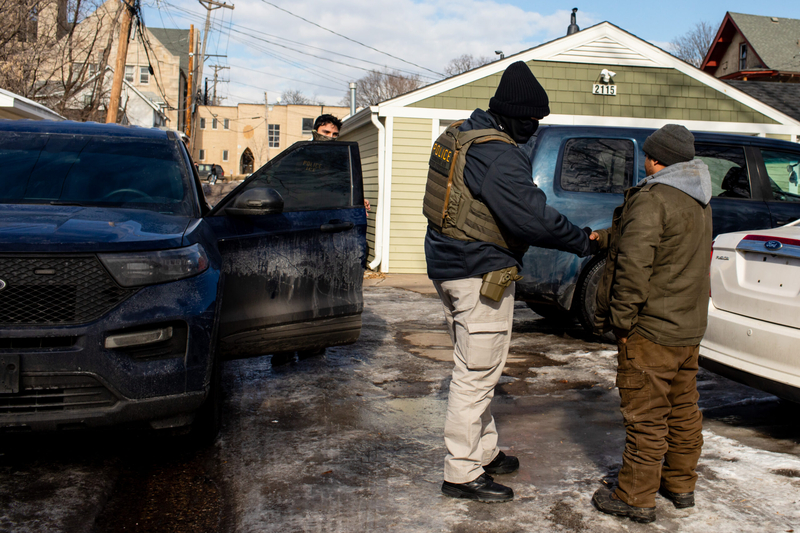
The third time, he wasn’t so lucky.
His car had broken down, so he borrowed a friend’s brother’s car to drive to work, unaware at the time that the car’s owner had an outstanding deportation order, Alex said. He asked the Reformer not to publish his full name for fear of compromising his ongoing asylum case.
Immigration agents pulled Alex over, and he got out of the vehicle. Then, an agent launched towards him and a melee ensued.
“They all fell on top of me … they started to hit me,” Alex said.
A female agent stopped the agents roughing up Alex and helped him into the back of the feds’ vehicle. Only then did they ask for his papers, Alex said. Even after they realized he wasn’t the target of their arrest, the agents brought him back to the Whipple Federal Building.
“That’s where the torture begins for everyone,” he said in Spanish.
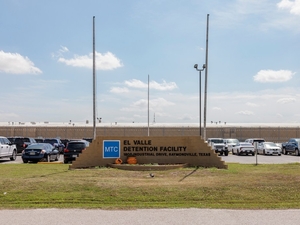
Alex said he slept on the floor for two nights with little food and water before being shipped to a Texas detention center. In El Paso, he saw a dead man in the nurse’s station, he said, and heard of other deaths. The food was nearly inedible, and he slept in a room with 60 other men.
Meanwhile, his attorneys sued for his release and won. He returned to Minnesota in early February, after more than a month in detention. His asylum case is still ongoing. He lost his job at a large retail store because he missed too much work.
Searching for a way out
Mendoza and Rondon endured the journey to the United States because they believed it would help them achieve their goal of buying a house in Venezuela.
After Rondon’s deportation, Mendoza sold their two cars in Minnesota. The proceeds were enough to purchase a home in Caracas.
Now, she just wants to find a way home.
She downloaded the CBP Home app, which assists immigrants in voluntary self-departure — giving them a free flight home and a $2,600 exit bonus. But the app requested a passport, and Mendoza doesn’t have one. When she left Venezuela in 2018, passports were expensive and hard-to-get, she said.
Even if she could board a plane, she can’t afford the tickets, as the family has been without income for months.
Complicating matters is her family’s mixed status; 4-year-old Mateo was born in Chile, and 2-year-old Moises in the U.S.
Mendoza saw videos of other Venezuelan women on TikTok turning their families in to ICE and asking to be deported. It seemed like the best option.
“That day, I’m praying hard to God that they detain me and take me away, because I don’t know how to tell the apartment manager to give me another chance, and I can’t afford the rent,” Mendoza said in Spanish.
On May 20 at 10 a.m., Mendoza and the children arrived at the Whipple Federal Building, many large suitcases in tow. The helpers tried to talk Mendoza out of it — there was no telling how long they would be detained, or whether DHS would let them bring their bags. She could be separated from her children, especially little Moises, the U.S. citizen.
The volunteers called legal help lines, but they couldn’t send anyone immediately, and Mendoza was dead set on walking into the building at her chosen date and time. Then, one volunteer contacted U.S. Rep. Angie Craig, who sent over some forms that would give her office permission to access Mendoza’s case and personal information while she was detained, allowing the staff to keep tabs on the family.
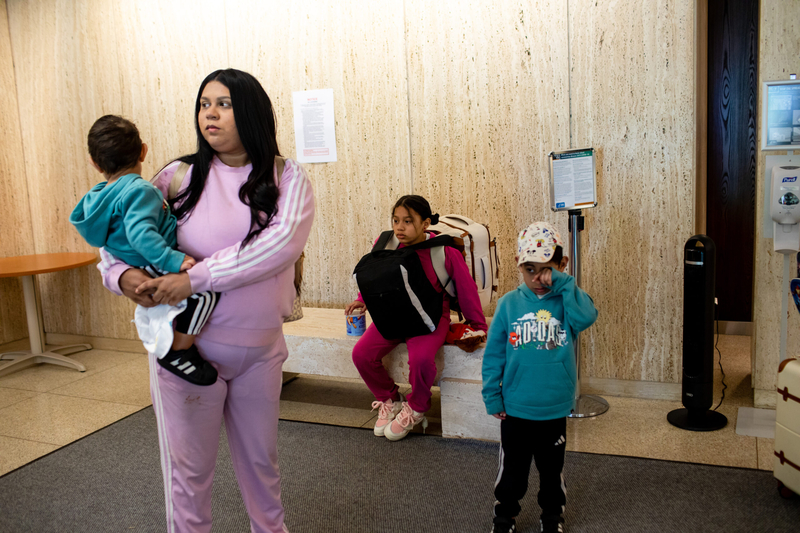
One volunteer left the Whipple Building to print the forms, and Mendoza and her kids waited in the parking lot, alternating between sitting quietly in the car and playing outside with stuffed toys — a dog, a bear and Jesus — and attempting to jump rope with the drawstring from Mendoza’s tracksuit.

The woman returned with the forms, and Mendoza filled them out. Then, Aranssa grasped Mateo’s hand and Mendoza lifted Moises on her hip, and they walked in together.
The plan to self-deport didn’t happen. In the office of Enforcement and Removal Operations, the division of ICE responsible for deportations, the woman at the front desk told Mendoza — through a Reformer reporter who interpreted the conversation because the staff didn’t speak Spanish — she couldn’t be deported without an order for removal. The office could, however, issue her a travel document to take the place of a passport, allowing her to travel to Venezuela on her own.
Volunteers immediately got to work raising money for their flights home.

Saint Paul, MN