Gov. Kim Reynolds signs health insurance premium tax increase into law
Mar 26, 2026 | 5:49 pm ET
Description
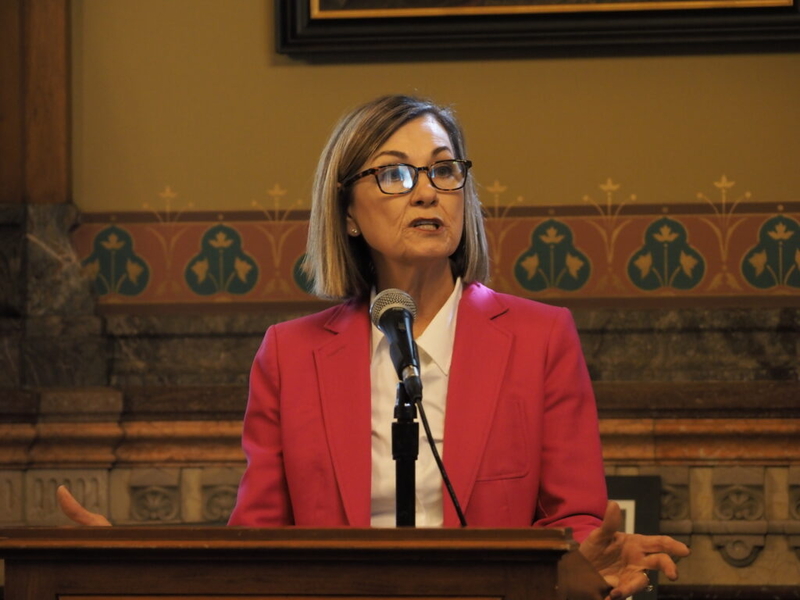
Gov. Kim Reynolds answered questions from reporters at a media availability Feb. 26, 2026. (Photo by Robin Opsahl/Iowa Capital Dispatch)
Gov. Kim Reynolds signed into law a tax increase on health maintenance organizations, or HMOs, which aims to fill the state’s Medicaid budget shortfall. Critics say the tax will increase health insurance costs for Iowans.
The governor signed House File 2739 into law Thursday, according to a news release. The law will retroactively raise the premium tax on HMOs, a type of Medicaid Advantage plan offered by private companies, from a rate of 0.925% to 3.5% between Jan. 1 and Sept. 30, 2026. Beginning in October, the rate would lower to 0.95%.
This increase is intended to help fill the projected funding gaps in the Iowa Medicaid program. The Medicaid Forecasting Group found found the state health coverage program is expected to face a $90.6 million deficit in Fiscal Year 2026, and a deficit of $167.6 million in FY 2027.
In addition to the tax hike, the measure also moves $89 million from the state’s general fund to the Iowa Department of Health and Human Services for the state’s Medicaid program to address the FY 2026 shortfall. It will also transfer almost $350 million from Iowa’s Taxpayer Relief Fund to make up for revenue loss from tax cuts made at the federal level in the “One Big Beautiful Bill” act.
Reynolds said Iowa is not the only state facing problems with Medicaid funding, and that the HMO tax increase was Iowa’s solution to help fill that budget deficit.
“The fact of the matter is, it helps cover the Medicaid shortfall from COVID,” Reynolds said in a news conference Wednesday. “We’ve been watching it all along. We knew that this was going to hit at some point. The bill has come due.”
The measure made it to the governor’s desk on a tight timeline — discussions started in early March on the proposal, and the House and Senate both approved the bill within the past week. The governor said the measure needed to move quickly so the state could implement the tax rate change before a March 31 deadline in order to draw down federal funding.
As the measure received public feedback and was debated in both chambers, lobbyists representing insurers and Democrats said the tax will result in health care premiums rising for Iowans. Scott Sundstrom, a lobbyist for Wellmark, Inc., said at a public hearing health insurance costs are projected to increase by $500 for a family of four covered through Wellmark’s HMO.
Reynolds compared these arguments brought up by insurance agencies to arguments made against legislation adding new regulations to pharmacy benefit managers (PBMs), which Reynolds signed into law in 2025.
“Private insurers do not have to pass along this one-time cost,” Reynolds said. “That’s always the threat. We’ve heard it with PBMs — every time we try to rein in or hold our insurance companies kind of in line, that’s the first place that they go. But the way that this bill is assembled with HMOs, they do not — they can, but they do not — have to pass that one-time cost along to individual policy owners.”
Des Moines, IA