Gov. Dunleavy approves standardized disaster evacuation terms and boost to legal aid
May 22, 2026 | 8:19 pm ET
Description
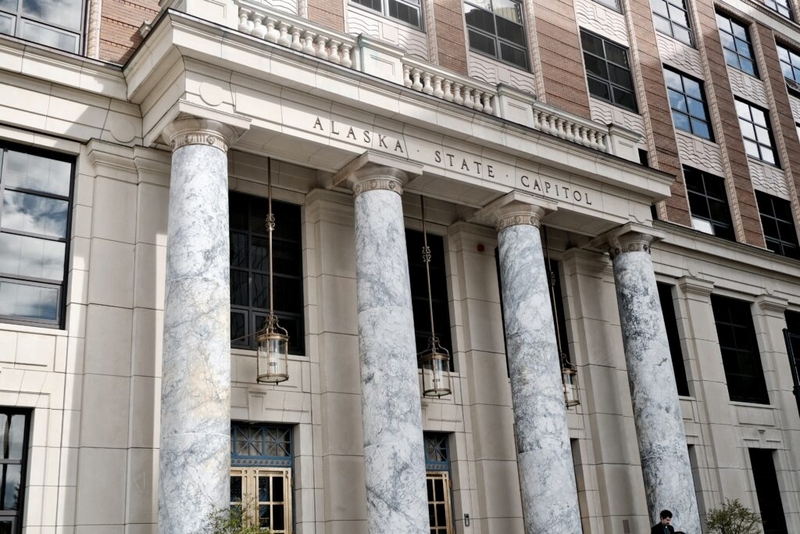
The Alaska State Capitol is seen in partial morning sun on May 10, 2024. (Photo by Claire Stremple/Alaska Beacon)
Alaska’s governor enacted two bills this week, giving final approval to a bill that sets a uniform disaster evacuation scale for the state and another that raises the amount of annual funding for the Alaska Legal Services Corp.
Gov. Mike Dunleavy signed Senate Bill 192, the evacuation system bill, on Wednesday, and he allowed House Bill 48, the civil legal services fund bill, to become law without his signature on Thursday.
SB 192, from Sen. Jesse Bjorkman, R-Nikiski, mandates that officials use a standardized three-level designation when communicating when Alaskans should leave the area of a disaster. Previously, that system was only optional, and the lack of a standard has occasionally caused miscommunications around wildfires.
“I am thankful that Alaskans will get clear and easy to understand instructions about when to prepare to leave and then when to evacuate in an emergency,” Bjorkman said.
HB 48 affects the organization that provides free legal help to Alaskans in civil cases. The Alaska Constitution mandates that the state provide free legal defenses in criminal cases, but Alaskans in civil lawsuits are not mandated to receive help.
In Alaska, domestic violence victims are frequently involved in civil lawsuits as they seek to separate from abusive partners and establish new lives.
HB 48 requires that 25% of all state court filing fees go to ALSC, up from 10% in current law. That higher percentage is worth an extra $400,000 to the corporation and is expected to help an additional 800-850 people annually.
Rep. Sara Hannan, D-Juneau, sponsored HB 48 and said on Friday that she appreciates the administration allowing it to become law.
“More Alaskans may be able to access civil justice,” she said by text message.
Lawmakers have proposed the 25% figure since 2011.
Sen. Forrest Dunbar, D-Anchorage, has been seeking it for the past four years. A prior bill fell just short of passage in 2024 after then-House Rules Chair Craig Johnson, R-Anchorage, blocked it from coming to a final vote in the House, Dunbar said.
Dunbar said he was “very glad to see” the bill become law.
“ALSC provides critical services to some of Alaska’s most vulnerable populations,” he said, crediting ALSC’s current director and her predecessor for their work on the bill.
“Maggie Humm and Nikole Nelson deserve a ton of credit for educating legislators on both sides of the aisle and turning support for Civil Legal Services into a bipartisan goal,” he said.
Juneau