Georgia’s agribusiness industry depends on a thriving, fully funded public health system
May 18, 2026 | 6:20 pm ET
Description
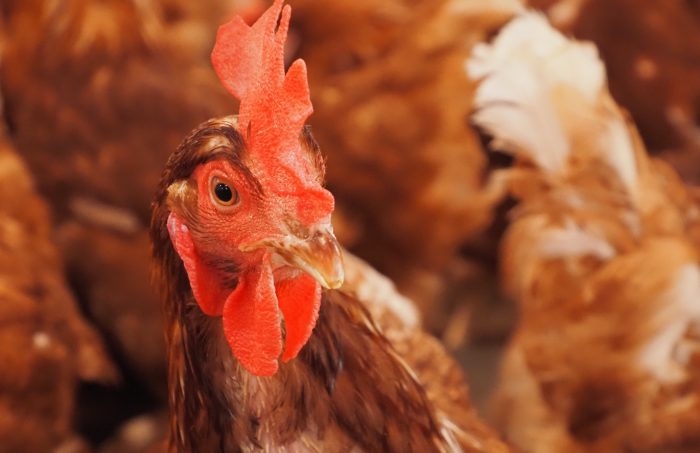
The recent outbreaks of avian flu across multiple states, including Georgia, is a reminder of how connected public health and agriculture are, writes today's guest commentator. Photo by Janelle Stecklein/ Oklahoma Voice
In the new budget that Gov. Brian Kemp signed last week, less than one in every 10 state dollars spent on Georgia’s three primary health agencies is allocated to the Department of Public Health. The future of Georgia’s No. 1 industry relies on a state and local public health system that can track outbreaks and keep communities healthy. Chronic underinvestment in public health puts the state’s health security and economic well-being at risk.
When animals get sick, people lose jobs and a food source
Georgia is the nation’s top poultry producer, a leading grower of pecans, peanuts, and blueberries and home to a multi-billion dollar cattle and hog industry. Growing up on a farm in south Georgia, I saw, as many other rural residents observe, that our food sources and our livelihoods are fully dependent on the health of our animals and plants. Today, the practice of One Health recognizes that human, animal, plant and environmental health are all inseparable. While these connections have been recognized for millennia, One Health has been embraced by organizations like the Centers for Disease Control and Prevention and the U.S. Department of Agriculture, the same groups that step in when livestock disease or crop failure threatens our nation’s food supply, and when illness or outbreak threatens the health of our families. It’s not the product of any one group, but a way of thinking that healthy land and healthy animals mean a stronger, more secure America.
To see these One Health connections, look no further than the spread of the severe and contagious avian influenza (H5N1) outbreaks recently. Across multiple states, millions of birds were culled (including hundreds of thousands in Georgia alone), egg and poultry prices spiked, and workers at affected facilities faced risk of disease and unemployment.
The economic damage can be catastrophic. When an agricultural worker cannot access care for an unknown respiratory illness that turns out to be an early signal of a novel influenza strain, the cost is not only paid by that individual, but also their household, the employer, the consumer and ultimately the taxpayer that funds the emergency response any emerging or re-emerging human pathogen necessitates. At the end of the chain, Georgia’s agricultural economy (and Georgians at large) depend on something less visible but equally vital: the trust of consumers and trading partners that its food products are safe. A single high-profile outbreak can devastate a commodity’s market value for years.
Public health helps detect outbreaks and keep agribusiness workers healthy
I’m proud to state that Georgia has taken meaningful steps towards building the One Health, cross-sector infrastructure that is needed for today’s (and tomorrow’s) challenges. The newly formed Georgia One Health Consortium, a collaboration spanning academia, nonprofit partners and state agencies is a step in the right direction. As part of the collaboration, Georgia’s Department of Public Health and Department of Agriculture work closely to serve as an early warning system of emerging health threats. As disease transmission between animals and humans grows, this surveillance network, managed primarily by county public health workers in rural communities, becomes ever more important.
Agribusiness workers face unique occupational hazards as well as more common constraints felt by many rural Georgia residents like limited access to care; public health helps to stand in the gap. For example, data collected by epidemiologists at the Department of Public Heath help inform efforts to address the startingly high rates of suicide among Georgia farmers. The department’s home visiting program helps get rural families across Georgia – from the poultry workers near Habersham County to the peanut farmers in Decatur County – off to a good start during pregnancy and beyond. And environmental health workers at county health departments offer testing for private wells to help prevent water contamination that puts rural families and livestock at risk.
Work in public health is largely invisible when everything is working. Outbreaks that are prevented are rarely met with fanfare. However, the epidemiologist who traced the source of a disease cluster or the environmental health officer who monitors water safety are frontline defenders of health.
The state’s agricultural economy and the people who sustain it cannot get by on a weakened public health system
The state and local public health system is infrastructure that is as vital to the economy and security in Georgia as roads or the energy grid and has a well-documented return on investment. On average, every $1 spent on public health yields about $14 in savings across health services and the broader economy. Yet over the past 15 years, total state and federal public health funding per Georgian has declined.
Public health in Georgia is not something to be funded as an afterthought. Thoughtful changes in Georgia’s public health governance structure paired with adequate state and county funding can build upon the system’s existing strengths and ensure every community has access to foundational public health services and functions — like One Health.
Jessica Schwind, PhD, MPH, is an infectious disease epidemiologist and resident of Wheeler County, Georgia. This column was authored by Dr. Schwind with support from Leah Chan, MPH, at Georgia Budget and Policy Institute.
Atlanta, GA