Federal judges question Alabama attorneys over plan to use earlier congressional map
May 22, 2026 | 9:33 pm ET
Description
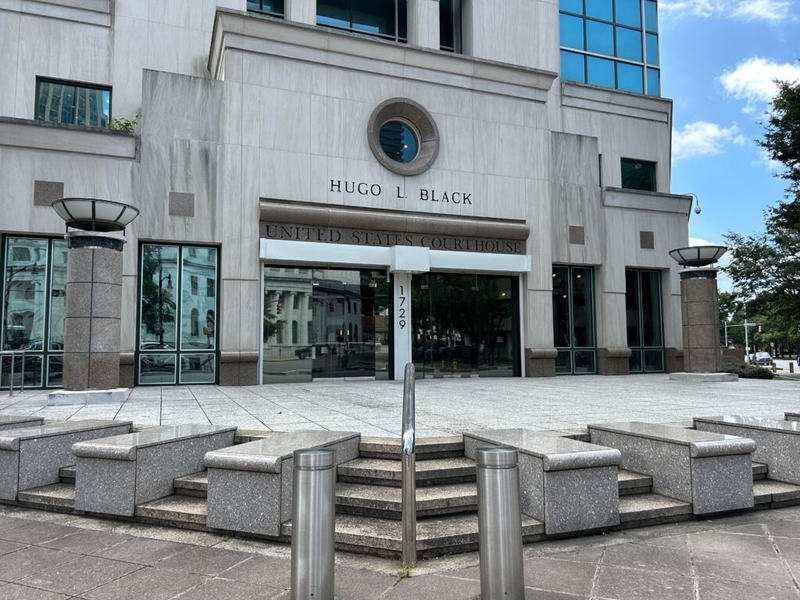
The front of Hugo L Black Courthouse in Birmingham, Alabama on August 15, 2023. A three-judge panel heard arguments in Allen v. Milligan in light of the U.S. Supreme Court decision in Louisiana v. Callais. (Jemma Stephenson/Alabama Reflector)
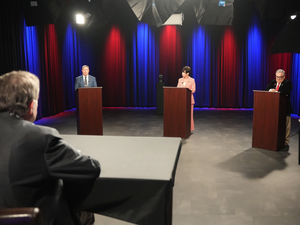
BIRMINGHAM — A three-judge panel of the Northern District of Alabama Friday peppered attorneys for Alabama with questions about its attempt to use a 2023 congressional map that the panel declared racially discriminatory.
The judges appeared skeptical of Alabama Solicitor General Barrett Bowdre’s arguments that the U.S. Supreme Court’s ruling in Louisiana v. Callais last month, which weakened the Voting Rights Act, created a new standard that required them to reverse their ruling that created a second congressional district where Black voters had a chance to elect their preferred leaders.
“They didn’t wipe the slate clean,” U.S. Circuit Judge Stanley Marcus, appointed to the circuit court by President Bill Clinton, said to Bowdre at the hearing, convened to decide whether the court should block Alabama’s plan to hold special August 11 primaries in the state’s 1st, 2nd, 6th and 7th congressional districts, whose boundaries would change should the court allow the use of the previously enjoined map.
Under Callais, plaintiffs challenging legislative maps on the grounds of racial discrimination under Section 2 of the Voting Rights Act must show intent to discriminate, a significantly higher standard than the previous one. Bowdre agreed that while the U.S. Supreme Court decision in Callais did not eliminate all the factors that led the three-judge panel’s ruling, he said their findings that the 2023 map illegally diluted Black voters’ congressional representation was “from a different standard.”
Marcus said the ruling created a heightened standard and appeared to concede that the new stipulations did favor the state.
Alabama set the new primary dates after the U.S. Supreme Court vacated the panel’s injunction last week. Qualifying for the August primaries ended on Friday.
Bowdre said that “No map achieves all the state’s political goals” and argued the remedial map the court drew in 2023 violated three of the Legislature’s political objectives — pitting incumbents against one another; splitting areas on the Gulf coast and splitting counties. Bowdre argued that was enough to tip the balance in favor of the state.
Judges on Friday turned much of their attention to one of the conditions Alito stated in Callais: that illustrative maps be drawn race blind. At one point, Marcus read out loud the transcript of the testimony of one of the plaintiffs’ experts stating that maps were drawn without considering race.
U.S. District Judge Anna Manasco, appointed by President Donald Trump, asked Bowdre if there is evidence that plaintiffs used race to create their maps.
“Race was used as a traditional districting criterion in the granular process of drawing a map?” she asked Bowdre.
Bowdre said that race had to be a factor when creating new maps because the stated goal was to create a second district to increase representation for Black voters in Alabama.
U.S. District Court Judge Terry Moorer, also appointed by Trump, asked Bowdre why Alabama was giving the Gulf Coast such deference when drawing the map. At one point, he referred to specific cultural neighborhoods in New York City and compared it to the demographic makeup of Alabama. He asked Bowdre if there are significant cultural differences among the state’s population.
Bowdre said there exists a divide between the urban and rural areas of the state, saying “I live in Birmingham and there are festivals,” when he referred to specific cultural events.
Plaintiffs argued that the court’s decision to impose an injunction and require the state to create one majority-minority congressional district and one near-Black majority district can remain despite the U.S. Supreme Court’s ruling in Callais, noting that the remedial map was race-blind and the judges had found the Legislature discriminated against Black voters.
Deuel Ross, director of litigation at the Legal Defense Fund, who represented the plaintiffs in Milligan, told the panel that the map the state currently plans to use is unconstitutional.
“The Callais case was about the Section 2 standards under the Voting Rights Act, this case, the panel had found that Alabama had engaged in intentional racial discrimination,” Ross told reporters after the hearing. “So when Alabama is talking about its justification for keeping Mobile and Baldwin whole, those justifications, as the court already found, were the result of an intentional, unconstitutional discrimination.”
Plaintiffs also said racially polarized voting, a key to the panel’s ruling in 2023, remained a fact of life in the state.
The parties also debated whether the equities of the situation warranted a preliminary injunction. Plaintiffs said in their motion that reverting to the congressional map created by the Legislature during the 2023 special session and convening a special primary election in the fall would confuse the electorate and effectively disenfranchise voters.
“I think that there were some great arguments from the Milligan, Caster and Singleton side,” said Senate Minority Leader Bobby Singleton, D-Greensboro. “Just trying to show that the Aug. 11 primary is confusing to the people and would not give any different results if we stayed with the remedial map.”
Jim Davis, deputy attorney general for the state of Alabama who represents the Alabama Secretary of State, argued that blocking the August primaries would create even more confusion among voters if there was still another reversion in the maps.
“The problems that they described are the ones they created,” Ross said.
Montgomery